Representative George Holden Tinkham
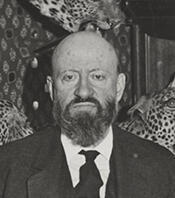
Here you will find contact information for Representative George Holden Tinkham, including email address, phone number, and mailing address.
| Name | George Holden Tinkham |
| Position | Representative |
| State | Massachusetts |
| District | 10 |
| Party | Republican |
| Status | Former Representative |
| Term Start | December 6, 1915 |
| Term End | January 3, 1943 |
| Terms Served | 14 |
| Born | October 29, 1870 |
| Gender | Male |
| Bioguide ID | T000283 |
About Representative George Holden Tinkham
George Holden Tinkham (October 29, 1870 – August 28, 1956) was a Republican member of the United States House of Representatives from the state of Massachusetts who served fourteen consecutive terms in Congress from 1915 to 1943. He was born in Boston, Massachusetts, to Frances Ann (Holden) Tinkham and George Henry Tinkham, a produce dealer. Raised in Boston, he came of age during a period of rapid urban and industrial growth that would later shape his interest in municipal and national politics.
Tinkham attended the public schools of Boston and went on to Harvard College, from which he graduated in 1894. After completing his undergraduate studies, he initially entered public life before resuming his legal education. He enrolled at Harvard Law School and, following his legal training, was admitted to the bar in 1899. He then commenced the practice of law in Boston, building a professional foundation that would support his subsequent political career.
Tinkham’s early political career was rooted in Boston city government. He served as a member of the Boston Common Council in 1897 and 1898, marking his first formal venture into elective office. After returning to his legal studies and being admitted to the bar, he reentered municipal politics as a member of the Boston Board of Aldermen, serving from 1900 to 1902. During these years he gained experience in local governance and urban administration while continuing his work as a practicing attorney.
Following several years devoted primarily to his law practice, Tinkham returned to public service at the state level. He was elected to the Massachusetts State Senate and served from 1910 to 1912, participating in the 131st Massachusetts General Court in 1910. His tenure in the state legislature broadened his legislative experience and increased his visibility within the Republican Party in Massachusetts, setting the stage for his entry into national politics.
Tinkham was elected as a Republican to the Sixty-fourth Congress and to the thirteen succeeding Congresses, serving in the United States House of Representatives from March 4, 1915, to January 3, 1943. As a Representative from Massachusetts, he contributed to the legislative process during a significant period in American history that encompassed World War I, the interwar years, the Great Depression, and the early years of World War II. He participated actively in the democratic process and represented the interests of his constituents over the course of fourteen terms in office. During World War I, he served in the military; he later recounted to Life magazine that while touring the front as a Congressman he fired what he described as the first American shot against the Austrians.
Within the House of Representatives, Tinkham became particularly noted for his advocacy on civil rights and electoral fairness. He was sometimes referred to as “the conscience of the House” for his persistent efforts to protect voting rights for African Americans. He drew attention to the disparity between the South’s disfranchised Black population and its relatively large representation in the House, arguing that the region’s representation was disproportionate to its actual voting population. His positions on foreign policy also attracted notice. In 1937, a California newspaper reported that “Representative Tinkham of Massachusetts, on the other hand, is emphatic in the view that we are heading for an alliance with England, France and Russia against Germany, Italy and Japan and he favors playing a lone hand and attending strictly to our own business,” reflecting his skepticism toward entangling alliances in the tense pre–World War II international climate.
Tinkham did not stand for renomination in 1942, bringing his long congressional career to a close at the start of 1943. After leaving Congress, he returned to Boston and continued to practice law, remaining professionally active until his retirement. Outside his legal and political work, he pursued travel and adventure; in his spare time, he went on safaris in Kenya and other parts of Africa, an avocation that underscored his interest in the wider world even as he maintained a reputation for caution in foreign policy.
In his later years, Tinkham divided his time away from public office and professional obligations, ultimately spending part of his retirement in the South. He died in Cramerton, North Carolina, on August 28, 1956. His remains were returned to his native Massachusetts, and he was interred in Forest Hills Cemetery in Boston, closing the life of a long-serving Representative whose career spanned nearly three decades of major national and international change.