Representative George Washington Bonaparte Towns
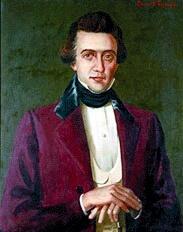
Here you will find contact information for Representative George Washington Bonaparte Towns, including email address, phone number, and mailing address.
| Name | George Washington Bonaparte Towns |
| Position | Representative |
| State | Georgia |
| District | 3 |
| Party | Democratic |
| Status | Former Representative |
| Term Start | December 7, 1835 |
| Term End | March 3, 1847 |
| Terms Served | 3 |
| Born | May 4, 1801 |
| Gender | Male |
| Bioguide ID | T000327 |
About Representative George Washington Bonaparte Towns
George Washington Bonaparte Towns (May 4, 1801 – July 15, 1854) was a United States lawyer, legislator, and politician who emerged as a prominent Democratic leader in Georgia during the antebellum period. Over the course of a public career spanning more than two decades, he served in the United States House of Representatives on three occasions and was the 39th Governor of Georgia from 1847 to 1851, participating in the democratic process during a significant period in American history and representing the interests of his constituents at both the state and national levels.
Towns was born on May 4, 1801, in Wilkes County, Georgia, to Margaret George Hardwick and John Towns, Virginians who had moved south and settled in Georgia. Shortly after his birth, the Towns family moved about within the state, and he received only a modest preparatory education. As a young man, he began the study of medicine in Eatonton, Georgia. An injury interrupted these medical studies, however, and he subsequently left Georgia for Montgomery, Alabama, which had recently been admitted to the Union. In Montgomery he turned to the study of law, and in 1824 he was admitted to the bar there, beginning his professional life as an attorney.
By the mid-1820s Towns had begun to establish himself both professionally and in public affairs. In 1826 he acquired the Alabama Journal newspaper, a move that increased his visibility and influence in local political and civic circles. That same year he married his first wife, Margaret Jane Campbell. The marriage was tragically brief; her poor health led to her death only a few days after the ceremony. Following this personal loss, Towns returned to Georgia and settled in Talbot County. In 1828 he became one of the original town commissioners of Talbotton, where he opened a law office and continued to build his legal practice. During this period he also served as a colonel in the 65th Regiment of the Georgia Militia, reflecting his growing prominence in local leadership.
Towns’s formal political career began in 1829 and would extend for roughly 22 years. He entered Georgia politics as a strong Unionist and an outspoken opponent of the doctrine of nullification, which was then a central and divisive issue in Southern and national politics. He served in the Georgia House of Representatives and later in the Georgia Senate, where he aligned with the Democratic Party and developed a reputation as an effective legislator and advocate of Unionist principles within the broader Southern political context. His state legislative service laid the foundation for his subsequent election to national office.
Towns was elected as a Democrat to the United States House of Representatives from Georgia on three occasions. He first entered Congress in the mid-1830s, serving a partial term from 1835 to 1836. He returned to the House for a full term from 1837 to 1839, participating in debates during the administrations of Presidents Andrew Jackson and Martin Van Buren, when issues such as banking, federal power, and territorial expansion were at the forefront. After several years back in Georgia politics and legal practice, he was again elected to Congress and served a third term from 1846 to 1847, a period that coincided with the Mexican–American War and intensifying national disputes over the expansion of slavery into newly acquired territories. During these three terms, he contributed to the legislative process as a Democratic representative of Georgia, engaging with the major questions confronting the Union in the antebellum era.
In 1847 Towns was elected Governor of Georgia, becoming the state’s 39th governor and serving from 1847 to 1851. His gubernatorial tenure occurred during a critical phase of sectional tension in the United States. On September 23, 1850, in the wake of the federal Compromise of 1850, Towns formally requested that the Georgia General Assembly authorize a special election to choose delegates to a state convention to pass judgment on the Compromise measures. This Georgia convention, which met in 1850–1851, ultimately adopted the Georgia Platform, a conditional acceptance of the Compromise that became influential throughout the South. Towns’s actions in calling for the convention placed him at the center of Georgia’s response to the national crisis over slavery and Union, illustrating his continued engagement with the balance between Southern rights and national unity.
Towns’s personal life intersected with national politics through his marriage to Mary Winston Jones Towns, the daughter of John Winston Jones of Virginia. John Winston Jones served as Speaker of the United States House of Representatives from 1843 to 1845, and Towns and his future father-in-law served concurrently in the House for a time, linking two prominent Democratic families of the era. Towns continued to be regarded as a significant Democratic figure in Georgia after leaving the governorship, though his active public career effectively concluded with the end of his term in 1851.
George Washington Bonaparte Towns died in Macon, Georgia, on July 15, 1854. He was interred in Rose Hill Cemetery in Macon, a burial ground that holds many of the city’s and state’s notable figures. His legacy in Georgia is commemorated geographically as well as politically; Towns County, Georgia, was named in his honor, reflecting the esteem in which he was held for his long service as a lawyer, legislator, congressman, and governor during a formative period in the history of both Georgia and the United States.