Senator George Vickers
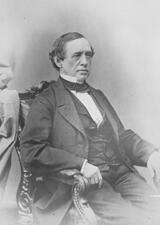
Here you will find contact information for Senator George Vickers, including email address, phone number, and mailing address.
| Name | George Vickers |
| Position | Senator |
| State | Maryland |
| Party | Democratic |
| Status | Former Representative |
| Term Start | January 1, 1868 |
| Term End | March 3, 1873 |
| Terms Served | 1 |
| Born | November 19, 1801 |
| Gender | Male |
| Bioguide ID | V000095 |
About Senator George Vickers
George Vickers (November 19, 1801 – October 8, 1879) was a Democratic politician, lawyer, and militia officer who represented Maryland in the United States Senate from 1868 to 1873. A prominent figure in Maryland politics during the Civil War and Reconstruction, he is best known for casting the deciding vote in the Senate that prevented the conviction and removal of President Andrew Johnson following Johnson’s impeachment by the House of Representatives. Over the course of his public life, Vickers also served in the Maryland State Senate and held high rank in the Maryland State Militia.
Vickers was born in Chestertown, Kent County, Maryland, where he spent his early years and entered public service at the local level. As a young man he was employed for several years in the clerk’s office of Kent County, gaining familiarity with legal procedure and public administration. He subsequently studied law and was admitted to the bar in 1832, commencing the practice of law in his native Chestertown. His legal career, rooted in the Eastern Shore of Maryland, provided the foundation for his later political influence and his role as a representative of a border state with divided loyalties during the Civil War.
During the Civil War, Vickers served as a major general of the Maryland State Militia, reflecting both his prominence in state affairs and Maryland’s complex position as a slaveholding border state that remained in the Union. His own family embodied the sectional divisions of the era: of his four sons, one fought for the North, while another, Benjamin Vickers, served in the Confederate 2nd Tennessee Regiment and was killed at the Battle of Shiloh in 1862. These personal and familial experiences during the conflict informed his later positions during Reconstruction and his alignment with the Democratic Party’s conservative wing.
Vickers’s formal political career accelerated in the 1860s. In 1864 he served as a presidential elector on the Democratic ticket, participating in the national contest held in the midst of the Civil War. Two years later, in 1866, he was vice president of the National Union Convention of Conservatives in Philadelphia, a gathering that sought to rally support for President Andrew Johnson’s lenient Reconstruction policies and to oppose the more radical measures favored by many Republicans in Congress. At the state level, Vickers served as a member of the Maryland State Senate from 1866 to 1867, representing his constituents during the turbulent early years of Reconstruction and helping to shape Maryland’s response to the postwar political realignment.
Vickers was elected as a Democrat to the United States Senate to fill the vacancy created when the Senate declined to permit Philip F. Thomas of Maryland to qualify for the seat. His service in Congress is sometimes dated from 1867 in broader historical accounts of the Reconstruction era, but he was formally sworn in on March 7, 1868, and served one full term, which lasted until March 3, 1873. His arrival in the Senate coincided with one of the most consequential constitutional crises in American history: the impeachment of President Andrew Johnson. Radical Republicans sought Johnson’s removal because of his moderate approach to Reconstruction and his clashes with Congress over the direction of postwar policy. According to contemporary accounts, supporters of the President crossed the ice-choked Chesapeake Bay in an iceboat to reach Chestertown, woke Vickers in the middle of the night, and informed him that Republican efforts to block his seating in the Senate had failed. Vickers hurried to Washington, took his oath of office, and shortly thereafter cast the crucial vote against Johnson’s conviction, helping to preserve Johnson’s presidency by the narrowest of margins.
During his Senate tenure, Vickers aligned with the Democratic Party’s conservative stance on Reconstruction and racial issues. In 1870 he led southern Democrats in an effort to block the swearing-in of Hiram Rhodes Revels of Mississippi, the first Black member of the United States Senate. Vickers argued that under the Supreme Court’s decision in Dred Scott v. Sandford, African Americans had not been recognized as citizens before the Civil War, and that Revels therefore could not meet the constitutional requirement of nine years’ citizenship, having, in Vickers’s view, been a citizen only since the ratification of the Fourteenth Amendment two years earlier. The Senate rejected this objection, and Revels was ultimately sworn in, but the episode underscored Vickers’s role in the contentious debates over citizenship, race, and representation during Reconstruction. Throughout his single term, he participated in the legislative process and represented the interests of his Maryland constituents at a time when the nation was redefining the relationship between the federal government, the states, and newly freed African Americans.
After his term in the Senate ended on March 3, 1873, Vickers returned to Chestertown and resumed the practice of law. He remained a respected figure in his community and in Maryland’s political history, remembered particularly for his dramatic entry into the Senate during the Johnson impeachment crisis and for his service as a militia officer and state legislator. George Vickers died in Chestertown on October 8, 1879. He was interred in Chester Cemetery, leaving a legacy closely intertwined with Maryland’s experience of the Civil War and the contested course of Reconstruction.