Senator George Peabody Wetmore
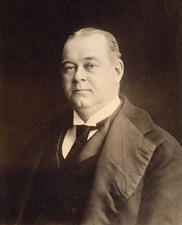
Here you will find contact information for Senator George Peabody Wetmore, including email address, phone number, and mailing address.
| Name | George Peabody Wetmore |
| Position | Senator |
| State | Rhode Island |
| Party | Republican |
| Status | Former Representative |
| Term Start | December 2, 1895 |
| Term End | March 3, 1913 |
| Terms Served | 3 |
| Born | August 2, 1846 |
| Gender | Male |
| Bioguide ID | W000312 |
About Senator George Peabody Wetmore
George Peabody Wetmore (August 2, 1846 – September 11, 1921) was an American politician who served as the 37th governor of Rhode Island and later as a United States senator from that state. A member of the Republican Party, he represented Rhode Island in the Senate from March 4, 1895, to March 3, 1907, and again from January 22, 1908, to March 3, 1913, contributing to the legislative process during three terms in office. His public career spanned a significant period in American history, and he was noted both for his role in state politics and for his influence on national cultural and commemorative projects.
Wetmore was born in London, England, on August 2, 1846, during a visit abroad by his parents, William Shepard Wetmore, a wealthy Yankee trader, and Anstiss Derby Rogers Wetmore. Although born overseas, he was raised in Newport, Rhode Island, where he received his early education at the private schools of Messrs. Reed and Thurston and of the Rev. William C. Leverett. He came from a prominent New England family with deep political and mercantile roots. His great-grandfather, Benjamin Pickman Jr., served as a Congressman from Massachusetts, and his second great-grandfather was the Salem merchant Elias Hasket Derby; Derby’s wife, Elizabeth Crowninshield Derby, belonged to the influential Crowninshield family. This lineage connected Wetmore to a long tradition of public service and commercial enterprise in New England.
Wetmore attended Yale College, from which he graduated in 1867. While at Yale he was a member of the secret society Skull and Bones, reflecting his early integration into elite social and professional networks. Following his undergraduate studies, he pursued legal training at Columbia Law School in New York City. He received the degree of LL.B. in 1869 and was admitted to the bars of both Rhode Island and New York that same year. Although he qualified as an attorney, he never engaged in active legal practice, instead devoting his time to managing family interests and cultivating a career in politics and public affairs.
Wetmore’s formal political activity began in the late nineteenth century. A committed Republican, he took an active interest in party affairs and served as a presidential elector in 1880 and again in 1884. In 1885 he was elected governor of Rhode Island and became the state’s 37th governor. He served two consecutive one-year terms, from 1885 to 1887, but was defeated in his bid for a third term. During his tenure he was appointed to the commission overseeing the construction of the new Rhode Island State House in Providence, a project that reflected his enduring interest in public architecture and civic improvement. His growing prominence in state politics and his alignment with the Republican establishment laid the groundwork for his later election to the United States Senate.
In 1894 Wetmore was elected as a Republican to the United States Senate, receiving the unanimous vote of the Rhode Island General Assembly in the Senate, House, and joint convention. He entered the Senate on March 4, 1895, and was re-elected in 1900, serving continuously until March 3, 1907. In 1907 he was challenged for his seat by another Republican, industrialist Samuel P. Colt. The resulting three-way contest among Wetmore, Colt, and Democrat Robert Hale Ives Goddard produced months of deadlocked ballots in the General Assembly and left one of Rhode Island’s seats vacant at the opening of the 60th Congress on March 4, 1907. Eventually Colt withdrew from the contest, and Wetmore was returned to the Senate on January 22, 1908. He then served until March 3, 1913, when he retired; he was succeeded by Colt’s brother, LeBaron B. Colt. During his Senate career, he represented the interests of his Rhode Island constituents through a period marked by industrial expansion, naval growth, and increasing federal involvement in public works and cultural affairs.
Within the Senate, Wetmore held a series of influential committee assignments. He first served as chairman of the Committee on Manufactures, reflecting Rhode Island’s industrial base. He later became chairman of the Joint Committee on the Library, a position he held for sixteen years, which placed him at the center of federal cultural and commemorative initiatives. He also served on the Committees on Appropriations, the District of Columbia, Naval Affairs, Public Buildings and Grounds, and other committees. He had a particular interest in the expansion and modernization of the United States Navy and in the development of the naval base in Narragansett Bay, an issue of strategic and economic importance to his home state. Beyond his legislative duties, he chaired the joint commission appointed by Congress to prepare plans for the completion of the United States Capitol in Washington; served as chairman of the first Lincoln Memorial Commission and as a member of the commission that erected the National Lincoln Memorial; and participated in the Grant Memorial Commission and other bodies responsible for statues and national memorials. He was closely associated with legislation creating the National Commission of Fine Arts and was deeply engaged in efforts to improve and develop Washington, D.C., according to a coherent artistic and civic plan. During his Senate tenure he was also a litigant in the Supreme Court case George Peabody Wetmore v. Tennessee Copper Company, 218 U.S. 369 (1910), reflecting his involvement in legal disputes of national significance.
Outside of elective office, Wetmore was extensively involved in cultural, educational, and social organizations. He was one of the organizers of the Metropolitan Opera in New York and served on the committee responsible for constructing the Metropolitan Opera House, underscoring his long-standing support for the fine arts. He was a trustee of the Peabody Museum of Natural History at Yale and of the Peabody Education Fund, institutions that reflected both his family connections and his interest in education and scientific inquiry. In 1888 he was nominated as a Fellow of Yale University but declined to have his name considered. An avid horseman, he was one of the founders of the Jockey Club, vice president of the National Horse Show Association of America, and a director of other organizations devoted to improving the breeding of horses. In Newport he was a trustee of the Redwood Library and Athenaeum, president and trustee of the Newport Hospital, and president of the Newport Reading Room and the Newport Casino. In 1877 he was admitted as a member of the Massachusetts Society of the Cincinnati, further marking his place within the hereditary and patriotic societies of his era.
On December 22, 1869, Wetmore married Edith Malvina Keteltas (1848–1927) in New York City. She came from a family with strong ties to Yale College: her father, Eugene Keteltas, had been a member of the Yale College Class of 1822 before graduating from Union College that same year; her grandfather, Philip Doddridge Keteltas, was Yale Class of 1792; her great-grandfather, the Rev. Abraham Keteltas, was Yale Class of 1752; and her great-great-grandfather, William Smith, was Yale Class of 1719. Edith’s brother, Brevet Lieutenant Colonel Henry Keteltas, served in the American Civil War as a captain in the 15th United States Infantry, was wounded in action, and received two brevets for gallantry; his sword is preserved and displayed at the Wetmore family mansion, Chateau-sur-Mer, in Newport. Mr. and Mrs. Wetmore, who were included in Ward McAllister’s famed list of New York and Newport society known as “The Four Hundred,” had four children: Edith Malvina Keteltas Wetmore (1870–1966), an avid patron of the arts, collector of rare children’s books, gardener, and well-known Newport socialite; Maude Alice Keteltas Wetmore (1873–1951), a political organizer and philanthropist; William Shepard Keteltas Wetmore (1875–1925), who received a B.A. degree from Yale in 1897; and Rogers Pickman Derby Keteltas Wetmore (1882–1917). The two sons predeceased their parents, while the two daughters lived together at the family’s Newport estate for many years. Through his extended family, Wetmore was also connected to other political figures; his first cousin once removed, Mary Toppan Pickman, married Massachusetts Congressman and diplomat George B. Loring.
In his later years, Wetmore continued to reside primarily in Newport while maintaining his many institutional and social affiliations. His estate in Newport, Chateau-sur-Mer, became one of the best-known examples of a Victorian mansion in the United States. The property, which reflected the wealth and social position of the Wetmore family during the Gilded Age, later passed into the care of the Preservation Society of Newport County and is open for public tours during the summer months. It is regarded as one of the best surviving examples of Victorian domestic architecture and stands as a tangible reminder of Wetmore’s social milieu and personal tastes.
George Peabody Wetmore died on September 11, 1921, in Boston, Massachusetts. His funeral was held at Trinity Church in Newport, Rhode Island, and he was buried in Newport’s Island Cemetery. His life and career placed him among the notable American officeholders who were born outside the United States, and his legacy encompasses not only his service as governor and United States senator from Rhode Island but also his substantial contributions to the cultural, architectural, and commemorative landscape of both his home state and the nation’s capital.