Representative George Warren Weymouth
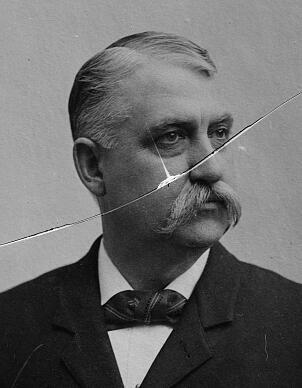
Here you will find contact information for Representative George Warren Weymouth, including email address, phone number, and mailing address.
| Name | George Warren Weymouth |
| Position | Representative |
| State | Massachusetts |
| District | 4 |
| Party | Republican |
| Status | Former Representative |
| Term Start | March 15, 1897 |
| Term End | March 3, 1901 |
| Terms Served | 2 |
| Born | August 25, 1850 |
| Gender | Male |
| Bioguide ID | W000316 |
About Representative George Warren Weymouth
George Warren Weymouth (August 25, 1850 – September 7, 1910) was a Republican member of the United States House of Representatives from Massachusetts who served two terms in Congress from 1897 to 1901. He represented his constituents during a significant period in American history at the close of the nineteenth century, contributing to the legislative process as a member of the Fifty-fifth and Fifty-sixth Congresses.
Weymouth was born on August 25, 1850, in West Amesbury, Massachusetts, a community that was later incorporated as the town of Merrimac. He was educated in the local public schools and attended Merrimac High School, receiving the foundational education that prepared him for a career in business and public life. His early years in this industrial and commercial region of Massachusetts helped shape his later interests in manufacturing and finance.
In 1882, Weymouth moved to Fitchburg, Massachusetts, where he entered the carriage business, reflecting the importance of transportation and manufacturing in the regional economy of the time. He subsequently became manager of the Simonds Rolling Machine Company, a prominent local industrial concern. His business activities expanded into the financial sector as well. From 1891 to 1901 he served as a trustee of the Fitchburg Savings Bank, and from 1892 to 1901 he was a director of the Fitchburg National Bank. In addition to these positions, he was a director in other corporations, underscoring his prominence in the commercial and financial life of Fitchburg.
Weymouth’s involvement in public affairs began at the local level. In 1886 he served as a member of the common council of Fitchburg, participating in municipal governance during a period of industrial growth and urban development. He advanced to state-level politics as a member of the Massachusetts House of Representatives in 1896, where he took part in shaping state legislation. That same year he was chosen as a delegate to the Republican National Convention in 1896, reflecting his growing influence within the Republican Party and his engagement with national political issues.
Building on his business and political experience, Weymouth was elected as a Republican to the United States House of Representatives, winning a seat in the Fifty-fifth Congress and securing reelection to the Fifty-sixth Congress. He served from March 4, 1897, to March 3, 1901. During these two terms, he participated in the democratic process as a member of the House of Representatives, representing the interests of his Massachusetts constituents and contributing to the legislative work of Congress at a time marked by economic change and the nation’s emergence on the world stage. He chose not to be a candidate for renomination in 1900, bringing his congressional service to a close at the end of his second term.
After leaving Congress, Weymouth relocated to Fairhaven, Massachusetts, where he continued his career in industry. He became president of the Atlas Tack Corporation in 1897 and held that position until his death in 1910, overseeing a company involved in the manufacture of tacks and related products, an important component of the region’s manufacturing base. His leadership in this enterprise extended his long record of involvement in business and corporate affairs beyond his years in elective office.
George Warren Weymouth died in an automobile accident near Bingham, Maine, on September 7, 1910. His death occurred while he was still actively engaged in business as president of the Atlas Tack Corporation. He was interred in Riverside Cemetery in Fairhaven, Massachusetts, closing a life marked by service in local and state government, two terms in the United States Congress, and significant contributions to the industrial and financial development of the communities in which he lived.