Representative George Willard
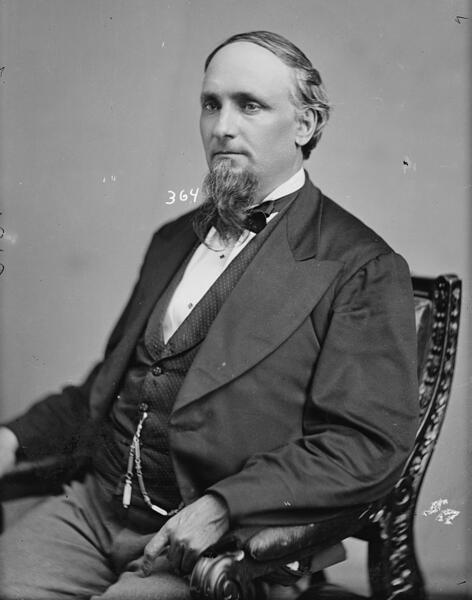
Here you will find contact information for Representative George Willard, including email address, phone number, and mailing address.
| Name | George Willard |
| Position | Representative |
| State | Michigan |
| District | 3 |
| Party | Republican |
| Status | Former Representative |
| Term Start | December 1, 1873 |
| Term End | March 3, 1877 |
| Terms Served | 2 |
| Born | March 20, 1824 |
| Gender | Male |
| Bioguide ID | W000479 |
About Representative George Willard
George Willard (March 20, 1824 – March 26, 1901) was a politician, newspaperman, and educator from the U.S. state of Michigan who served as a Republican Representative in the United States Congress from 1873 to 1877. Over the course of two terms in the U.S. House of Representatives, he contributed to the legislative process during a significant period in American history and represented the interests of his Michigan constituents. He was also instrumental in opening the University of Michigan to women, a development that marked an important step in the expansion of educational opportunities in the state. The American architect, educator, and writer Charles Willard Moore was a descendant of George Willard.
Born on March 20, 1824, Willard came of age in the early decades of the nineteenth century, a time of rapid growth and political realignment in the United States. Details of his early childhood and family background are not extensively documented in the surviving record, but his later career as a newspaperman and public official suggests that he received a solid education and developed an early interest in public affairs, literature, and civic life. His formative years coincided with the rise of new political movements and the expansion of educational institutions in the Midwest, influences that would shape his later work in both journalism and higher education.
Willard’s education prepared him for a life of public engagement and intellectual activity. Although the specific institutions he attended are not fully recorded, his subsequent roles as a newspaperman and advocate for higher education indicate that he was well versed in classical learning, public speaking, and the issues of his day. His familiarity with the workings of educational institutions and his later involvement with the University of Michigan reflect a sustained commitment to the advancement of learning and the broadening of access to higher education.
Before entering national politics, Willard established himself as a newspaperman in Michigan, a role that placed him at the center of public discourse in the state. Through his work in journalism, he informed citizens about political developments, helped shape public opinion, and developed a reputation as an articulate voice on civic and educational matters. His experience in the press likely strengthened his skills in analysis, persuasion, and communication, which would serve him well in legislative service. At the same time, he became active in public and educational affairs, emerging as a significant advocate for reform within Michigan’s growing system of higher education.
Willard’s most notable contribution in the field of education was his instrumental role in opening the University of Michigan to women. At a time when most American universities remained closed to female students, he supported policies and initiatives that advanced coeducation, helping to secure formal access for women to one of the leading public universities in the country. This achievement placed him among the prominent advocates of expanded educational opportunity in the nineteenth century and aligned him with broader national movements for women’s rights and educational reform. His efforts helped to reshape the character of higher education in Michigan and had lasting effects on generations of students.
In 1873, Willard was elected as a Republican to the United States House of Representatives from Michigan, beginning the first of his two consecutive terms in Congress. Serving from 1873 to 1877, he participated in the democratic process during the later years of Reconstruction and the complex political realignments that followed the Civil War. As a member of the House of Representatives, he worked within the legislative framework of the era, contributing to debates and decisions on national policy while advocating for the interests of his Michigan constituents. His service coincided with important discussions about economic development, civil rights, and the role of the federal government in postwar America.
Willard’s congressional tenure reflected both his party affiliation and his regional priorities. As a Republican, he was aligned with the dominant party of the Reconstruction period, which was engaged in questions of national reconciliation, industrial growth, and the protection of civil and political rights. Representing Michigan, he was attentive to the concerns of a rapidly developing state whose economy and institutions were expanding in the late nineteenth century. His legislative work, informed by his background in journalism and education, contributed to the broader efforts of Congress to address the challenges of a changing nation.
After leaving Congress in 1877, Willard remained a respected figure in Michigan public life. Drawing on his experience as a newspaperman, educator, and legislator, he continued to be associated with civic and educational causes and retained a reputation as an advocate for learning and public service. His legacy endured not only through his role in opening the University of Michigan to women and his service in the House of Representatives, but also through his family line, which included the noted architect, educator, and writer Charles Willard Moore. George Willard died on March 26, 1901, closing a life that spanned from the early republic through the dawn of the twentieth century and left a lasting imprint on Michigan’s political and educational history.