Representative George Washington Wilson
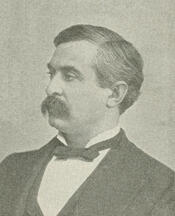
Here you will find contact information for Representative George Washington Wilson, including email address, phone number, and mailing address.
| Name | George Washington Wilson |
| Position | Representative |
| State | Ohio |
| District | 7 |
| Party | Republican |
| Status | Former Representative |
| Term Start | August 7, 1893 |
| Term End | March 3, 1897 |
| Terms Served | 2 |
| Born | February 22, 1840 |
| Gender | Male |
| Bioguide ID | W000583 |
About Representative George Washington Wilson
George Washington Wilson was born on 7 February 1823 in Alvah, Banffshire, Scotland. Little is recorded about his family background, but his early years in the North East of Scotland placed him within reach of the region’s emerging artistic and technical communities. Showing an aptitude for drawing and composition, he pursued formal artistic training, which would later underpin both his work as an artist and his pioneering efforts in photography. His birth and upbringing in Banffshire, followed by his later association with Aberdeen, situated him at a crossroads of traditional Scottish culture and the rapidly modernizing Victorian world.
Wilson studied art in Edinburgh and London, two of the principal artistic centers of the United Kingdom in the mid-19th century. This education exposed him to contemporary trends in portraiture and miniature painting, as well as to the broader visual culture that was beginning to embrace new technologies. In 1849, after completing his studies, he returned to Aberdeen and established himself as a portrait miniaturist, catering primarily to the wealthy families of the North East of Scotland. Although his early career as a miniaturist met with only moderate success, it refined his sense of composition, lighting, and likeness—skills that translated directly into his later photographic practice.
By the early 1850s, Wilson began to shift from traditional portrait miniatures to the emerging field of photography. In 1852 he ventured into portrait photography, setting up a studio with John Hay at 25 Crown Street in Aberdeen. From this base, he combined artistic training with technical experimentation, developing a reputation for both commercial acumen and technical innovation. A major turning point came in 1854–1855, when he received a contract to photograph the British Royal Family and to document the construction of Balmoral Castle. This royal commission, and his subsequent work for Queen Victoria and Prince Albert in 1860, firmly established him as one of Scotland’s premier photographers and significantly expanded the reach of his business.
Over the following decades, Wilson emerged as a leading figure in the development of outdoor and landscape photography. Moving increasingly away from studio portraiture in the 1860s, he pioneered techniques that allowed for reliable photography outside controlled indoor environments, including very short exposures for stereoscopic views. At the same time, he was an innovator in the mass production of photographic prints, building a business model that treated photographs not merely as bespoke commissions but as reproducible commodities. By 1864 he claimed to have sold over half a million prints, a remarkable figure that reflected both the technical efficiency of his operation and the growing public appetite for photographic images of landscapes, architecture, and distant places.
Wilson’s professional life also included service as a Representative from Ohio in the United States Congress from 1893 to 1897. A member of the Republican Party, he served two terms in the U.S. House of Representatives, participating in the legislative process during a significant period in American history. As a congressman, he took part in debates and votes that shaped national policy in the post–Civil War and Gilded Age context, representing the interests and concerns of his Ohio constituents within the broader framework of federal governance. His role in Congress placed him within the institutional core of the American democratic process, complementing his earlier prominence in the artistic and commercial spheres.
In the later phase of his photographic career, Wilson increasingly delegated fieldwork and production to others while maintaining overall direction of the firm. From about 1870 onward, he relied more heavily on staff photographers and commissioned work from other photographic firms in the United Kingdom. Many of the Mediterranean views and a substantial portion of the English and Scottish series were produced by these associates, while his son Charles Wilson and staff photographers such as Fred Hardie expanded the company’s stock in the 1890s with images from Australia and colonial South Africa. In 1888, Wilson formally handed over the business to his sons Charles, Louis, and John Hay Wilson. By the time of his death on 9 March 1893, aged 70, the firm employed around 40 staff and ranked among the largest publishers of photographic prints in the world, competing with contemporaries such as James Valentine of Dundee.
Wilson’s legacy rests not only on his commercial success but also on the extraordinary survival of his work. Over 40,000 of his photographic glass plates are known to exist, a testament to the meticulous washing and chemical treatments he insisted upon during production. The University of Aberdeen holds approximately 38,000 of these plates, donated in 1958 by Aberdeen photographer Archie Strachan; they date from the late 1850s into the early 20th century and document Aberdeen, the North East of Scotland, the wider Scottish and English countryside, and locations in Wales, Northern Ireland, Gibraltar, Morocco (including Tangier), the south of Spain, colonial South Africa, and Australia. A further 500 or more plates reside in the collections of Aberdeen City Council’s archives, galleries, and museums. The business itself continued after his death until it was wound up at auction in 1908, but Wilson’s work endures in major institutional collections, including the Smithsonian National Museum of American History, the National Galleries of Scotland, the University of Aberdeen Photographic Archives, and other repositories that preserve and study his photographs as key documents of Victorian visual culture and early photographic enterprise.