Representative George Washington Woodward
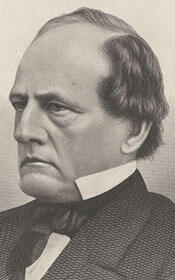
Here you will find contact information for Representative George Washington Woodward, including email address, phone number, and mailing address.
| Name | George Washington Woodward |
| Position | Representative |
| State | Pennsylvania |
| District | 12 |
| Party | Democratic |
| Status | Former Representative |
| Term Start | March 4, 1867 |
| Term End | March 3, 1871 |
| Terms Served | 2 |
| Born | March 26, 1809 |
| Gender | Male |
| Bioguide ID | W000730 |
About Representative George Washington Woodward
George Washington Woodward (March 26, 1809 – May 10, 1875) was an American jurist and Democratic politician who served as a justice and chief justice of the Supreme Court of Pennsylvania and as a Representative from Pennsylvania in the United States Congress from 1867 to 1871. Over the course of a long public career, he held a series of important judicial and legislative posts at both the state and federal levels and was a prominent Democratic figure in Pennsylvania during the mid-nineteenth century.
Woodward was born on March 26, 1809, in Bethany, Wayne County, Pennsylvania. Little is recorded about his early childhood, but he came of age in a region that was then part of the expanding northern Pennsylvania frontier. He pursued preparatory and collegiate studies in the Northeast, attending Geneva College—now Hobart and William Smith Colleges—in Geneva, New York, and later Wilkes-Barre Academy in Wilkes-Barre, Pennsylvania. These institutions provided him with a classical education that prepared him for the legal profession and public life.
After completing his formal studies, Woodward read law and was admitted to the bar in 1830. He commenced the practice of law in Wilkes-Barre, where he quickly established himself as a capable attorney. His legal acumen and growing reputation led to his selection as a delegate to the Pennsylvania constitutional convention of 1837, where he participated in deliberations over the structure and powers of state government. In 1841 he was appointed president judge of the fourth judicial district of Pennsylvania, a position he held for a decade, from 1841 to 1851, presiding over a wide range of civil and criminal matters and solidifying his standing in the state’s legal community.
Woodward’s prominence in Democratic politics grew alongside his judicial career. He was an unsuccessful candidate for the United States Senate in 1844, reflecting his party’s confidence in his abilities and his rising profile in state and national affairs. In 1845 President James K. Polk nominated him to be an associate justice of the Supreme Court of the United States. The United States Senate, however, rejected his nomination by a vote of 20–29. Contemporary accounts and later historical assessments have noted that a major factor in the failure of his nomination was the nativist views he was understood to support, which generated significant opposition in the Senate and in the broader political climate of the era.
Despite this setback, Woodward continued to advance within Pennsylvania’s judiciary. He was appointed an associate judge of the Supreme Court of Pennsylvania in 1852 and served in that capacity until 1863. In 1863 he became chief justice of the Supreme Court of Pennsylvania, a post he held until 1867. During these years he was involved in adjudicating important questions of state law at a time when Pennsylvania was deeply affected by the political and constitutional crises of the Civil War. Also in 1863, while serving on the state’s highest court, he was the Democratic candidate for governor of Pennsylvania. He was unsuccessful in that bid, losing in a closely watched wartime election that reflected the broader national divisions over the Union war effort and Democratic opposition.
Woodward relocated to Philadelphia prior to 1860, where he continued the practice of law even as he maintained his judicial responsibilities and political connections. His transition from the bench to national legislative service came in the aftermath of the Civil War. A member of the Democratic Party, he was elected as a Democrat to the Fortieth Congress to fill the vacancy caused by the death of Representative Charles Denison, thereby entering the U.S. House of Representatives during the turbulent Reconstruction period. He was subsequently reelected to the Forty-first Congress, serving continuously from 1867 to 1871. During his two terms in office, he represented Pennsylvania’s interests in the House of Representatives and contributed to the legislative process at a time when Congress was grappling with the reintegration of the former Confederate states, the rights of newly freed African Americans, and the reshaping of federal-state relations. He did not seek renomination in 1870.
In addition to his congressional service, Woodward remained active in party and constitutional affairs. He was a delegate to the 1868 Democratic National Convention, participating in the selection of the party’s national ticket during Reconstruction. In 1870 he was an unsuccessful candidate for president judge of the eleventh judicial district of Pennsylvania, indicating his continued interest in judicial office even after his tenure in Congress. He later served again as a delegate to a Pennsylvania constitutional convention in 1873, returning to the work of state constitutional revision that had first brought him to prominence in the 1830s.
In his later years, Woodward continued his legal practice and maintained his engagement with public affairs. In 1874 he traveled abroad, reflecting both his stature and the common practice among prominent Americans of undertaking extended European journeys. While on this trip he died in Rome, in the Kingdom of Italy, on May 10, 1875. His body was returned to the United States, and he was interred in Hollenback Cemetery in Wilkes-Barre, Pennsylvania, the community where he had first established his legal career. His family also remained connected to public service; his son, George A. Woodward, went on to become a brigadier general in the United States Army, extending the Woodward family’s involvement in national service into the next generation.