Representative George Helm Yeaman
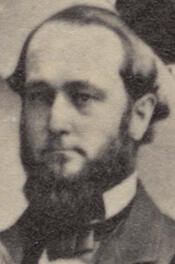
Here you will find contact information for Representative George Helm Yeaman, including email address, phone number, and mailing address.
| Name | George Helm Yeaman |
| Position | Representative |
| State | Kentucky |
| District | 2 |
| Party | Unionist |
| Status | Former Representative |
| Term Start | July 4, 1861 |
| Term End | March 3, 1865 |
| Terms Served | 2 |
| Born | November 1, 1829 |
| Gender | Male |
| Bioguide ID | Y000015 |
About Representative George Helm Yeaman
George Helm Yeaman (November 1, 1829 – February 23, 1908) was an American politician, lawyer, and diplomat who served as a U.S. Representative from Kentucky from 1862 until 1865 and as United States Minister to Denmark from 1865 to 1870. A member of the Unionist Party during the Civil War era, he represented Kentucky in the House of Representatives for two terms and later became a prominent legal scholar and lecturer in New York. His congressional service took place during one of the most consequential periods in American history, and he played a notable role in the passage of the Thirteenth Amendment to the United States Constitution.
Yeaman was born in Hardin County, Kentucky, the son of Lucretia Sneed (Helm) and Steven Minor Yeaman. He completed preparatory studies in his youth and subsequently read law, following the customary path of legal education in the mid-nineteenth century. In 1852 he was admitted to the bar and commenced the practice of law in Owensboro, Daviess County, Kentucky. Establishing himself quickly in his profession, he gained local prominence both as an attorney and as a public official.
Early in his career, Yeaman held judicial and legislative offices at the state and county levels. In 1854 he served as judge of Daviess County, Kentucky, an office that placed him at the center of local legal and civic affairs. A decade later, as the nation moved toward civil war, he entered state politics and served as a member of the Kentucky House of Representatives in 1861. His service in the state legislature coincided with Kentucky’s fraught efforts to maintain a position between Union and Confederate sympathies, and it helped establish his credentials as a Unionist leader in a border state.
Yeaman was elected as a Unionist to the Thirty-seventh Congress to fill the vacancy caused by the resignation of Representative James S. Jackson. He took his seat on December 1, 1862, and was reelected to the Thirty-eighth Congress, serving continuously until March 3, 1865. During his tenure, he represented the interests of his Kentucky constituents while participating in the broader legislative struggles of the Civil War period. A member of the Unionist Party, he contributed to the legislative process during two terms in office and took part in the debates over slavery and national reunification. He provided a critical vote for the passage of the Thirteenth Amendment to the United States Constitution, which abolished slavery through action of the U.S. House of Representatives. Despite this role, Yeaman himself was a slave owner, reflecting the complex and often contradictory attitudes toward slavery in Kentucky and other border states. He was an unsuccessful candidate for reelection in 1864 to the Thirty-ninth Congress, bringing his formal congressional service to a close in early 1865.
Following his departure from Congress, Yeaman was appointed by the federal government as United States Minister (commonly styled Ambassador) to Denmark in 1865. In this diplomatic post he represented American interests in Copenhagen during the immediate post–Civil War years, a period in which the United States was redefining its international position and internal political order. He served in Denmark until 1870, when he resigned his commission. His five-year tenure as minister marked the culmination of his federal public service and extended his influence beyond domestic politics into the realm of foreign affairs.
After leaving diplomatic service, Yeaman settled in New York City, where he continued his legal and intellectual career. He became a lecturer on constitutional law at Columbia College, contributing to the education of a new generation of lawyers and public officials. In addition to his academic work, he served as president of the Medico-Legal Society of New York, an organization devoted to the intersection of law and medicine, reflecting his broader interest in legal reform and professional discourse. These activities solidified his reputation as a learned authority on constitutional and legal questions in the postwar period.
George Helm Yeaman spent his later years in the New York metropolitan area. He died in Jersey City, New Jersey, on February 23, 1908. He was interred in Hillside Cemetery in Madison, New Jersey. His life and career, spanning local judgeship, state legislative service, two terms in the U.S. House of Representatives, and a diplomatic posting in Europe, illustrate the trajectory of a nineteenth-century American public servant shaped by the upheavals of the Civil War era. His historical legacy has also been reflected in popular culture; in the 2012 film “Lincoln,” which dramatizes the struggle to secure passage of the Thirteenth Amendment, Yeaman was portrayed by actor Michael Stuhlbarg.