Representative Gerry E. Sikorski
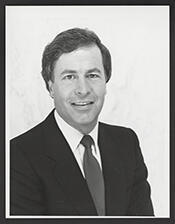
Here you will find contact information for Representative Gerry E. Sikorski, including email address, phone number, and mailing address.
| Name | Gerry E. Sikorski |
| Position | Representative |
| State | Minnesota |
| District | 6 |
| Party | Democratic |
| Status | Former Representative |
| Term Start | January 3, 1983 |
| Term End | January 3, 1993 |
| Terms Served | 5 |
| Born | April 26, 1948 |
| Gender | Male |
| Bioguide ID | S000407 |
About Representative Gerry E. Sikorski
Gerald Edward Sikorski (born April 26, 1948) is an American politician, lobbyist, and lawyer from Minnesota who served as the U.S. Representative for Minnesota’s 6th congressional district for five terms, from 1983 to 1993, as a member of the Democratic-Farmer-Labor Party. A Polish American, he emerged from Minnesota’s DFL tradition to become an influential figure in both state and national politics during a significant period in late twentieth-century American history.
Sikorski pursued his higher education at the University of Minnesota, where he graduated summa cum laude with a Bachelor of Arts degree in 1970. He continued at the University of Minnesota Law School, earning his Juris Doctor in 1973. That same year he was admitted to the Minnesota bar and commenced the practice of law in Stillwater, Minnesota. His early legal career provided the foundation for his subsequent work in public service, combining legal training with a growing interest in legislative affairs and public policy.
Sikorski entered elective office at the state level, serving in the Minnesota Senate from 1977 to 1982. In the Senate he represented his constituents during a period of economic and political change in the state, gaining experience in legislative procedure, committee work, and the development of state policy. His tenure in the Minnesota Legislature helped establish his reputation within the Democratic-Farmer-Labor Party and positioned him for a bid for national office.
Sikorski first ran for Congress in 1978, challenging incumbent Arlen Erdahl, but was unsuccessful in that initial attempt. Following reapportionment after the 1980 census, Erdahl was moved from Minnesota’s 1st congressional district to the 6th district. Sikorski sought a rematch in 1982 and narrowly defeated Erdahl by a margin of 51 percent to 49 percent. He took office in the U.S. House of Representatives on January 3, 1983, beginning a decade of service in Congress. This 1982 contest would remain his closest election; he subsequently won reelection by margins of at least 20 percentage points in 1984, 1986, 1988, and 1990.
During his five terms in the House of Representatives, Sikorski contributed to the legislative process as a member of the Democratic-Farmer-Labor Party and participated actively in the democratic governance of the country. He served as a Whip-at-Large in the House Democratic leadership, a role that involved helping to organize party strategy and secure votes on key legislation. He also served on the Committee on Energy and Commerce and the Committee on the Post Office and Civil Service, where he engaged in oversight and lawmaking on issues ranging from energy policy and interstate commerce to federal employment and postal operations. Throughout his tenure, he represented the interests of his Minnesota constituents while taking part in national debates during a period marked by the Reagan and George H. W. Bush administrations, the end of the Cold War, and shifting domestic priorities.
Sikorski’s congressional career came to an end following the 1992 election. Earlier that year, he was implicated in the House banking scandal when it was revealed that he had 697 overdrafts on the House Bank, which he attributed to sloppy bookkeeping by himself and his wife. The controversy damaged his political standing. In the 1992 general election, he was defeated by Republican television news anchor Rod Grams in a four-way race, receiving 33 percent of the vote. His service in Congress concluded on January 3, 1993, closing a decade-long tenure in the U.S. House.
After leaving Congress, Sikorski continued his professional life in law and public affairs. He became an attorney and lobbyist in Washington, D.C., drawing on his legislative experience, legal training, and knowledge of federal policy and procedure. In this capacity, he has remained engaged with the workings of the federal government, advising clients and participating in the policy process from the private sector while maintaining his longstanding connection to Minnesota and its political tradition.