Representative Gideon Lee
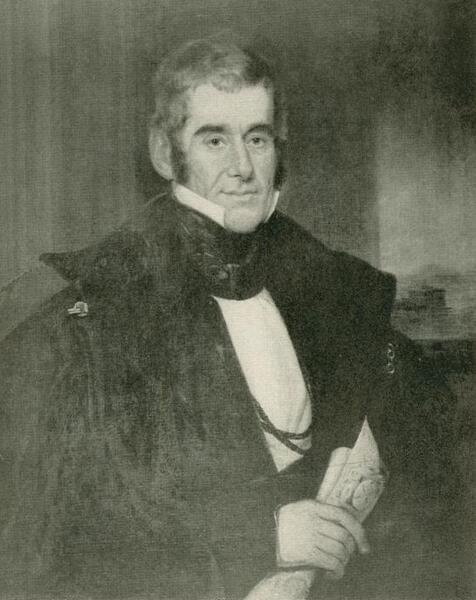
Here you will find contact information for Representative Gideon Lee, including email address, phone number, and mailing address.
| Name | Gideon Lee |
| Position | Representative |
| State | New York |
| District | 3 |
| Party | Jackson |
| Status | Former Representative |
| Term Start | December 7, 1835 |
| Term End | March 3, 1837 |
| Terms Served | 1 |
| Born | April 27, 1778 |
| Gender | Male |
| Bioguide ID | L000193 |
About Representative Gideon Lee
Gideon Lee II (April 27, 1778 – August 21, 1841) was an American politician who served as the 61st Mayor of New York City from 1833 to 1834 and as a United States Representative from New York for one term from 1835 to 1837. He was born in Amherst, Hampshire County, Massachusetts, on April 27, 1778, to Gideon Lee (1747–1811) and Lucy (née Ward) Lee (1746–1817). He attended the common schools of Amherst. Lee was a descendant of an early New England family: the first known ancestor, John “Leigh,” of Burton Street, London, England, born about 1600, emigrated to New England and settled at Agawam (now Ipswich), Essex County, Massachusetts, in 1635. In 1677 John Leigh’s sons agreed to change the spelling of the family name from “Leigh” to “Lee,” and Gideon Lee II belonged to the sixth generation of this family in America.
As a young man, Lee learned the trade of shoemaking and worked as a shoemaker in Worthington, Massachusetts. Seeking broader opportunities in commerce, he moved to New York City and subsequently to Georgia, where he entered the mercantile business. He became associated with the firm later known as “Gideon Lee, Shepard Knapp and Charles M. Leupp,” which was active in the leather and mercantile trade. In 1807 he returned permanently to New York City, where he engaged in the leather business and established himself as a successful businessman in the city’s growing commercial sector.
Lee’s prominence in business and local affairs led to his entry into public service in New York. He served as a member of the New York State Assembly in 1823, participating in state legislative matters at a time of rapid economic and political change. He later served as an alderman of New York City from 1828 to 1830, a position that placed him at the center of municipal governance during a period of expanding urban population and infrastructure. His work as alderman helped to solidify his standing in city politics and prepared him for higher municipal office.
In 1833 Lee was elected Mayor of New York City, becoming the city’s 61st mayor and serving from 1833 to 1834. His mayoralty coincided with an era of intense partisan competition and urban development in New York. Although he completed his term, he declined to be a candidate for reelection in 1834, choosing not to continue in the office beyond his initial year. His tenure as mayor formed a key part of his public career and contributed to his later selection for national office.
Lee was elected as a Jacksonian to the 24th United States Congress to fill the vacancy caused by the resignation of Representative Campbell P. White. Representing New York as a member of the Jackson Party, he served in the U.S. House of Representatives from November 4, 1835, to March 3, 1837. His service in Congress occurred during a significant period in American history marked by the policies of President Andrew Jackson and the evolving party system. In this context, Lee contributed to the legislative process, participated in the democratic governance of the nation, and represented the interests of his New York constituents for one full term in office.
After leaving Congress in March 1837, Lee retired from active political life and moved to the vicinity of Seneca Lake in Geneva, New York. Although largely retired from elective office, he remained engaged in national politics and, in 1840, served as a presidential elector on the Whig ticket. In that capacity he cast his electoral vote for William Henry Harrison for President and John Tyler for Vice President, reflecting his alignment at that time with the Whig Party in the contentious presidential election of 1840.
On April 28, 1823, Lee married Isabella Williamson (1800–1870), the daughter of the Rev. David Williamson, a minister of the Church of Scotland. The couple had at least one child, Gideon Lee III (1824–1894). Their son married Floride Elizabeth Clemson, daughter of Thomas Green Clemson and Anna Maria Calhoun Clemson, the latter being a daughter of U.S. Vice President John C. Calhoun. After the death of his first wife, Gideon Lee III married Ella Frances Lorton (1844–1921), daughter of John S. Lorton. Through these family connections, the Lee family became linked to other prominent American political and social figures of the nineteenth century.
Gideon Lee II died on August 21, 1841, in Geneva, New York. He was interred in Washington Street Cemetery in Geneva. His career as a tradesman, merchant, municipal official, mayor of New York City, and member of the United States House of Representatives illustrates the trajectory of an early nineteenth-century American who rose from modest beginnings to positions of influence in both local and national public life.