Senator Gideon Tomlinson
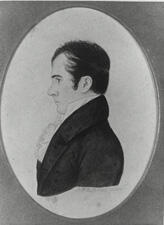
Here you will find contact information for Senator Gideon Tomlinson, including email address, phone number, and mailing address.
| Name | Gideon Tomlinson |
| Position | Senator |
| State | Connecticut |
| Party | Anti-Jacksonian |
| Status | Former Representative |
| Term Start | December 6, 1819 |
| Term End | March 3, 1837 |
| Terms Served | 5 |
| Born | December 31, 1780 |
| Gender | Male |
| Bioguide ID | T000300 |
About Senator Gideon Tomlinson
Gideon Tomlinson (December 31, 1780 – October 8, 1854) was a United States Senator, United States Representative, and the 25th Governor of the State of Connecticut. He served as a Senator from Connecticut in the United States Congress from 1819 to 1837, during which, as a member of the Anti-Jacksonian Party, he contributed to the legislative process over five terms in office. His service in Congress occurred during a significant period in American history, and as a member of the Senate he participated in the democratic process and represented the interests of his constituents.
Tomlinson was born in Stratford, Connecticut, on December 31, 1780. He completed preparatory studies and graduated from Yale College in 1802. After graduation he went to Virginia for a year, where he worked as a private tutor and pursued the study of law. Upon his return to Fairfield, Connecticut, he continued his legal studies and was admitted to the bar in 1807, beginning the practice of law. That same year he married Sarah Bradley. He received a Master of Arts degree from Yale in 1808. The couple’s only child, Jabez Huntington Tomlinson, was born in 1818 but died at the age of nineteen in 1838. Sarah Bradley Tomlinson died in 1842. In 1846, Tomlinson married Lydia Ann Wells Wright, the widow of William Wright of Bridgeport, Connecticut.
Tomlinson entered public life in state politics in 1817, when he was elected clerk of the Connecticut House of Representatives. He was reelected in 1818 and, in that year, also served as speaker of the House. In 1818 he was a delegate to the Connecticut State Constitutional Convention, which framed a new constitution for the state and ended the colonial charter system. These early roles established his reputation as an able legislator and helped launch his subsequent national career.
Elected as a Representative to the Sixteenth and the three succeeding United States Congresses, Tomlinson served in the U.S. House of Representatives from March 4, 1819, to March 3, 1827. During his tenure in the House he was aligned with the emerging Anti-Jacksonian opposition and took part in debates over commerce, internal improvements, and the evolving national economy in the post–War of 1812 era. In the Nineteenth Congress he served as chairman of the Committee on Commerce, a position that placed him at the center of legislative consideration of trade and maritime policy during a period of expanding American commercial activity.
In 1827 Tomlinson secured the gubernatorial nomination in Connecticut and was elected the state’s eighth governor, later recognized as its 25th governor under the modern numbering of officeholders. He was reelected to the governorship in 1828, 1829, and 1830. His administration was marked by significant reform initiatives. In 1827 prison reform was advanced with the opening of a more modern and “civilized” state penitentiary, reflecting contemporary movements toward more humane penal systems. Tomlinson’s government also advocated improvements in education and increased fiscal support for the public school system, seeking to strengthen common schooling and expand educational opportunities. He resigned the governorship on March 2, 1831, to accept election to the United States Senate.
Tomlinson served in the United States Senate from March 4, 1831, to March 3, 1837. In the Senate he was identified with the Anti-Jacksonian Party, part of the broader coalition that would soon coalesce into the Whig Party, and he participated in major national debates over President Andrew Jackson’s policies, including issues such as the Bank of the United States and federal–state relations. During the Twenty-third and Twenty-fourth Congresses he served as chairman of the Committee on Pensions, overseeing legislation related to military pensions and the claims of veterans and their families. His years in the Senate extended his influence on national policy during a transformative period in the early republic.
After leaving the Senate in 1837, Tomlinson turned to business and educational pursuits. That year he became the first president of the newly chartered Housatonic Railroad Company, reflecting his interest in internal improvements and the growing importance of rail transportation in New England’s economic development. He also served as a trustee of Trinity College in Hartford, contributing to the governance of one of Connecticut’s leading institutions of higher education. In his later years he retired to private life, residing in Fairfield.
Gideon Tomlinson died in Fairfield, Connecticut, on October 8, 1854. He was interred in the Old Congregational Cemetery in Stratford, Connecticut, returning in death to the town of his birth. His name has been commemorated in several Connecticut landmarks, including the Tomlinson Bridge in the Fair Haven section of New Haven, built between 1796 and 1798 and later associated with his family name, and Tomlinson Middle School in Fairfield, which honors his long record of public service to the state and nation.