Senator Gilbert Monell Hitchcock
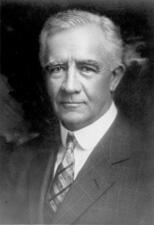
Here you will find contact information for Senator Gilbert Monell Hitchcock, including email address, phone number, and mailing address.
| Name | Gilbert Monell Hitchcock |
| Position | Senator |
| State | Nebraska |
| Party | Democratic |
| Status | Former Representative |
| Term Start | November 9, 1903 |
| Term End | March 3, 1923 |
| Terms Served | 5 |
| Born | September 18, 1859 |
| Gender | Male |
| Bioguide ID | H000645 |
About Senator Gilbert Monell Hitchcock
Gilbert Monell Hitchcock (September 18, 1859 – February 3, 1934) was an American congressman and United States Senator from Nebraska, and the founder of the Omaha World-Herald newspaper. A member of the Democratic Party, he served in the United States Congress during a significant period in American history and contributed to the legislative process over multiple terms in both the House of Representatives and the Senate, representing the interests of his Nebraska constituents.
Hitchcock was born in Omaha, Nebraska, the son of Phineas Warren Hitchcock, a Republican who served as a United States Senator from Nebraska. He attended public schools in Omaha and later studied at a gymnasium in Baden-Baden, Germany, gaining early exposure to European education and culture. He then enrolled in the law department of the University of Michigan at Ann Arbor, from which he graduated in 1881. While at Michigan he was admitted to the Zeta Psi fraternity. After completing his legal studies, he was admitted to the bar and commenced the practice of law in Omaha in 1882.
Hitchcock practiced law until 1885, when he turned to journalism and publishing, a field in which he would leave a lasting mark on Nebraska. That year he established and edited the Omaha Evening World. In 1889 he purchased the Nebraska Morning Herald and consolidated the two papers into morning and evening editions of a single publication, the Omaha World-Herald, which became one of the state’s leading newspapers. His family had traditionally been Republicans, but Hitchcock broke with that tradition and became a Democrat, influenced in part by agricultural issues affecting Nebraskan farmers and by the leadership and policies of fellow Nebraskan William Jennings Bryan. On August 30, 1883, he married Jessie Crounse, daughter of Nebraska Supreme Court justice and future governor Lorenzo Crounse. His first wife died on May 8, 1925, and on June 1, 1927, he married Martha Harris of Memphis, Tennessee. The Omaha World-Herald later passed into the leadership of his son-in-law, Henry Doorly, the husband of Hitchcock’s daughter Margaret.
Hitchcock first sought federal office as a Democrat in 1898, when he ran unsuccessfully for the United States House of Representatives. He ran again four years later and was elected, serving in the House from March 4, 1903, to March 3, 1905. Although he lost his bid for reelection in 1904, he returned to the House after winning again in 1906, and he served two additional terms from March 4, 1907, to March 3, 1911. Over these three terms in the House, he participated actively in the legislative process during a period of rapid economic and political change in the United States. In total, combining his House and later Senate service, Hitchcock contributed to the work of Congress across five terms in office.
In 1910 Hitchcock declined to seek reelection to the House and instead became a candidate for the United States Senate. He was elected to the Senate by the Nebraska legislature on January 18, 1911, becoming the first Democrat ever elected or to serve as a Senator from Nebraska. He was reelected in 1916, this time by popular vote, making him the first person popularly elected to the Senate from Nebraska after the ratification of the Seventeenth Amendment. Hitchcock served in the Senate from March 4, 1911, to March 3, 1923. During his Senate career he held several important committee chairmanships: he was chairman of the Committee on the Philippines from 1913 to 1918, chairman of the Committee on Foreign Relations from 1918 to 1919, and chairman of the Committee on Forest Reservations and Game Protection from 1919 to 1921. As chairman of the Foreign Relations Committee in the aftermath of World War I, he emerged as a leading advocate of President Woodrow Wilson’s foreign policy, particularly the Treaty of Versailles and the proposed League of Nations, serving as Wilson’s floor leader in the Senate fight over ratification. His Senate tenure coincided with the Progressive Era and the First World War, and he played a prominent role in debates over America’s international responsibilities.
Hitchcock’s bid for a third Senate term ended in defeat when he lost to Republican Robert B. Howell in the 1922 election. After leaving the Senate in March 1923, he returned to Omaha and resumed his work in the newspaper business, remaining an influential figure in Nebraska journalism and Democratic politics. In 1930 he attempted a political comeback by running again for the Senate, but he was decisively defeated by the incumbent Republican senator George W. Norris, a leading progressive. Following this loss, Hitchcock gradually withdrew from active business affairs, retiring in 1933.
In his final years, Hitchcock moved to Washington, D.C., where he lived in retirement until his death on February 3, 1934. He was interred in Forest Lawn Memorial Park in Omaha, Nebraska. His legacy in his home state was commemorated through the naming of Gilbert M. Hitchcock Elementary School and Hitchcock Park in Omaha. Collections of his papers are preserved at the Library of Congress and the Nebraska State Historical Society, documenting his dual careers in journalism and public service. In recognition of his contributions to Nebraska’s political and civic life, Gilbert Monell Hitchcock was inducted into the Nebraska Hall of Fame in 1984.