Representative Gilbert Brown Patterson
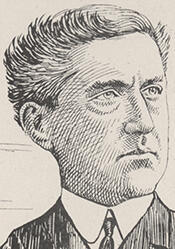
Here you will find contact information for Representative Gilbert Brown Patterson, including email address, phone number, and mailing address.
| Name | Gilbert Brown Patterson |
| Position | Representative |
| State | North Carolina |
| District | 6 |
| Party | Democratic |
| Status | Former Representative |
| Term Start | November 9, 1903 |
| Term End | March 3, 1907 |
| Terms Served | 2 |
| Born | May 29, 1863 |
| Gender | Male |
| Bioguide ID | P000117 |
About Representative Gilbert Brown Patterson
Gilbert Brown Patterson (May 29, 1863 – January 26, 1922) was an American politician and a member of the United States House of Representatives from North Carolina. A Democrat, he represented his state in Congress during the early twentieth century, serving from 1903 to 1907 and contributing to the legislative process during two consecutive terms in office. His congressional service took place during a significant period in American history, marked by the nation’s transition into the Progressive Era and the aftermath of the Spanish–American War.
Patterson was born on May 29, 1863, in North Carolina, during the closing years of the Civil War. He came of age in the Reconstruction and post-Reconstruction South, a context that shaped the political and social environment in which he would later build his career. Growing up in a region undergoing economic and political realignment, he was exposed early to the issues of agricultural recovery, race relations, and the reassertion of Democratic control in Southern politics, all of which would inform his later public service.
As a young man, Patterson pursued his education in North Carolina, attending the common schools available in his community. Like many Southern politicians of his generation, his formal schooling was complemented by self-education and practical experience in business and public affairs. This combination of local schooling and independent study prepared him for professional life and gave him familiarity with the concerns of rural constituents, particularly farmers and small landowners.
Before entering national politics, Patterson established himself in North Carolina’s civic and political life. He became active in the Democratic Party at the local and state levels, aligning with the dominant political organization in North Carolina during the late nineteenth and early twentieth centuries. Through party work, community involvement, and engagement with agricultural and commercial interests, he developed a reputation that eventually led to his selection as a candidate for Congress. His background in local affairs and his understanding of regional economic issues helped him build a base of support among voters.
Patterson was elected as a Democrat to the United States House of Representatives and served from 1903 to 1907, encompassing the Fifty-eighth and Fifty-ninth Congresses. As a member of the House of Representatives, he participated in the democratic process and represented the interests of his North Carolina constituents at the federal level. During his two terms, he was involved in legislative deliberations at a time when Congress addressed questions of economic development, regulation of commerce, and the evolving role of the federal government in national life. While specific committee assignments and sponsored measures are less extensively documented, his service reflected the priorities of Southern Democrats of his era, including attention to agricultural concerns and states’ rights within the framework of national policy.
Patterson’s tenure in Congress coincided with a period of significant change in American politics, as reform movements, industrial expansion, and debates over tariffs, transportation, and banking shaped the national agenda. Within this context, he contributed to the legislative process and worked to ensure that the perspectives of his North Carolina district were heard in Washington. After completing his second term in 1907, he left the House of Representatives, concluding his direct role in national legislative affairs.
Following his departure from Congress, Patterson returned to private life in North Carolina. He remained identified with the Democratic Party and with the civic life of his community, drawing on his experience as a former member of the House of Representatives. In his later years, he continued to be regarded as a figure of public standing in the state, representative of a generation of Southern Democrats who had guided their constituencies through the turn of the century.
Gilbert Brown Patterson died on January 26, 1922. His career as a two-term Democratic Representative from North Carolina placed him among the early twentieth-century lawmakers who helped shape the federal response to the social and economic issues of their time, and his service in Congress stands as the central achievement of his public life.