Senator Gilbert Ashville Pierce
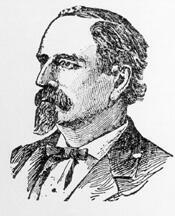
Here you will find contact information for Senator Gilbert Ashville Pierce, including email address, phone number, and mailing address.
| Name | Gilbert Ashville Pierce |
| Position | Senator |
| State | North Dakota |
| Party | Republican |
| Status | Former Representative |
| Term Start | December 2, 1889 |
| Term End | March 3, 1891 |
| Terms Served | 1 |
| Born | January 11, 1839 |
| Gender | Male |
| Bioguide ID | P000334 |
About Senator Gilbert Ashville Pierce
Gilbert Ashville Pierce (January 11, 1839 – February 15, 1901) was an American author, journalist, playwright, legislator, territorial governor, and United States senator who played a notable role in the political development of the Dakota Territory and the early statehood period of North Dakota. He was born at East Otto, Cattaraugus County, New York, and moved with his parents in childhood to Indiana, where he was raised. Pierce County, North Dakota, was later named in his honor, reflecting his prominence in the region’s political history.
Pierce pursued higher education at the University of Chicago, where he studied writing, literature, and law, training that underpinned his later work as a journalist and author as well as his legal and legislative activities. At the outbreak of the Civil War, he enlisted in the Ninth Indiana Volunteers in 1861 as a second lieutenant. Over the course of his military service, he rose in rank and responsibility, and by 1864 he was serving as a colonel and inspector general in the War Department, gaining administrative and organizational experience that would inform his subsequent public career.
Following the war, Pierce entered state and federal public service. In 1868, he became a member of the Indiana House of Representatives, marking his formal entry into elective office. That same year he began service as journal clerk of the United States Senate, a position he held from 1868 to 1871. In this role he became closely acquainted with legislative procedure and the workings of Congress. After resigning his clerkship, Pierce turned more fully to journalism and literature. He edited the Republican Chicago newspaper the Inter Ocean and wrote a number of plays, novels, and sketches, establishing a parallel career as an author and political commentator. In 1877 he became managing editor of the Inter Ocean before later assuming a similar editorial position with the Chicago News.
Pierce’s growing reputation as a Republican journalist and political figure led to his appointment as the eighth Governor of Dakota Territory. On June 25, 1884, President Chester A. Arthur appointed him to the post. Because of corruption associated with his predecessor, his appointment was initially met with suspicion among residents of the territory. In the midst of controversy over the relocation of the territorial capital from Yankton to Bismarck, Pierce chose to be sworn in at the former capital city of Yankton on July 25, 1884, before formally assuming his duties at the new capital in Bismarck. Over time, he gained respect in the territory as he navigated contentious issues, including the location of the capital and the question of statehood.
As governor, Pierce exercised an active veto power and shaped the institutional development of the territory. He vetoed a bill to move the capital from Bismarck to Pierre, thereby maintaining Bismarck’s status as the seat of government. He and the territorial legislature cooperated in establishing the School of Mines at Rapid City, an important step in the development of higher education and technical training in the region. Pierce also vetoed a bill to grant equal suffrage to women, reflecting the contested nature of voting rights in the late nineteenth century. A strong proponent of statehood, he quickly signed into law a bill authorizing a state constitutional convention for southern Dakota Territory, advancing the process that would eventually lead to the division of the territory and the admission of North and South Dakota as states. In August 1886, he tendered his resignation as governor but remained in office until February 5, 1887. After leaving office, he stayed in Bismarck for a time, serving as a correspondent for newspapers based in St. Paul, Minnesota.
With the admission of North Dakota to the Union in 1889, Pierce’s long association with the region culminated in federal office. A member of the Republican Party, he was elected as a United States senator from North Dakota and served one term in the United States Congress from 1889 to 1891. During this period, he participated in the legislative process at a formative time in the state’s history, representing the interests of his constituents in the Senate and contributing to national debates during a significant era of American political and economic development.
After his Senate term ended in 1891, Pierce returned to journalism and business. That year he purchased a half interest in the Minneapolis Tribune, expanding his influence in Midwestern newspaper circles. He later sold this interest and became business manager of the Chicago Post and Times-Herald, continuing his long engagement with the press. In 1893, President Benjamin Harrison appointed him United States Minister to Portugal, a diplomatic post he held only briefly; failing health forced him to resign after a few months of service abroad.
In his later years, Pierce’s declining health led him to spend time in various parts of North America, including British Columbia, Washington, and California. Despite these efforts to recuperate, his condition did not improve substantially. He died at the Lexington Hotel in Chicago on February 15, 1901, at the age of 62. His multifaceted career—as soldier, legislator, editor, author, territorial governor, and United States senator—left a lasting imprint on both the political evolution of the Dakotas and the broader landscape of late nineteenth-century American public life.