Representative G. V. (Sonny) Montgomery
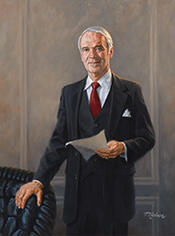
Here you will find contact information for Representative G. V. (Sonny) Montgomery, including email address, phone number, and mailing address.
| Name | G. V. (Sonny) Montgomery |
| Position | Representative |
| State | Mississippi |
| District | 3 |
| Party | Democratic |
| Status | Former Representative |
| Term Start | January 10, 1967 |
| Term End | January 3, 1997 |
| Terms Served | 15 |
| Born | August 5, 1920 |
| Gender | Male |
| Bioguide ID | M000865 |
About Representative G. V. (Sonny) Montgomery
Gillespie V. “Sonny” Montgomery (August 5, 1920 – May 12, 2006) was an American soldier and Democratic politician from Mississippi who served in the Mississippi Senate and as a Representative from Mississippi in the United States Congress from 1967 to 1997. Over the course of 15 consecutive terms in the U.S. House of Representatives, he became one of the most influential voices on military and veterans’ affairs, while also rising to the rank of major general in the Mississippi National Guard. His long tenure in Congress spanned a significant period in American history, during which he participated in the legislative process and represented the interests of his Mississippi constituents.
Montgomery was born in Meridian, Mississippi, and maintained close ties to his hometown throughout his life. He attended Mississippi State University, where he was active in campus leadership and served as Student Association President for the 1942–43 school year. His early adulthood was shaped by World War II, and he left college to enter military service. These formative experiences—both in higher education and in uniform—later informed his conviction that the nation owed robust educational and support benefits to those who served in the armed forces.
During World War II, Montgomery served in the United States Army, beginning a military career that would continue for decades. After the war, he remained active in the Mississippi National Guard, ultimately attaining the rank of major general. His dual identity as a citizen-soldier and public official became a defining feature of his career. His service in uniform during a global conflict, and later in the Guard, gave him firsthand insight into the needs of service members and veterans, and he carried that perspective into his legislative work.
Montgomery entered elective office in Mississippi as a member of the Mississippi Senate, where he served before seeking national office. In 1966 he was elected to the U.S. House of Representatives as a Democrat from Mississippi, taking his seat in January 1967. He would hold that seat for 15 terms, serving until his retirement in January 1997. As a member of the House of Representatives, Montgomery participated actively in the democratic process, working on legislation that affected both his home state and the nation. His congressional service coincided with the Vietnam War, the civil rights era, the Watergate scandal, the end of the Cold War, and the first Gulf War, placing him at the center of many of the major political debates of the late twentieth century.
Montgomery became best known in Congress for his work on military and veterans’ policy. He was the author and chief architect of the modern G.I. Bill that bears his name, the Montgomery GI Bill. In 1981, concerned by declining recruitment and educational levels among new volunteers—nearly half of whom lacked high school diplomas and basic skills—he led the fight for passage of a new G.I. Bill. As a World War II veteran, he believed the country should provide educational benefits to its service members and that the combination of military service and a college degree would make veterans valuable assets to the nation. The Montgomery GI Bill provided money for college and other educational opportunities to members of the armed forces, revitalizing recruitment and significantly improving the quality and readiness of the all-volunteer force. He was also a lead sponsor in establishing the Department of Veterans Affairs as a cabinet-level department, further cementing his reputation as a champion of veterans.
As chairman of the House Veterans’ Affairs Committee, Montgomery sometimes took positions that drew controversy. He led opposition to the Kerry–Daschle bill (Agent Orange Disabilities Act of 1987, S. 1787), which would have required the Department of Veterans Affairs to compensate veterans suffering from non-Hodgkin’s lymphoma and lung cancer as presumed service-connected diseases related to Agent Orange exposure. Montgomery argued that further studies were needed to prove a connection between various diseases and Agent Orange before the government should be held liable for disability benefits, despite several studies published in the Journal of the American Medical Association by the National Cancer Institute and the VA, as well as research by the New Jersey Agent Orange Commission. Subsequent scientific work strengthened the link between Agent Orange and illnesses among Vietnam veterans and birth defects in their children. In 1991, Montgomery stood behind President George H. W. Bush at the signing of the Agent Orange Act, having opposed a similar bill the previous year; after years of resistance to Agent Orange disability claims, he then appeared as a public supporter of affected veterans. In the same general period, he authored the Montgomery Amendment to the National Defense Authorization Act for Fiscal Year 1987, which limited the authority of state governors to withhold National Guard forces from federal training or deployment, effectively strengthening federal control over the National Guard by prohibiting governors from blocking overseas training missions.
Montgomery’s voting record and public statements reflected his independent streak within the Democratic Party. During the aftermath of the Watergate scandal, he was one of only three Representatives—along with Earl Landgrebe and Otto Passman—who voted to reject the House Judiciary Committee’s report on the scandal following President Richard Nixon’s resignation; 412 members voted in favor of the report. During the final stages of the Vietnam War, he delivered a notable speech on the House floor in April 1975 opposing additional foreign aid to South Vietnam, declaring that “The South Vietnamese can blame only themselves for their present situation.” On September 13, 1988, he became the first member of Congress to lead the U.S. House of Representatives in reciting the Pledge of Allegiance as a permanent part of its daily and morning business operations, an action that underscored his emphasis on patriotism and ceremonial observances.
Montgomery remained active in national Democratic politics even as he often worked closely with Republican administrations on defense and veterans’ issues. He served as a delegate to the Democratic National Convention from Mississippi in 1996, near the end of his congressional career. His long-standing personal and professional relationships crossed party lines; he was known to have played paddleball with George H. W. Bush before Bush became president. On November 10, 2005, President George W. Bush awarded him the Presidential Medal of Freedom, the nation’s highest civilian honor, in recognition of his decades of service to veterans, the military, and the country.
After leaving Congress in 1997, Montgomery continued to be honored in Mississippi and nationally. A statue of him stands on the campus of Mississippi State University, where he once served as Student Association President, and a bust of him is located in the university’s library, with a duplicate bust displayed at the Mississippi Armed Forces Museum at Camp Shelby alongside his personal effects from World War II and his National Guard service. Numerous public facilities and projects were named in his honor, including the VA Hospital in Jackson, Mississippi; the G. V. Montgomery Lock on the Tennessee–Tombigbee Waterway; the G. V. “Sonny” Montgomery Naval Reserve Center at Naval Air Station Meridian in Meridian, Mississippi; the G. V. Montgomery Airport in Forest, Mississippi; and a Mississippi Air National Guard C-17 Globemaster III named “The Spirit of G. V. ‘Sonny’ Montgomery,” making him the third person in the United States to have a military fleet aircraft named in his honor. Mississippi State University established the G. V. “Sonny” Montgomery Center for America’s Veterans in Starkville and the G. V. “Sonny” Montgomery Advisement and Career Services Center at its Meridian College Park campus. In Washington, D.C., the Department of Veterans Affairs named the G. V. “Sonny” Montgomery Conference and Special Events Room at its central office building in his honor, and the G. V. “Sonny” Montgomery National Guard Complex in Meridian, Mississippi, further commemorates his legacy.
Gillespie V. “Sonny” Montgomery died on May 12, 2006, in Meridian, Mississippi. The day before his death, Congressman Gene Taylor introduced an amendment to a House Defense Appropriations Bill to rename it the Sonny Montgomery National Defense Authorization Act for Fiscal Year 2007, a final legislative tribute to his influence on defense policy. Following his death, funeral services were conducted by James F. Webb Funeral Home in Meridian. President George W. Bush ordered U.S. flags flown at half-staff, and the U.S. House of Representatives canceled non-suspension votes on the day of his funeral as a mark of respect. Montgomery was buried in Magnolia Cemetery in Meridian, Mississippi, closing the life of a soldier-legislator whose career left a lasting imprint on veterans’ benefits, the National Guard, and the institutions of his home state.