Senator Gladys Pyle
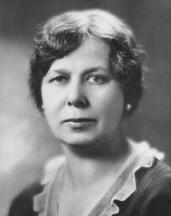
Here you will find contact information for Senator Gladys Pyle, including email address, phone number, and mailing address.
| Name | Gladys Pyle |
| Position | Senator |
| State | South Dakota |
| Party | Republican |
| Status | Former Representative |
| Term Start | January 1, 1938 |
| Term End | January 3, 1939 |
| Terms Served | 1 |
| Born | October 4, 1890 |
| Gender | Female |
| Bioguide ID | P000581 |
About Senator Gladys Pyle
Gladys Shields Pyle (October 4, 1890 – March 14, 1989) was an American educator, suffrage advocate, insurance executive, and record‑setting Republican politician from South Dakota. Born in Huron, South Dakota, she was the youngest of four children of John L. Pyle, a lawyer who served as Attorney General of South Dakota, and Mamie Shields Pyle, a leading suffragist in the state. The family lived in a house in Huron that John built in 1894, and they remained there after his death from typhoid fever in 1902. Both parents were instrumental in the establishment of Huron College, and the Pyle home became an early center of civic and political activity, particularly around women’s rights.
Pyle attended Huron College, where she and her sisters were active in debating, and she graduated in 1911. She then moved to Chicago, Illinois, for further study at the American Conservatory of Music and the University of Chicago. Returning to South Dakota, she embarked on a career in education from 1912 to 1920. She taught Latin and civics for two years in Huron before becoming principal of the public schools in Wessington, South Dakota. During this period, she, her mother, and her sisters were deeply involved in the women’s suffrage movement. The Pyle home in Huron frequently hosted meetings of the local League of Women Voters chapter, and Gladys became a lecturer for the League, traveling to Indiana, Iowa, Nebraska, Kansas, and Ohio to deliver speeches and presentations in support of women’s political participation.
Pyle’s formal political career began in the early 1920s. In 1922, after failing to secure the Republican nomination for a seat in the South Dakota House of Representatives from Beadle County, she ran in the Independent ticket primary. Though she initially appeared to lose, she successfully contested the result and went on to be the leading vote‑getter for the three at‑large House seats in the general election, winning on the Independent ticket alongside two Republicans. In 1923 she became the first woman member of the South Dakota House of Representatives and was reelected in 1924, serving from 1923 to 1927. During this time she also served as Deputy Secretary of State of South Dakota. In 1926, she was the successful Republican nominee for Secretary of State of South Dakota and was elected to that constitutional executive office; she was reelected in 1928, receiving more votes than had ever been cast for any candidate for any office in the state. Serving as Secretary of State from 1927 to 1931, she became the first woman nationally to be elected both to a state constitutional legislative office (in 1922) and to a state constitutional executive office (in 1926), and the first to do so in her own right.
In 1930, Pyle sought the Republican nomination for governor of South Dakota. She won the primary with nearly one‑third of the vote, but because no candidate reached the 35 percent threshold required by state law, the nomination was decided at the Republican state convention. Over a series of ballots, Pyle led on the fourth and from the sixth through the eleventh ballots, generally increasing her total, but on the twelfth ballot the convention chairman suspended the roll call. After more than three hours of maneuvering, three male candidates shifted their support to Warren E. Green, who had finished last in the primary with about 7.5 percent of the vote, and he secured the nomination. Pyle conceded without public rancor, though the episode was widely perceived in South Dakota as driven by opposition to her candidacy on the basis of sex. She delayed endorsing Green until after the filing period for independent candidates had closed and later suggested she would not again seek partisan office. From 1931 to 1933 she served as executive officer for the State Securities Commission. Concurrently, she built a career in the life insurance business as an agent for firms including New York Life Insurance Company and Northwestern Mutual Life Insurance, was elected president of the Huron Life Underwriters Association, and was active in the National Association of Life Underwriters.
Despite her earlier pledge to avoid further partisan contests, Pyle returned to electoral politics in 1938 under unusual circumstances. United States Senator Peter Norbeck of South Dakota died in December 1936, and Governor Tom Berry appointed Democrat Herbert E. Hitchcock to fill the vacancy. Hitchcock later lost the Democratic primary for the full term, which was won in the general election by Republican Chan Gurney. Under South Dakota law, Hitchcock was required to step down after the November 8, 1938, election, before Gurney’s term would begin on January 3, 1939, creating a two‑month vacancy. State law also barred Gurney from appearing twice on the same ballot, preventing him from running in the special election to fill the short term. Concerned that President Franklin D. Roosevelt might call a special session of Congress before January, South Dakota Republicans pressed for a special election and turned to Pyle as their candidate, relying on her popularity and name recognition. On November 8, 1938, she was elected as a Republican to the United States Senate from South Dakota to fill the vacancy, winning over 58 percent of the vote and running about 6 percentage points ahead of the next highest statewide election winner. In that contest she received roughly 8,500 more votes than the second‑highest vote‑getter for any statewide office in South Dakota, and she set at least a dozen national electoral records, including becoming the first woman in the nation to enter the U.S. Senate through election and the first to do so in her own right, at age 48.
Pyle’s service in Congress, formally spanning from November 9, 1938, to January 3, 1939, occurred during a significant period in American history, as the nation continued to grapple with the Great Depression and the evolving New Deal. Although she was elected to the United States Senate and was paid for her service with authority to hire staff, Congress was not in session during her short term, and she was never sworn in as a senator. Nonetheless, as a member‑elect of the Senate from South Dakota and a Republican, she participated in the democratic process by representing the interests of her constituents in informal ways. She traveled to Washington, D.C., at her own expense, accompanied by her mother and one aide, and shared an office with Thomas M. Storke, an appointed interim senator from California. During this period she lobbied federal agencies, including the Works Progress Administration and the Bureau of Indian Affairs, seeking approval of projects that would benefit South Dakota. She campaigned against aspects of the New Deal, arguing that the program had not gone far enough to assist the people of her state, and her brief term from 1937 to 1939 marked her as a pioneering woman in the upper chamber of Congress.
After her Senate service ended on January 3, 1939, Pyle returned to South Dakota and resumed her work in the insurance business in Huron. She remained active in public affairs and in 1940 became the first woman to deliver a presidential nominating speech at a national convention, speaking on behalf of Republican candidate Harland J. Bushfield. Beyond her professional and political roles, she served as guardian for two orphaned boys and managed her family’s 640‑acre farm near Huron. From 1943 to 1957 she was a member of the South Dakota Board of Charities and Corrections, continuing her long record of public service at the state level. In her later years she remained a respected figure in South Dakota politics and a symbol of the early generation of women who translated the achievement of suffrage into sustained electoral success.
In 1988, Pyle became the oldest living current or former United States senator. She died in Huron, South Dakota, on March 14, 1989, at the age of 98, and her ashes were interred at Riverside Cemetery in Huron. The family home in which she had lived from 1894 until 1985, known as the Pyle House, was placed on the National Register of Historic Places and converted into a museum. Before her death she recorded her recollections of the house in preparation for its preservation. Largely unchanged from the time it was built, and retaining many original furnishings and interior decorations, the Pyle House stands as a tangible reminder of her life and of the broader history of women’s political advancement in South Dakota and the United States.