Representative Gladys Noon Spellman
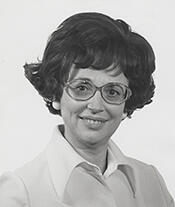
Here you will find contact information for Representative Gladys Noon Spellman, including email address, phone number, and mailing address.
| Name | Gladys Noon Spellman |
| Position | Representative |
| State | Maryland |
| District | 5 |
| Party | Democratic |
| Status | Former Representative |
| Term Start | January 14, 1975 |
| Term End | January 3, 1983 |
| Terms Served | 4 |
| Born | March 1, 1918 |
| Gender | Female |
| Bioguide ID | S000716 |
About Representative Gladys Noon Spellman
Gladys Noon Spellman (born Gladys Blossom Noon; March 2, 1918 – June 19, 1988) was an American educator and Democratic politician who represented Maryland’s 5th congressional district in the United States House of Representatives from January 3, 1975, to February 24, 1981. Her service in Congress spanned three terms and occurred during a significant period in American history, and her seat was declared vacant after she fell into a coma in 1980. Over the course of a long public career, she rose from local civic activism in Prince George’s County, Maryland, to national prominence as a member of Congress and a leader in county government.
Spellman was born Gladys Blossom Noon in New York City on March 2, 1918, into a Jewish family. She moved to Washington, D.C., where she attended Eastern High School and Roosevelt High School. She later pursued higher education at George Washington University, and she also completed graduate studies within the United States Department of Agriculture. This combination of local schooling in the nation’s capital and advanced study in public and administrative fields helped prepare her for a career that would bridge education, local governance, and federal legislative service.
Before entering politics, Spellman began her professional life as an elementary school teacher in the public schools of Prince George’s County, Maryland. After World War II, she and her family were part of the wave of young suburban residents who moved from Washington and elsewhere into Prince George’s County, and that growing suburban constituency would remain the core of her political base. During the 1950s and 1960s she taught at Happy Acres Elementary School in Cheverly, Maryland—later renamed Gladys Noon Spellman Elementary School in 1991 in her honor—and became president of its Parent-Teacher Association. At the same time, she was active as a civic association leader, a community activist, and a young mother and housewife in Cheverly. She also served as chairwoman of the National Mental Health Study Center, reflecting an early interest in public health and social issues. Through these roles she emerged as a prominent figure in the local reform movement that challenged and ultimately displaced the long-entrenched Democratic organization that had dominated Prince George’s County politics for decades.
Spellman’s formal political career began with her election to the Prince George’s County Board of Commissioners in 1962, running on a reform slate that sought to modernize and democratize county government. She served on the Board of Commissioners from 1962 to 1970, including two years as chairman, a position that effectively made her the head of the county government. She was a strong advocate for a home rule charter form of government for Prince George’s County, and after the adoption of a new charter and the establishment of the County Council, she was elected councilwoman at large, serving from 1971 to 1974. Her growing reputation extended beyond the county: in 1967 President Lyndon B. Johnson appointed her to the Advisory Commission on Intergovernmental Relations, where she participated in national discussions on the relationship between federal, state, and local governments. In 1972 she became the first woman elected president of the National Association of Counties, receiving what was then considered the highest honor that could be bestowed by county officials nationwide.
In 1974, Spellman sought national office and easily won the Democratic primary nomination for Maryland’s 5th congressional district. In the general election she defeated Republican candidate John B. Burcham Jr., beginning her tenure in the U.S. House of Representatives on January 3, 1975. As a member of Congress, she represented a district in which almost 40 percent of the workforce was employed by the federal government, the highest percentage of any congressional district in the nation. This shaped her legislative priorities and committee assignments. She served on the Committee on Banking, Currency and Housing; the Committee on Post Office and Civil Service, where she chaired the Subcommittee on Compensation and Employee Benefits; and the Democratic Steering and Policy Committee. A member of the Democratic Party, she played an active role in the legislative process during her three terms, focusing particularly on issues affecting federal employees, local government finance, and urban and suburban development.
Spellman’s voting record reflected both her concern for public employees and her interest in national economic stability. In 1975 she supported a proposal authorizing $7 billion in federal loan guarantees to assist financially troubled New York City, viewing the measure as necessary to avert a broader fiscal crisis. In 1977 she favored legislation to establish a bank to make loans to consumer-owned cooperatives and supported the extension of the federal revenue-sharing program, which provided funds directly to state and local governments. She consistently resisted efforts to impose restrictions on the hiring or promotion of federal employees and opposed President Jimmy Carter’s 1978 plan to reform the civil service system, believing that aspects of the proposal would unfairly disadvantage federal workers, many of whom were her constituents. Her work in Congress thus closely aligned with the interests of the large federal workforce in her district and with her long-standing commitment to effective intergovernmental relations.
On October 31, 1980, while judging a Halloween costume contest at the Laurel Mall in Laurel, Maryland, Spellman suffered an incapacitating heart attack, during which her heart briefly stopped beating. Despite her grave condition, she was re-elected to a fourth term on November 4, 1980, receiving approximately 80 percent of the vote against a little-known Republican opponent. It soon became clear, however, that she would remain comatose and was unlikely to recover. At the opening of the 97th Congress in 1981, the House of Representatives adopted a resolution providing that Spellman would receive pay as if she had been seated and that her congressional office would be maintained as if a member had died or resigned. When her permanent incapacitation became undeniable, the House passed an act declaring Maryland’s 5th District seat vacant on February 24, 1981. This action, taken for medical reasons, remains unique in House history. The vacancy prompted a crowded special election in which thirty-two candidates from both parties competed, including her husband, Reuben Spellman. Reuben Spellman lost the Democratic nomination to Steny Hoyer, who then won the special election on May 19, 1981, defeating Republican nominee and Bowie mayor Audrey Scott. Hoyer would go on to long service in the House and eventually become House Majority Leader.
In addition to her public career, Spellman maintained a family life rooted in Prince George’s County. She lived in Laurel, Maryland, with her husband, Reuben Spellman, and they had three children: Stephen, Richard, and Dana Spellman O’Neill. Her Jewish heritage placed her among the notable Jewish members of the United States Congress and among the early generations of women serving in the U.S. House of Representatives. Her prominence was recognized in popular culture when, in 1979, she was featured in the Supersisters trading card set, which highlighted notable women in various fields. In 1985 she was inducted into the Maryland Women’s Hall of Fame as part of its inaugural class, reflecting her pioneering role in both county and national politics.
Spellman never regained consciousness after her 1980 heart attack and remained in a coma for nearly eight years. She died in a Maryland nursing home on June 19, 1988. Her legacy is marked by several public honors: the Baltimore–Washington Parkway, a major north–south highway in Maryland, is dedicated to her, and the former Happy Acres Elementary School in Cheverly was renamed Gladys Noon Spellman Elementary School in 1991. She and her husband, Reuben, are buried at Arlington National Cemetery, a final recognition of her decades of service in local and national public life.