Senator Glen Hearst Taylor
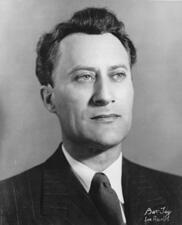
Here you will find contact information for Senator Glen Hearst Taylor, including email address, phone number, and mailing address.
| Name | Glen Hearst Taylor |
| Position | Senator |
| State | Idaho |
| Party | Democratic |
| Status | Former Representative |
| Term Start | January 3, 1945 |
| Term End | January 3, 1951 |
| Terms Served | 1 |
| Born | April 12, 1904 |
| Gender | Male |
| Bioguide ID | T000079 |
About Senator Glen Hearst Taylor
Glen Hearst Taylor (April 12, 1904 – April 28, 1984) was an American politician, entertainer, businessman, and United States senator from Idaho. A member of the Democratic Party during his congressional career, he served one term in the U.S. Senate from 1945 to 1951 and later gained national prominence as the vice-presidential candidate on the Progressive Party ticket in the 1948 election. By one quantitative measure of roll-call voting, Taylor was the second-most liberal member of the U.S. Senate, trailing only Wayne Morse of Oregon, and the fourth-most liberal member of Congress overall between 1937 and 2002.
Taylor was born in a boarding house in Portland, Oregon, where his parents, Pleasant John Taylor and Olive Higgins Taylor, were staying while his father, a retired Texas Ranger and itinerant preacher, conducted a protracted revival meeting. The twelfth of thirteen children, he spent his early childhood in a large, peripatetic family before they homesteaded in north central Idaho near Kooskia. He attended public schools in the area and completed the eighth grade in 1919. That year, he left school to join his older brother’s stock theater company, beginning a long association with show business. Taylor’s family was musically inclined; his older sister Lena achieved national fame in the 1920s as a jazz singer under the stage name Lee Morse.
With only an eighth-grade education, Taylor built a career in popular entertainment during the 1920s and 1930s. Between 1926 and 1944, he owned and managed various entertainment enterprises, including traveling shows, and performed as a professional actor and country-western singer, a background that later earned him the nickname “The Singing Cowboy.” By the late 1930s he had settled in Pocatello, in eastern Idaho, while continuing to support himself in a variety of occupations, including work as a painter’s assistant and sheet metal worker in California between political campaigns. His early political thinking was shaped by reformist and progressive literature, notably King Camp Gillette’s book The People’s Corporation and Stuart Chase’s 1932 work A New Deal. In 1935 he made an early, unsuccessful attempt to organize a Farmer–Labor Party in Nevada and Montana, reflecting his interest in left-leaning economic and social reforms.
Taylor’s formal political career began in Idaho Democratic politics. His first campaign for public office came in 1938, when he ran for an open seat in the U.S. House of Representatives from Idaho’s Second District; he finished a distant fourth in the Democratic primary. Undeterred, he sought a U.S. Senate seat in a special election in November 1940 to complete the final two years of the term left vacant by the death of Senator William E. Borah on January 19, 1940. In that race he lost to Republican John Thomas, a former senator (1928–1933) who had been appointed to the vacancy by Governor C. A. Bottolfsen on January 27, 1940; Taylor received 47.1 percent of the vote to Thomas’s 52.9 percent. Labeled by opponents as “semi-socialistic” and “communistic,” he ran again against Thomas in 1942 and narrowed the margin, losing 48.5 to 51.5 percent, amid stiff opposition from Idaho’s Democratic Party leadership.
In 1944 Taylor mounted his third campaign for the Senate, this time for Idaho’s other seat. Running as a liberal challenger, he narrowly defeated conservative incumbent Democrat D. Worth Clark in the primary and then won the general election over Republican Governor C. A. Bottolfsen. When he took office in January 1945, Taylor became the first professional actor ever elected to Congress and noted that he had never been east of Chicago before his election. His Senate service, from 1945 to 1951, coincided with a transformative period in American history, spanning the final months of World War II, the beginning of the Cold War, and the early postwar domestic realignments. As a senator, he participated actively in the legislative process and represented the interests of his Idaho constituents while aligning himself with the left wing of the national Democratic Party.
Taylor quickly became known in Washington for both his flamboyant style and his unconventional methods of drawing attention to issues. Upon his arrival in the capital, he rode his horse, Nugget, up the steps of the U.S. Capitol. Nugget later accompanied him on a 1947 national tour highlighting his antiwar views and his opposition to prevailing U.S. foreign policy. Confronted with a severe wartime housing shortage when he and his family moved to Washington in early 1945, Taylor stood outside the Capitol and sang, to the tune of “Home on the Range,” “O give us a home, near the Capitol dome, with a yard for two children to play …,” prompting several offers of rental housing. In the Senate he was appointed to the Committee on Banking and Currency after telling Senator Robert F. Wagner of New York that his chief qualification was that he had been a depositor in several banks. In October 1945 he introduced a resolution favoring the creation of a “world republic,” reflecting his internationalist and idealistic outlook. Between 1945 and 1947 he supported President Harry S. Truman’s domestic legislative program approximately 92 percent of the time, but he increasingly broke with the administration over foreign policy, especially its anti-Soviet orientation.
An outspoken critic of concentrated economic power, Taylor used his Senate platform to attack what he saw as the influence of monopolies on both domestic and foreign policy. Addressing a convention of the National Lawyers Guild in Cleveland in July 1946, he argued that monopolies had succeeded in “wrecking” price controls, securing “profit-guaranteeing tax rebates,” blocking public power projects in the Columbia and Missouri river valleys, pigeonholing a federal minimum wage bill, and emasculating both the 1944 Kilgore reconversion bill and the 1945 Murray full-employment bill. He charged that monopolistic interests had so shaped U.S. foreign policy that it served their aims. Taylor also became known for lengthy Senate speeches that were often critical of the Truman Doctrine and the Marshall Plan, which he believed risked bringing the United States closer to war with the Soviet Union. He was notably less critical of Soviet policy than most of his colleagues, remarking that there was no need for him to denounce the USSR when ninety other senators did so daily.
Taylor’s Senate career was marked by contentious relationships within Idaho politics and several highly publicized confrontations. He feuded with fellow Idaho Democrat Charles C. Gossett, who had resigned as governor in November 1945 so that his successor could appoint him to a vacant Senate seat; during the 1946 Democratic primary Taylor openly supported Gossett’s opponent, George E. Donart, denouncing Gossett as a “conservative” who “hobnobbed” with Republicans in Congress. On election night in 1946, Taylor made national headlines when he allegedly broke the jaw of Republican leader Ray McKaig in a Boise hotel lobby. Taylor maintained that McKaig had first insulted him with an obscene epithet and struck him, breaking Taylor’s nose, while McKaig, then sixty-six, claimed that Taylor kicked him in the face while he lay on the floor, a charge Taylor denied. When Taylor lost his 1950 Democratic primary bid for renomination, McKaig sent him a telegram declaring, “You may have broken my jaw, but I just broke your back!!!” Taylor also drew attention in July 1947 when, asked by a United Press reporter about reports of a crashed UFO near Roswell, New Mexico, he said he almost hoped flying saucers would prove to be spaceships from another planet because “they could end our petty arguments on earth.” Even if they were only a psychological phenomenon, he added, they were a sign of growing global tensions that could turn the world into a “global nuthouse.”
A committed early supporter of civil rights, Taylor used his Senate position to oppose racial segregation and discrimination at a time when such views were still controversial in much of the country. He advocated an immediate end to Jim Crow practices in employment, housing, voting, and the courts. In 1946 he physically pushed his way onto the Senate floor to interrupt and challenge Southern senators who were filibustering against legislation to make the wartime Fair Employment Practices Committee (FEPC) permanent; the FEPC had been created to bar discrimination in defense industries receiving federal funds. In January 1947 he asked the Senate to delay the swearing-in of Mississippi Senator Theodore G. Bilbo, who had been reelected in 1946, pending investigation of allegations of corruption and civil rights violations. The Senate never formally seated Bilbo for his final term, and the controversy remained unresolved until Bilbo’s death in August 1947. Taylor’s civil rights advocacy extended beyond the Senate chamber. On May 1, 1948, in Birmingham, Alabama, he was arrested by Police Commissioner Eugene “Bull” Connor for attempting to enter a meeting of the Southern Negro Youth Congress through a door reserved for African Americans rather than the whites-only entrance. Convicted of disorderly conduct, Taylor appealed unsuccessfully to the Court of Appeals of Alabama. When he refused to return to Alabama to serve a 180-day sentence of hard labor, Idaho Governor C. A. Robins declined to extradite him.
Taylor’s national prominence peaked in 1948, when he accepted the vice-presidential nomination of the Progressive Party on a ticket headed by former Vice President Henry A. Wallace of Iowa. Although he correctly anticipated that this decision would gravely damage his prospects for reelection in Idaho and brand him as an “incorrigible leftist,” he agreed to run. The Wallace–Taylor ticket, espousing an unabashedly left-wing platform critical of Cold War policies, failed to carry any states and received about 2.4 percent of the nationwide popular vote. Conservatives within the Idaho Democratic Party attempted to expel Taylor from the party for his role in the Progressive campaign, but the effort failed. Nonetheless, his association with the Progressive Party contributed significantly to his defeat in the 1950 Democratic primary, when former Senator D. Worth Clark successfully challenged him for renomination. Clark then lost the general election to conservative Republican Herman Welker, ending Taylor’s Senate service on January 3, 1951.
After leaving the Senate, Taylor struggled to rebuild his career amid the heightened anti-communist atmosphere of the early Cold War. From 1950 to 1952 he served as president of Coryell Construction Company, but he was forced to resign after being labeled a “security risk,” which jeopardized a government contract. Thereafter he often had to accept manual labor construction jobs to support his family. He remained active in Idaho politics and mounted several further attempts to return to the Senate. In 1954 he ran as the Democratic nominee against Republican incumbent Henry Dworshak but was decisively defeated, receiving only 37.2 percent of the vote. In 1956 he made his sixth and final bid for a Senate seat, narrowly losing the Democratic primary to 32-year-old attorney Frank Church. Taylor then waged a write-in campaign in the general election, garnering 5.1 percent of the vote. In March 1958 he publicly challenged Church to take a lie-detector test regarding alleged fraud in the 1956 primary, underscoring the lingering bitterness of that contest.
In 1958 Taylor and his wife, Dora, moved to Millbrae, California, where they embarked on a new and ultimately successful business venture manufacturing hairpieces. Drawing on a hairpiece he had fashioned for himself in the early 1940s—originally constructed from a tin pie plate lined with pink felt through which he pulled human hair—Taylor began producing toupees by hand. He later explained that he had started losing his hair at age eighteen, when he was a juvenile leading man in a traveling show, and that there was “not much demand for bald juvenile leading men.” He tried various remedies, joking that “sheep dip” only made his hair fall out faster. Taylor also observed that he had run for office without a hairpiece and found that voters “didn’t have much use for bald politicians,” but that “I ran the fourth time with it and won.” In 1958 he was granted U.S. Patent No. 2,850,023 for his innovative hair replacement design. By 1960, their company, Taylor Topper Inc., had become a major manufacturer of hair replacements in the United States. The firm, later known as Taylormade Hair Replacement, continued to operate in Millbrae and became well known in its field.
Glen and Dora Taylor had three sons, born between 1935 and 1946: Glen Arod (his first name formed by spelling “Dora” backward), Paul Jon, and Greg. In his later years Taylor lived quietly in California while managing his business and occasionally granting interviews that reflected on his unusual career in politics and entertainment. He died at age eighty on April 28, 1984, from complications of Alzheimer’s disease. Dora Taylor remained in the San Mateo County area until her death at age ninety-three in 1997. The couple are interred together at Skylawn Memorial Park in San Mateo, California.