Representative Glenn M. Anderson
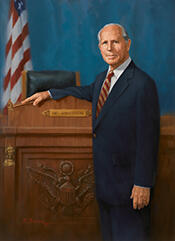
Here you will find contact information for Representative Glenn M. Anderson, including email address, phone number, and mailing address.
| Name | Glenn M. Anderson |
| Position | Representative |
| State | California |
| District | 32 |
| Party | Democratic |
| Status | Former Representative |
| Term Start | January 3, 1969 |
| Term End | January 3, 1993 |
| Terms Served | 12 |
| Born | February 21, 1913 |
| Gender | Male |
| Bioguide ID | A000189 |
About Representative Glenn M. Anderson
Glenn Malcolm Anderson (February 21, 1913 – December 13, 1994) was an American politician who served as the 37th lieutenant governor of California and later as a Representative from California in the United States Congress from 1969 to 1993. A member of the Democratic Party, he represented Southern Los Angeles County, including Carson, San Pedro, and Long Beach, and contributed to the legislative process during 12 terms in office.
Anderson was born on February 21, 1913, in Hawthorne, California. He was educated in local schools and went on to attend the University of California, Los Angeles, where he received a Bachelor of Arts degree in 1936. After college, he entered the private sector as a real estate developer, a profession that later informed his legislative interests in infrastructure and public works. During World War II, he served in the United States Army as an infantry sergeant, adding military experience to his background in business and local affairs.
Anderson’s public career began at the municipal level. He was elected mayor of Hawthorne, serving from 1940 to 1943, a period that coincided with the early years of World War II and the associated growth and change in Southern California. Building on his local experience, he won election to the California State Assembly, representing the 46th district from 1943 to 1951. In the Assembly, he established himself as a Democratic legislator during a period of postwar expansion in the state, gaining familiarity with statewide issues and the workings of California’s government.
After several years out of statewide office, Anderson returned to prominence when he was elected lieutenant governor of California, serving from 1959 to 1967. His tenure as the 37th lieutenant governor was marked most notably by his role during the 1965 Watts riots. In August 1965, while Governor Pat Brown was vacationing in Greece, Anderson served as acting governor when civil unrest broke out in the Watts neighborhood of Los Angeles. When Los Angeles officials urgently requested state support to help quell the riots, Anderson waited approximately five hours before granting approval for the deployment of state resources. This delay became the subject of intense controversy and criticism, and the episode dogged Anderson for the remainder of his political career. It was widely regarded as a major factor in his defeat for re-election in 1966 by Republican Robert Finch.
Anderson transitioned to national office at the end of the 1960s. He was first elected to the 91st Congress in 1968 and took his seat in the U.S. House of Representatives in January 1969. He served 12 consecutive terms, remaining in Congress until January 1993. As a member of the House of Representatives, Glenn Malcolm Anderson participated in the democratic process and represented the interests of his Southern Los Angeles County constituents during a significant period in American history, spanning the Vietnam War era, the civil rights movement’s later phases, the Watergate period, and the end of the Cold War. Drawing on his background as a real estate developer and his experience in state government, he successfully sought a seat on the Committee on Public Works and Transportation. Over the course of his tenure, he became a key figure on that committee, focusing on transportation infrastructure, harbor development, and public works projects important to his district and the broader region.
In 1988, Anderson rose to the chairmanship of the House Committee on Public Works and Transportation, achieving one of the most influential positions of his congressional career. However, by the late 1980s, some of his House colleagues claimed that his abilities had slipped because of his advancing age. Concerns about his effectiveness led state Democratic leaders in 1991 to consider reapportionment plans that would carve up his harbor-area district. Amid these concerns and internal party pressures, he was removed as committee chairman after only 33 months. Anderson decided not to run for re-election in 1992, bringing to a close nearly a quarter-century of continuous service in the U.S. House of Representatives.
Anderson’s health declined in his later years. He underwent multiple heart bypass surgery in 1988, even as he continued to serve in Congress. After leaving office, he lived quietly in Southern California. He died on December 13, 1994, at San Pedro Peninsula Hospital Pavilion in San Pedro, California. The cause of death was complications of Alzheimer’s disease. He was 81 years old and was interred at Green Hills Memorial Park in Rancho Palos Verdes, California.
Anderson’s long career in public office left a visible imprint on the infrastructure of the Los Angeles region he represented. In recognition of his work on transportation and public works, the Los Angeles Harbor ship channel was named in his honor, and Interstate 105 in South Los Angeles bears the designation “Glenn M. Anderson Freeway.” These commemorations reflect his enduring association with the development of Southern California’s transportation network and his decades of service as a Democratic leader at the local, state, and national levels.