Representative Glenn R. Davis
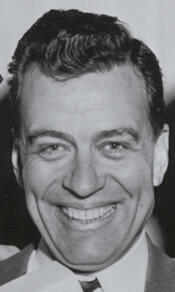
Here you will find contact information for Representative Glenn R. Davis, including email address, phone number, and mailing address.
| Name | Glenn R. Davis |
| Position | Representative |
| State | Wisconsin |
| District | 9 |
| Party | Republican |
| Status | Former Representative |
| Term Start | January 3, 1947 |
| Term End | January 3, 1975 |
| Terms Served | 10 |
| Born | October 28, 1914 |
| Gender | Male |
| Bioguide ID | D000102 |
About Representative Glenn R. Davis
Glenn Robert Davis (October 28, 1914 – September 21, 1988) was an American educator, lawyer, and Republican politician who served ten terms as a United States Representative from Wisconsin between 1947 and 1975. Over the course of his congressional career, he represented Wisconsin’s 2nd congressional district from April 22, 1947, to January 3, 1957, and Wisconsin’s 9th congressional district from January 3, 1965, to December 31, 1974. His service in Congress spanned a significant period in American history, during which he participated actively in the legislative process and represented the interests of his constituents in Wisconsin.
Davis was born on a small farm to a poor family in Vernon, Wisconsin. Raised in modest circumstances, he faced pressure from his father to leave school and work full-time on the family farm, but he excelled academically and resisted those expectations. He attended a one-room schoolhouse, where he advanced so quickly that he skipped several grades and, while still a student himself, taught younger children in the school. He graduated from Mukwonago High School in 1930 at the age of 15, three years earlier than usual, demonstrating the intellectual drive that would shape his later career.
With financial help from his mother—who had secretly saved money against her husband’s wishes so that her son could pursue higher education—Davis enrolled at Platteville State Teachers College (now the University of Wisconsin–Platteville). He majored in education and, after completing his studies, taught high school in Cottage Grove and Waupun, Wisconsin, for five years. Seeking to broaden his professional opportunities, he returned to school and earned a Juris Doctor degree from the University of Wisconsin–Madison in 1940. After passing the bar, he opened a law firm in Waukesha, Wisconsin, beginning a legal career that would serve as a springboard into public office. He later lived in New Berlin and Wauwatosa, Wisconsin, as his professional and political responsibilities expanded.
Davis’s formal political career began soon after he entered the legal profession. From his law practice in Waukesha, he mounted a successful campaign for the Wisconsin State Assembly in 1940. After serving one year in the legislature, he resigned his seat following the Japanese attack on Pearl Harbor in order to join the United States Navy. Commissioned as a lieutenant, he served as communications officer aboard the escort carrier USS Sangamon (CVE-26). During the latter stages of World War II, the Sangamon was struck by a kamikaze attack off Okinawa, an assault that Davis survived. He was honorably discharged from the Navy on December 12, 1945, and returned to Wisconsin, where he resumed the practice of law and became increasingly active in Republican Party affairs, including service as a local court commissioner and regular attendance at party functions.
In 1947, Davis entered national politics by running in a special election to fill the vacancy caused by the death of Representative Robert Kirkland Henry, a Republican who had died just weeks after being elected to a second term from Wisconsin’s 2nd congressional district. Davis won the special election and took his seat in the U.S. House of Representatives on April 22, 1947. He was reelected four times, serving five consecutive terms from the 2nd district through January 3, 1957. During this period, he established a reputation as a generally conservative legislator, while engaging in the broader debates of the early Cold War era and the postwar domestic agenda. In 1956, rather than seek reelection to the House, he pursued higher office by challenging incumbent Republican Senator Alexander Wiley in the primary, a bid that proved unsuccessful. The following year, in 1957, Davis unsuccessfully lobbied to become the Republican candidate in the special election to replace the late Senator Joseph McCarthy; the nomination went instead to former Governor Walter J. Kohler Jr., who lost the general election to Democrat William Proxmire. After these setbacks, Davis returned to his law practice in Wisconsin.
Davis remained an influential figure in Republican circles even while out of office. He was elected as a delegate to every Republican National Convention from 1952 to 1972, reflecting his sustained prominence within the party at the state and national levels. In 1964, after an eight-year absence from Congress, he mounted a successful political comeback. Benefiting from redistricting that created an open seat, he won election to represent Wisconsin’s 9th congressional district, taking office on January 3, 1965. He served four additional terms from the 9th district, remaining in the House until December 31, 1974. Over this later phase of his congressional career, his record, while rooted in conservatism, grew more moderate in the early 1970s. Notably, he voted in favor of the Voting Rights Act and the Civil Rights Act of 1968, aligning himself with key federal civil rights protections during a transformative period in American social and political life.
Davis’s congressional service was also marked by close personal relationships and a visible presence in the informal culture of Capitol Hill. He became a close friend and golf partner of House Minority Leader Gerald R. Ford, with whom he was closely associated politically and personally. Davis was in the Oval Office the night President Richard Nixon resigned in August 1974, underscoring his proximity to the highest levels of national leadership. He later believed that his association with Nixon and Ford, combined with President Gerald Ford’s unpopular pardon of Nixon on the Sunday before the 1974 primary, contributed to his defeat that year. In the 1974 Republican primary, he lost his bid for renomination to State Senator Bob Kasten, a younger, more conservative challenger. Davis resigned his seat effective December 31, 1974, just days before the official end of his term. Beyond the formal legislative arena, he was known as the star shortstop for the “Washington Senators,” a recreational baseball team composed solely of members of Congress, and he remains the only native of Waukesha County ever to have held congressional office.
After leaving Congress, Davis moved permanently to Arlington, Virginia. From 1975 to 1983, he worked as a consultant for Potter International, Inc., continuing to draw on his legislative and legal experience in the private sector. He remained engaged with public affairs and with his home state through family and philanthropic ties, even as his professional life shifted away from elective office. Davis died in Arlington on September 21, 1988, at the age of 73.
Part of Davis’s legacy is carried forward through the Glenn R. Davis Charitable Foundation, a scholarship organization funded and administered by his family. The foundation provides a monetary award each year to one graduating student in every high school in Waukesha County. The award is given to a student who has overcome substantial obstacles, a criterion intended to reflect Davis’s own rise from the son of pickle farmers on a small Wisconsin farm to a long-serving member of the U.S. Congress. His family’s public service tradition continued through his son, J. Mac Davis, who served as a Wisconsin State Senator and later as a Wisconsin Circuit Court judge in Waukesha County.