Representative Glenn English
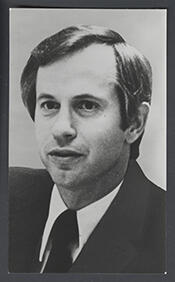
Here you will find contact information for Representative Glenn English, including email address, phone number, and mailing address.
| Name | Glenn English |
| Position | Representative |
| State | Oklahoma |
| District | 6 |
| Party | Democratic |
| Status | Former Representative |
| Term Start | January 14, 1975 |
| Term End | January 3, 1995 |
| Terms Served | 10 |
| Born | November 30, 1940 |
| Gender | Male |
| Bioguide ID | E000184 |
About Representative Glenn English
Glenn Lee English Jr. (born November 30, 1940) is an American businessman, lobbyist, and Democratic politician who represented Oklahoma’s 6th congressional district in the United States House of Representatives for 10 consecutive terms from 1975 to 1994. A member of the Democratic Party, he contributed to the legislative process during a significant period in American history, participating in the democratic process and representing the interests of his largely rural and conservative constituency. After leaving Congress, English became the chief executive officer of the National Rural Electric Cooperative Association, continuing a career focused on public policy and rural development.
English was born in Cordell, Oklahoma, in Washita County, and grew up in western Oklahoma. He attended local schools before enrolling at Southwestern Oklahoma State University, where he earned a Bachelor of Arts degree in 1964. Following college, he joined the United States Army Reserve, serving until 1971 and rising to the rank of staff sergeant. His military service coincided with the Vietnam era, though he served in the Reserve rather than on active duty. After completing his military service, English entered the private sector, working in the oil and natural gas leasing business, real estate, insurance sales, and mortgage lending, gaining experience in several key industries important to Oklahoma’s economy.
English’s early political career began outside his home state. His first job in politics was as a staff member for the majority caucus of the California State Assembly, where he learned legislative procedure and party organization. He later moved to Washington, D.C., to work as a legislative staffer in the U.S. House of Representatives, further deepening his familiarity with federal policymaking. Returning to Oklahoma, he served as executive director of the Oklahoma Democratic Party from 1969 to 1973, playing a central role in party strategy, candidate recruitment, and statewide political organization during a period of significant political realignment in the region.
In November 1974, English was elected as a Democrat to the U.S. House of Representatives from Oklahoma’s 6th Congressional District, beginning his service in January 1975. He was re-elected nine times, serving a total of 10 terms until his resignation in 1994. His district stretched from the Oklahoma Panhandle to northeastern Oklahoma City and included some of the most rural and conservative territory in the state. Reflecting the political character of his district, English was regarded as one of the most conservative Democrats in the House, often emphasizing agricultural issues, rural development, and fiscal restraint while maintaining his affiliation with the Democratic Party.
During his congressional career, English served on the House Committee on Agriculture and the Committee on Government Operations, positions that allowed him to influence policy on farming, rural infrastructure, and federal oversight. He chaired the Select Committee on Narcotics Abuse and Control, where he focused on anti-drug initiatives and federal coordination in the war on drugs. As chairman of the Government Information, Justice and Agriculture Subcommittee, he secured approval for the U.S. military to use aircraft and radar to assist Customs agents in the interdiction of drug smugglers. During the 1985–1986 term, he was instrumental in obtaining a $20 million federal hub in Oklahoma City, located at Will Rogers Airport, to support anti-drug operations. In 1993, he played a key role in halting a plan to reduce the work of the Rural Electrification Administration (REA); through a series of meetings between the House Committee on Agriculture and the White House, he successfully interceded to enhance the REA’s status and improve the quality of life for rural Americans. English resigned from the House on January 7, 1994, and was succeeded by Republican Frank Lucas.
Following his departure from Congress in 1994, English became chief executive officer of the National Rural Electric Cooperative Association (NRECA), based in Arlington, Virginia. NRECA is the national trade association for more than 900 locally owned, consumer-controlled, nonprofit electric cooperatives that provide electricity to approximately 42 million Americans in 47 states. Under his leadership, NRECA expanded its advocacy on behalf of rural electric systems, focusing on reliable service, infrastructure investment, and fair regulatory treatment for cooperatives. His work at NRECA further solidified his reputation as a leading voice for rural communities and cooperative enterprises.
In his personal life, English met and married Jan Pangle Barnett, and the couple had two children, John Lee and Tyler Janine. During his years in Congress, the family lived in McLean, Virginia, while maintaining close ties to Oklahoma. After serving 16 years as chief executive officer of NRECA, English was inducted into the Cooperative Hall of Fame on May 5, 2010, at the National Press Club in Washington, D.C., in recognition of his long-standing contributions to the cooperative movement and rural America.