Representative Godlove Stein Orth
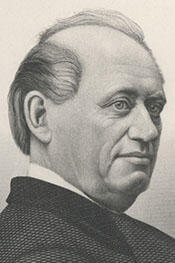
Here you will find contact information for Representative Godlove Stein Orth, including email address, phone number, and mailing address.
| Name | Godlove Stein Orth |
| Position | Representative |
| State | Indiana |
| District | 9 |
| Party | Republican |
| Status | Former Representative |
| Term Start | December 7, 1863 |
| Term End | March 3, 1883 |
| Terms Served | 7 |
| Born | April 22, 1817 |
| Gender | Male |
| Bioguide ID | O000106 |
About Representative Godlove Stein Orth
Godlove Stein Orth (April 22, 1817 – December 16, 1882) was a United States Representative from Indiana, an acting Lieutenant Governor of Indiana, and a prominent Republican politician whose congressional service spanned the Civil War, Reconstruction, and the postwar era. Of German ancestry, he was born near Lebanon, Lebanon County, Pennsylvania, on April 22, 1817. He grew up in a region heavily influenced by German-American culture, an experience that shaped his early life and outlook. Orth attended Pennsylvania College at Gettysburg (now Gettysburg College) for about one year, after which he left formal schooling to read law in the office of James Cooper, a future United States senator and cabinet officer. He was admitted to the bar in 1839, beginning a legal career that would underpin his subsequent political life.
Orth’s political engagement began almost immediately after his entry into the legal profession. In 1840 he gained public notice by delivering speeches in support of Whig presidential candidate William Henry Harrison, marking his first significant foray into partisan politics. Originally a member of the Whig Party, Orth, like many of his contemporaries, was forced to reassess his political alignment as that party collapsed in the 1850s. For a time he became a leading figure in Indiana for the Know-Nothing movement, formally known as the American Party, reflecting the era’s nativist currents. As the political landscape continued to shift in the years leading up to the Civil War, he ultimately aligned himself with the emerging Republican Party, in which he would spend the remainder of his public career.
Orth’s rise in Indiana politics began with his election to the Indiana Senate, where he served from 1843 to 1849. During this period he also held the position of acting Lieutenant Governor of Indiana in 1845, assuming the responsibilities of that office in addition to his legislative duties. His work in the state senate established him as a capable legislator and party leader, and it provided the foundation for his later influence at the national level. By the early 1860s he had become a well-known figure in Indiana Republican circles, recognized for his oratorical skills and his ability to navigate the factional rivalries that characterized state and local politics.
Orth entered the United States House of Representatives as a Republican from Indiana during the Civil War. He served as a Representative from Indiana in the United States Congress from 1863 to 1871, from 1873 to 1875, and again from 1879 to 1882, for a total of seven terms in office. His service in Congress thus extended, with brief interruptions, from 1863 to 1883, a significant period in American history encompassing the Civil War, Reconstruction, and the contentious politics of the Gilded Age. As a member of the House of Representatives, Orth participated in the legislative process at critical moments in national life and represented the interests of his Indiana constituents. Local jealousies and intra-party rivalries in his district made repeated reelection difficult, and he faced serious challenges, including a notable contest in 1868 from General Lew Wallace. To maintain his position, Orth cultivated his constituents with unusual diligence, keeping a list of the top hundred Republican leaders in each county and a file on some ten thousand other constituents—“pretty much all the reading Republicans and some Democrats in the District”—to whom he regularly sent public documents, books, and his own speeches, making full use of the congressional franking privilege.
Within the House, Orth emerged as a reliable, if generally second-rank, leader among Republicans in the late 1860s. He served on the House Foreign Affairs Committee and became one of the Grant administration’s most dependable allies on foreign policy questions. In 1871 he managed the House resolution that created a fact-finding commission to Santo Domingo (now the Dominican Republic), a key step in President Ulysses S. Grant’s ultimately unsuccessful effort to annex the territory. During the administration of President Andrew Johnson, Orth stood at the more conservative end of the Republican spectrum. He supported Reconstruction but sought, where possible, to restore harmony between the President and Congress. Contemporary observers described him as cautious and pragmatic rather than doctrinaire; a Chicago Tribune correspondent characterized him as a man “without prejudice, without notions, without fixed ideas upon any question,” conservative and law-abiding, and generally sound on broad principles even if less pronounced on local or highly specific issues.
Orth’s national reputation was further shaped by both praise and controversy. The Chicago Times in 1876 depicted him as “a fat, fluffy, pudgy-cheeked, good-humored old boy” with a ready smile and a volubility suited to politics, noting that he possessed “a good head, well stocked with information and experience, and is no fool.” His skill at political survival, however, also drew suspicion from reform-minded Republicans. After one of his periods of retirement from the House, Orth was appointed Envoy Extraordinary and Minister Plenipotentiary to Austria, reflecting the confidence of party leaders and the Grant administration in his diplomatic and political abilities. He resigned this diplomatic post in the late spring of 1876 after being nominated in February of that year as the Republican candidate for governor of Indiana. Members of the reform wing of the party distrusted him because of his close association with Senator Oliver P. Morton’s political machine and questioned his personal integrity. Their doubts intensified when newspapers accused Orth of involvement in a speculative “ring” that allegedly profited from Venezuelan claims against the United States and of lobbying Congress to confirm those claims. Orth declined to provide a full explanation or convincing denial, and with rumors of incriminating correspondence threatening to dominate the campaign, Morton withdrew his public support. On August 2, 1876, Orth withdrew as the Republican candidate for governor and was replaced on the ticket by Benjamin Harrison.
Despite his earlier association with the nativist Know-Nothing movement, Orth’s later congressional record included a notable stand in defense of racial equality. Near the end of his life, during debate over the first Chinese Exclusion Act in 1882, he condemned the bill’s racial discrimination and declared that he would vote against it because he was “opposed to all legislation founded on ‘race, color, or previous condition of servitude.’ We have no such odious laws now upon our statute-book, and no vote of mine shall ever be given to place any there.” This position placed him among a small minority in Congress willing to oppose one of the era’s most popular exclusionary measures, and it underscored the evolution of his views on questions of race and civil rights over the course of his long public career.
Orth’s personal life included two marriages, and he was the father of a daughter and two sons. He spent his later years residing in Lafayette, Indiana, which served as his political and professional base during his congressional service. He died in office on December 16, 1882, in Lafayette, shortly after losing a reelection bid to Democrat Thomas B. Ward. His death placed him among the members of the United States Congress who died while still serving between 1790 and 1899. Godlove Stein Orth was interred at Greenbush Cemetery in Lafayette, Indiana, closing the career of a politician who had been active in state and national affairs from the 1840s through the turbulent decades following the Civil War.