Representative Gordon Weaver Browning
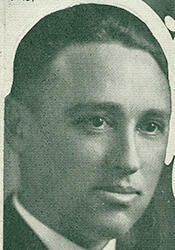
Here you will find contact information for Representative Gordon Weaver Browning, including email address, phone number, and mailing address.
| Name | Gordon Weaver Browning |
| Position | Representative |
| State | Tennessee |
| District | 7 |
| Party | Democratic |
| Status | Former Representative |
| Term Start | December 3, 1923 |
| Term End | January 3, 1935 |
| Terms Served | 6 |
| Born | November 22, 1889 |
| Gender | Male |
| Bioguide ID | B000959 |
About Representative Gordon Weaver Browning
Gordon Weaver Browning (November 22, 1889 – May 23, 1976) was an American progressive politician and attorney who served six terms as a Democratic Representative from Tennessee in the United States Congress from 1923 to 1935 and as the 38th governor of Tennessee from 1937 to 1939 and again from 1949 to 1953. Over a public career spanning more than three decades, he also served as Chancellor of Tennessee’s Eighth Chancery District in the 1940s, held important posts in the Allied occupation government in Europe after World War II, and became a central figure in the decline of the political machine led by Memphis boss E. H. Crump. As governor, he stabilized state finances, doubled Tennessee’s mileage of paved roads, and enacted significant legislation to curb voter fraud.
Browning was born near Atwood in Carroll County, Tennessee, the son of James and Melissa (Brooks) Browning. When he was still young, his parents moved to Milan, Tennessee, where his father served as a justice of the peace, and he grew up in the historic Browning House. He attended the local public schools and graduated from Milan High School in 1908. To further his education, he enrolled at Valparaiso University in Indiana, where he supported himself in part by waiting tables. He completed his studies there in 1913, earning both a Bachelor of Science and a Bachelor of Pedagogy degree.
After college, Browning briefly taught school before deciding to pursue a legal career. He enrolled in the Cumberland School of Law in Lebanon, Tennessee, then one of the South’s leading law schools, and graduated in 1915. Admitted to the bar shortly thereafter, he returned to his native region and, in March 1915, began the practice of law in Huntingdon, Tennessee, in Carroll County, joining the office of attorney George McCall. His early legal practice in Huntingdon provided the foundation for his later political career and maintained his close ties to the rural communities he would represent in public office.
With the entry of the United States into World War I, Browning volunteered for military service. In June 1917 he enlisted in the Tennessee National Guard as a second lieutenant in Company D of the First Tennessee Field Artillery. When this unit was federalized as the 114th Field Artillery of the 30th Infantry Division under the command of General Lawrence Tyson, Browning was promoted to captain and transferred to Company A. He served with the unit in northern France, saw combat, and was cited for gallantry. Following his discharge in 1919, he returned to Huntingdon and resumed the practice of law. In 1920 he made his first bid for national office, running for the U.S. House of Representatives from Tennessee’s 8th Congressional District. He narrowly lost to his former law school classmate, Lon Scott, by a margin of 50 percent to 49 percent, but the close contest established him as a rising figure in state Democratic politics.
Browning was elected to Congress in 1922 and took his seat in the Sixty‑eighth Congress on March 4, 1923. He represented Tennessee’s 8th District for five consecutive terms, frequently running unopposed, and, following redistricting, represented the 7th District for one term from 1933 to 1935. His six terms in the U.S. House of Representatives thus extended from 1923 to 1935, a period that encompassed the later years of the 1920s and the onset of the Great Depression. As a member of the House of Representatives, he participated in the legislative process and represented the interests of his constituents during a significant period in American history. In his final term, he was selected as one of the House “managers,” or prosecutors, in the impeachment proceedings against federal district judge Harold Louderback of California. In 1934, instead of seeking reelection to the House, he ran for the Democratic nomination for the U.S. Senate seat vacated when Cordell Hull resigned to become Secretary of State. His principal opponent, Nathan L. Bachman, had been appointed to fill the vacancy and enjoyed the support of Memphis political boss E. H. Crump, then at the height of his power. Browning, who struggled to gain support in East Tennessee, was defeated by Bachman by a vote of 166,293 to 121,169.
Turning his attention to state office, Browning entered the 1936 gubernatorial race after incumbent Governor Hill McAlister, having angered Crump by proposing a state sales tax, declined to seek reelection. Browning’s chief opponent for the Democratic nomination was Burgin Dossett, a Campbell County school superintendent. Crump initially declared neutrality, but when it became apparent that Browning could win with or without the Shelby County vote, he endorsed Browning. Browning easily secured the nomination and went on to defeat Republican candidate Pat Thach in the general election by 332,523 votes to 77,392. As governor, Browning campaigned on cleaning up state government, bringing Tennessee’s burgeoning debt—then more than $100 million—under control, and maintaining statewide prohibition following the repeal of national prohibition. In 1937 he signed the Debt Reorganization Act, which consolidated the state’s obligations and introduced new taxes; over the next decade, these measures reduced Tennessee’s debt by about 40 percent. He created the Department of Conservation (now the Tennessee Department of Environment and Conservation), implemented state components of several New Deal–era federal relief programs, and established a civil service merit system. One contemporary study characterized him as a progressive supporter of President Franklin D. Roosevelt during his 1937–1939 administration.
Browning’s first term as governor was also marked by increasingly strained relations with Crump. After Senator Bachman died in April 1937, Browning attempted to engineer a political arrangement that would allow him to move to the Senate, assist Crump in unseating Senator Kenneth McKellar, and elevate Lewis S. Pope to the governorship. Crump refused to run against his longtime ally McKellar, and the plan collapsed. Browning further alienated Crump by appointing several associates of Crump’s old rival, Luke Lea, to state positions while ignoring Crump’s patronage requests. Browning appointed George L. Berry to fill Bachman’s vacant Senate seat. In 1938 Crump backed Prentice Cooper against Browning in the Democratic gubernatorial primary. Anticipating that Crump would rely heavily on Shelby County’s large, carefully managed voter rolls, Browning supported legislation to replace the statewide primary with a “county unit” system that would equalize the weight of votes by county and diminish Shelby County’s influence. Although the bill passed, the Tennessee Supreme Court declared it unconstitutional. Browning also created a commission to investigate voter fraud in Shelby County, resulting in the purging of more than 13,000 names from the rolls. Despite these efforts, he lost the primary to Cooper by 231,852 votes to 158,854 and returned to Huntingdon to resume his law practice.
In 1942 Browning was elected Chancellor of Tennessee’s Eighth Chancery District without opposition, adding judicial service to his legislative and executive experience. After the United States entered World War II, he repeatedly sought a commission in the U.S. Army but initially was blocked by political adversaries. Persisting, he appealed directly to the Army’s adjutant general in Washington and in 1943 received a commission as a captain. He attended the School of Military Government in Charlottesville, Virginia, which trained officers for the administration of occupied territories, and rose to the rank of lieutenant colonel. Browning first served as deputy head of the Belgium–Luxembourg mission, working to restore civilian government in those countries and contributing to Allied efforts during the Battle of the Bulge in early 1945. In September 1946 he was appointed commander of the military government in the Bremen enclave as part of the Allied occupation of Germany. In the years following World War II, he thus played a role in the Allied occupational government in Germany and served as a civil affairs advisor on the staff of General Dwight D. Eisenhower.
While still overseas, Browning reentered Tennessee politics. In 1946 he challenged incumbent Governor Jim Nance McCord for the Democratic nomination, though he remained in Europe and did not actively campaign. He was defeated, but his total of 120,535 votes to McCord’s 187,119 demonstrated that he retained substantial support in the state. In 1948 he again sought the nomination against McCord, this time mounting a vigorous campaign aimed directly at the Crump organization. He allied himself with Congressman Estes Kefauver, who was challenging Crump-backed Senator Tom Stewart. Crump responded with aggressive attacks, criticizing Browning for what he claimed were excessive pardons during Browning’s earlier governorship and accusing Kefauver of communist sympathies. Browning compared Crump to Adolf Hitler and told colorful stories of Crump prowling Memphis cemeteries at night to harvest names of deceased persons for fraudulent voter registrations. He also denounced McCord for implementing a 2 percent state sales tax, which Crump had reluctantly supported. As the campaign progressed, Crump’s hold on Tennessee politics visibly weakened. Representative Albert Gore Sr. returned from Washington to campaign for Browning, African American voters in Memphis increasingly broke with Crump, returning veterans identified with Browning’s military record, and labor groups opposed McCord for his support of a right-to-work law. In the Democratic primary Browning defeated McCord by 231,852 votes to 158,854, while Kefauver unseated Stewart, marking the first major defeat of a Crump-backed candidate in more than twenty years. In the general election Browning faced country music entertainer Roy Acuff, who had been placed on the Republican primary ballot as a publicity measure and unexpectedly won the nomination. Acuff conducted a serious campaign, but Browning prevailed easily, 363,903 votes to 179,957.
During his second tenure as governor from 1949 to 1953, Browning pursued an ambitious program of political and administrative reform. Determined to weaken Crump and other courthouse machines, he supported and signed legislation requiring permanent voter registration, mandating open meetings of county election commissions, and providing for the use of metal ballot boxes in precincts without voting machines. He also approved measures that partially eliminated Tennessee’s poll tax, long a tool of political bosses to control and suppress votes. In addition to these electoral reforms, Browning increased funding for rural schools and higher education, established a retirement system and minimum salary standards for teachers, and oversaw a major expansion of the state’s highway system, increasing Tennessee’s paved road mileage from roughly 10,000 miles to more than 20,000 miles. His administration thus both modernized the state’s infrastructure and advanced the professionalization of its public workforce. In the 1950 gubernatorial race he turned back a primary challenge from Nashville attorney and state senator Clifford Allen, winning the nomination by 267,855 votes to 208,634. For the first time since the Civil War, no Republican candidate appeared on the general election ballot; Browning’s only opponent was independent attorney John R. Neal, whom he defeated by 184,437 votes to 51,757.
Browning’s long political career in statewide office concluded with the 1952 and 1954 gubernatorial primaries. In 1952 he was challenged for the Democratic nomination by Frank G. Clement, a rising young politician who criticized Browning as “dishonest, indecent, and immoral” and attacked the state’s purchase of an expensive office building in Nashville. Browning, then in his early sixties and nearly twice Clement’s age, found it difficult to adapt to the emerging medium of television, which Clement used effectively. Clement defeated him in the primary by 302,487 votes to 245,156. Browning returned to Huntingdon to practice law but remained active in politics and again opposed Clement in the 1954 primary, losing by a wide margin. Thereafter he continued to participate in Democratic Party affairs, traveling frequently to attend party functions, while also operating a dairy farm and an insurance firm in Carroll County.
In his personal life, Browning married Ida Leach in 1920; the couple had no children. He maintained close ties to his home region throughout his life and continued to reside in Huntingdon after leaving public office. Gordon Weaver Browning died on May 23, 1976, and was buried in Oak Hill Cemetery in Huntingdon, Tennessee. His legacy is commemorated in several institutions across the state. The Gordon Browning Museum in McKenzie, Tennessee, located in the former McKenzie post office building in Carroll County, preserves documents and artifacts related to his life and career. Dormitories on the campuses of Tennessee Technological University and the University of Tennessee at Martin have been named in his honor, as has the administration building at Austin Peay State University. A former dormitory at the University of Memphis, originally opened as East Hall, was later renamed for Browning and now houses academic offices and support space.