Representative Gordon Canfield
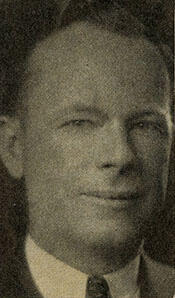
Here you will find contact information for Representative Gordon Canfield, including email address, phone number, and mailing address.
| Name | Gordon Canfield |
| Position | Representative |
| State | New Jersey |
| District | 8 |
| Party | Republican |
| Status | Former Representative |
| Term Start | January 3, 1941 |
| Term End | January 3, 1961 |
| Terms Served | 10 |
| Born | April 15, 1898 |
| Gender | Male |
| Bioguide ID | C000113 |
About Representative Gordon Canfield
James Gordon Canfield (April 15, 1898, in Salamanca, New York – June 20, 1972, in Hawthorne, New Jersey) was an American lawyer and Republican politician who represented New Jersey in the United States House of Representatives from 1941 to 1961. Over the course of ten consecutive terms in Congress, he became particularly noted for his role in establishing and funding the United States Coast Guard Reserve, earning recognition as the “Father of the United States Coast Guard Reserve.”
Canfield spent his early years in New York State and was educated in the public school system of Binghamton, New York. With the United States’ entry into World War I, he was drafted into military service and served as a private in the Signal Corps during 1917 and 1918, the final two years of the conflict. Following his wartime service, he moved to Passaic, New Jersey, where he embarked on a civilian career that would lead him into journalism, law, and ultimately national politics.
From approximately 1919 until 1923, Canfield worked as a reporter in Passaic, New Jersey. Seeking to advance his professional prospects, he then pursued legal studies, first at New Jersey Law School in Newark and later at The George Washington University Law School in Washington, D.C. He received his Bachelor of Laws degree in 1926 and was admitted to the bar of the District of Columbia the following year, beginning his career as a lawyer. His legal training and experience in the nation’s capital provided a foundation for his subsequent work in congressional offices and his own legislative career.
Canfield’s direct involvement in national politics began in 1923, when he became secretary to George N. Seger, the Republican United States Representative from New Jersey’s 8th Congressional District. He served in this capacity for seventeen years, from 1923 until Seger’s death on August 26, 1940. During this period he gained extensive familiarity with legislative procedure, constituent service, and the political landscape of northern New Jersey. Active in civic and fraternal life, he was a member of the Freemasons and the Rotary Club, affiliations that further broadened his community and political connections.
Following Seger’s death, Canfield sought to succeed his former employer in Congress. Running as the Republican candidate in the November 1940 elections, he won the contest for New Jersey’s 8th District and was sworn into the 77th United States Congress on January 3, 1941. He would go on to be re-elected to represent the district for a total of nine additional terms, serving continuously until January 3, 1961. His congressional tenure spanned World War II, the early Cold War, and the beginnings of the modern civil rights era, and he consistently participated in the legislative process and represented the interests of his constituents during this significant period in American history.
During World War II, Canfield undertook direct service related to the war effort even while holding office. In the 1944 congressional recess, he served as a seaman in the United States Merchant Marine, performing North Atlantic tanker duty. Near the end of the war, on April 22, 1945, he was among the first members of Congress to visit the Buchenwald concentration camp in Germany, witnessing firsthand the atrocities of the Holocaust. In domestic politics, he faced several competitive elections, including a notably close race in 1948 against Democrat Charles S. Joelson, in which Canfield prevailed by a margin of only 148 votes, 59,191 to Joelson’s total. Joelson challenged him again in 1954, but Canfield was re-elected by a wider margin, 54.8 percent to 45.1 percent.
Canfield’s most enduring legislative achievement was his leadership in creating and funding the United States Coast Guard Reserve. He introduced legislation to provide federal support for this reserve component, and in April 1950 the measure passed, resulting in the first $1 million appropriation for training the Coast Guard Reserve. For his central role in this effort, he became widely known as the “Father of the Coast Guard Reserve.” In addition to his work on maritime and defense matters, he supported key civil rights legislation, voting in favor of the Civil Rights Act of 1957 and the Civil Rights Act of 1960. After two decades in the House of Representatives, he chose not to be a candidate for renomination in 1960 to the 87th Congress, concluding his congressional service on January 3, 1961.
Following his retirement from Congress, Canfield returned to New Jersey and settled in Paterson. He remained active in public affairs, serving as director of the National Housing Conference, a public policy and affordable housing advocacy organization, and as public relations director for the First Federal Savings and Loan Association of Paterson. He continued to participate in civic life in his community until his death. Canfield died on June 20, 1972, in Hawthorne, New Jersey, at the age of 74, and was remembered as a long-serving representative of New Jersey’s 8th District and a key figure in the establishment of the United States Coast Guard Reserve.