Representative Gordon Leo McDonough
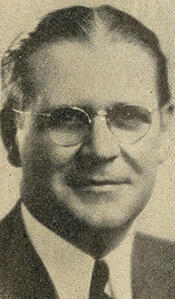
Here you will find contact information for Representative Gordon Leo McDonough, including email address, phone number, and mailing address.
| Name | Gordon Leo McDonough |
| Position | Representative |
| State | California |
| District | 15 |
| Party | Republican |
| Status | Former Representative |
| Term Start | January 3, 1945 |
| Term End | January 3, 1963 |
| Terms Served | 9 |
| Born | January 2, 1895 |
| Gender | Male |
| Bioguide ID | M000414 |
About Representative Gordon Leo McDonough
Gordon Leo McDonough (January 2, 1895 – June 25, 1968) was an American politician and industrial chemist who served nine terms as a U.S. Representative from California from 1945 to 1963. A member of the Republican Party, he represented his constituents in the House of Representatives during a significant period in American history, contributing to the legislative process over the course of nine consecutive terms in office.
McDonough was born in Buffalo, New York, on January 2, 1895. In 1898 he moved with his parents to Emporium, Pennsylvania, where he attended the public schools and graduated from high school. His early years in Emporium provided the foundation for his later professional work in industry and his eventual entry into public service.
After completing his schooling, McDonough engaged in work as an industrial chemist in Emporium from 1915 to 1918. In 1918 he moved to Los Angeles, California, where he resumed his occupation as an industrial chemist, continuing in that field from 1918 to 1933. His long experience in industry in both Pennsylvania and California preceded and informed his later involvement in local and national government.
McDonough’s political career began at the county level in California. He was elected to the Los Angeles County Board of Supervisors, on which he served from 1933 to 1944. During his tenure on the board he also served as county chair for one year, gaining administrative and legislative experience in one of the nation’s largest and most complex local governments. His work on the Board of Supervisors helped establish his reputation as a public official and set the stage for his election to Congress.
In national politics, McDonough was elected as a Republican to the Seventy-ninth and to the eight succeeding Congresses, serving in the U.S. House of Representatives from January 3, 1945, to January 3, 1963. His service in Congress spanned the end of World War II, the early Cold War, and the beginnings of the modern civil rights era. As a member of the House of Representatives, he participated in the democratic process and represented the interests of his California constituents during a period of rapid growth and change in the state. During his congressional career, McDonough voted in favor of the Civil Rights Acts of 1957 and 1960, as well as the 24th Amendment to the U.S. Constitution, which abolished the poll tax in federal elections, aligning himself with key federal civil rights and voting rights measures of the mid-twentieth century.
In 1962, following reapportionment in which California gained eight U.S. House seats, McDonough became involved in a pivotal electoral contest. To boost the chances for re-election of Republican colleagues and to create opportunities for potential new Republican House members, he agreed to run in a newly drawn but politically unfavorable district in Los Angeles. In that race he faced Democrat Edward Roybal, a member of the Los Angeles City Council. Roybal defeated McDonough, and with that victory became the first Latino American member of Congress from California in 80 years, marking the end of McDonough’s congressional service on January 3, 1963.
Beyond his formal political duties, McDonough also appeared in popular culture. On January 4, 1950, while serving in Congress, he was a guest on Groucho Marx’s game show “You Bet Your Life,” reflecting the growing intersection of politics and mass media in the postwar era. In his personal life, he was married to Catherine McNeil, and together they raised seven children, maintaining a large family alongside his long public career.
Gordon Leo McDonough died in Bethesda, Maryland, on June 25, 1968. He was interred in Holy Cross Mausoleum in Los Angeles, California, returning in death to the city that had been central to both his professional life as an industrial chemist and his long tenure in public office.