Representative Gordon James Russell
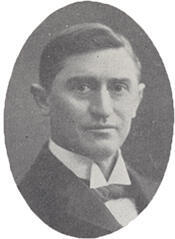
Here you will find contact information for Representative Gordon James Russell, including email address, phone number, and mailing address.
| Name | Gordon James Russell |
| Position | Representative |
| State | Texas |
| District | 3 |
| Party | Democratic |
| Status | Former Representative |
| Term Start | December 2, 1901 |
| Term End | March 3, 1911 |
| Terms Served | 5 |
| Born | December 22, 1859 |
| Gender | Male |
| Bioguide ID | R000526 |
About Representative Gordon James Russell
Gordon James Russell (December 22, 1859 – September 14, 1919) was a United States Representative from Texas and later a United States district judge of the United States District Court for the Eastern District of Texas. A member of the Democratic Party, he served in the United States House of Representatives from 1901 to 1911, contributing to the legislative process during five terms in office, and subsequently held federal judicial office from 1910 until his death in 1919.
Russell was born on December 22, 1859, in Huntsville, Madison County, Alabama. He attended the common schools and pursued further studies at the Sam Bailey Institute in Griffin, Georgia, and Crawford High School in Dalton, Georgia. He received an Artium Baccalaureus degree in 1877 from the University of Georgia and read law later that same year, completing his legal preparation through the traditional method of legal apprenticeship rather than formal law school.
Following his legal training, Russell taught school in Dalton, Georgia, before being admitted to the bar. He entered private practice in Dalton from 1878 to 1879. Seeking broader opportunities, he moved to Texas, where he continued in private practice from 1879 to 1884. He then established himself in Van Zandt County, Texas, maintaining a private law practice there from 1884 to 1895. During this period he also entered public service, serving as judge of the Van Zandt County Court from 1890 to 1892. After his county judgeship, he resumed private practice in Willsport, Texas, beginning in 1892, and served as district attorney for the Seventh Judicial District of Texas from 1892 to 1896. He continued his legal career in Tyler, Texas, where he entered private practice in 1895. From 1896 to 1902, he was judge of the Texas District Court for the Seventh Judicial District, further solidifying his reputation in the state’s judiciary.
Russell’s judicial and prosecutorial experience led to his election to Congress. He was elected as a Democrat to the United States House of Representatives of the Fifty-seventh Congress to fill the vacancy caused by the death of Representative Reese C. De Graffenreid. He was subsequently reelected to the Fifty-eighth Congress and to the three succeeding Congresses, serving from November 4, 1902, to June 14, 1910. During this significant period in American history, which encompassed the early years of the Progressive Era, Russell participated in the democratic process and represented the interests of his Texas constituents in the House of Representatives. His decade of service in Congress formed the legislative phase of a career that bridged both political and judicial responsibilities.
While still serving in Congress, Russell was nominated to the federal bench. President William Howard Taft nominated him on May 27, 1910, to a seat on the United States District Court for the Eastern District of Texas that had been vacated by Judge David Ezekiel Bryant. The United States Senate confirmed his nomination on June 6, 1910, and he received his commission the same day. In order to assume his new judicial duties, Russell resigned from the House of Representatives on June 14, 1910, thus concluding his five terms in Congress and beginning nearly a decade of service as a federal district judge.
Russell’s tenure on the United States District Court for the Eastern District of Texas extended from June 6, 1910, until his death on September 14, 1919. His service on the bench, like his earlier legislative career, took place during a transformative era in national affairs, and he remained in active judicial service until the end of his life. He died in Kerrville, Kerr County, Texas, and was interred in Oakwood Cemetery in Tyler, Smith County, Texas. His federal judicial service was formally terminated on September 14, 1919, due to his death, closing a long career in public service that spanned local, state, legislative, and federal judicial offices.