Representative Gordon Harry Scherer
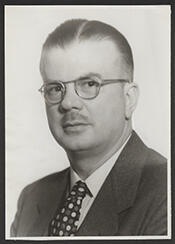
Here you will find contact information for Representative Gordon Harry Scherer, including email address, phone number, and mailing address.
| Name | Gordon Harry Scherer |
| Position | Representative |
| State | Ohio |
| District | 1 |
| Party | Republican |
| Status | Former Representative |
| Term Start | January 3, 1953 |
| Term End | January 3, 1963 |
| Terms Served | 5 |
| Born | December 26, 1906 |
| Gender | Male |
| Bioguide ID | S000120 |
About Representative Gordon Harry Scherer
Gordon Harry Scherer (December 26, 1906 – August 13, 1988) was an American lawyer and Republican politician who served five terms as a United States Representative from Ohio from 1953 to 1963. Over the course of a long career in public service at the municipal, state, national, and international levels, he played an active role in mid‑twentieth‑century American politics and governance.
Scherer earned his law degree in 1929 from the Salmon P. Chase College of Law and was admitted to the bar, beginning the practice of law in Cincinnati, Ohio. Establishing himself in the legal profession in Hamilton County, he quickly moved into public legal work, gaining experience that would underpin his later political career.
From 1933 to 1941, Scherer served in the office of the Hamilton County prosecutor, where he worked on the enforcement of state and local laws during a period marked by the Great Depression and the lead‑up to World War II. During the war years, from 1943 to 1944, he was Cincinnati’s safety director, overseeing public safety functions in the city. He continued his involvement in local governance as a member of the Cincinnati planning commission from 1945 to 1946, participating in postwar planning and development efforts. Scherer was elected to the Cincinnati city council and served there from 1945 to 1949, further solidifying his reputation in local politics while maintaining his legal practice.
In 1952, Scherer successfully sought election to the U.S. House of Representatives as a Republican from Ohio and entered Congress with the 83rd Congress in January 1953. He was re‑elected four times, in 1954, 1956, 1958, and 1960, serving continuously until January 1963 and completing five terms in office. His decade in the House coincided with a significant period in American history, encompassing the early Cold War, the Eisenhower and early Kennedy administrations, and the beginnings of the modern civil rights movement. As a member of the House of Representatives, Scherer participated in the legislative process and represented the interests of his Ohio constituents. He served on the House Committee on Un‑American Activities (HUAC), reflecting the era’s focus on internal security and anti‑communism. On major civil rights legislation, he voted “present” on the Civil Rights Act of 1957 but supported and voted in favor of the Civil Rights Act of 1960. After five terms, he declined to run for re‑election in 1962 and returned to his private law practice.
Scherer continued his political career at the state level when he was elected to the Ohio House of Representatives. He served four terms in the state legislature from 1965 to 1972, contributing to state policymaking during a period of social and political change. Concurrently, he remained active in party affairs. From 1962 to 1968, he was chairman of the Hamilton County Republican Party, playing a key role in local party organization and candidate support. He also participated in national party politics as a delegate from Ohio to the Republican National Conventions in 1964 and 1968.
In the 1970s, Scherer’s public service extended to the international arena. From 1970 to 1973, he was a member of the United States National Commission for UNESCO, the body that advises on U.S. participation in the United Nations Educational, Scientific and Cultural Organization. He served on the executive board of that commission from 1974 to 1975, helping to shape U.S. policy and engagement with UNESCO’s programs. In 1972, he was appointed a United States representative to the United Nations, serving in that capacity from 1972 to 1973 and representing U.S. interests in the multilateral diplomatic environment of the UN.
Gordon Harry Scherer remained associated with public affairs and the law for most of his life. He died on August 13, 1988. His career encompassed local, state, national, and international service, reflecting the broad scope of American political life in the mid‑twentieth century.