Representative Grace F. Napolitano
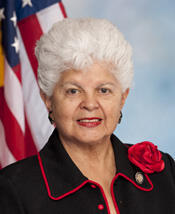
Here you will find contact information for Representative Grace F. Napolitano, including email address, phone number, and mailing address.
| Name | Grace F. Napolitano |
| Position | Representative |
| State | California |
| District | 31 |
| Party | Democratic |
| Status | Former Representative |
| Term Start | January 6, 1999 |
| Term End | January 3, 2025 |
| Terms Served | 13 |
| Born | December 4, 1936 |
| Gender | Female |
| Bioguide ID | N000179 |
About Representative Grace F. Napolitano
Graciela “Grace” Napolitano (née Flores; born December 4, 1936) is an American Democratic Party politician who represented California’s San Gabriel Valley and other parts of Los Angeles County in the United States House of Representatives from 1999 to 2025. Over 13 consecutive terms in Congress, she served as a Representative from California and contributed to the legislative process during a significant period in American history, participating in the democratic process and representing the interests of her constituents. Her district was most recently numbered California’s 31st congressional district. At the age of 89, Napolitano was the oldest sitting member of the House of Representatives at the time of her departure in 2025.
Napolitano was born and raised in Brownsville, Texas. After completing high school, she married Federico “Fred” Musquiz and moved with him to Norwalk, California, where they raised five children. Following Musquiz’s death in 1980, she married Frank Napolitano in 1982. Her early adult life in Norwalk, as a working mother and later widow, helped shape her understanding of working-class communities, immigrant families, and the challenges facing local governments in rapidly growing suburban areas.
Before entering elective office, Napolitano spent 21 years working for the Ford Motor Company, where she rose through the ranks in a corporate environment that had relatively few women and Latinas in positions of responsibility at the time. She retired from Ford in 1992. Her experience in the private sector, particularly in an industry central to transportation and manufacturing, later informed her legislative interests in economic development, transportation infrastructure, and labor issues.
Napolitano began her political career at the local level as a member of the Norwalk City Council, winning her first election in 1986 by a margin of 28 votes. Four years later, she was reelected by the largest margin recorded in the city’s history. In 1989, her colleagues on the council selected her to serve as mayor of Norwalk. During her tenure in city government, she focused on providing broad access to constituents and on redevelopment and transportation initiatives designed to create jobs and diversify the city’s economic base. Building on this local experience, she was elected to the California State Assembly in 1992. In the Assembly, she emerged as a leader on international trade, environmental protection, transportation, and immigration. In 1996, she requested and secured the creation of the first new California State Assembly standing committee in nine years, the Committee on International Trade, which she chaired until she was termed out in 1998. During her six years in the Assembly, she also served as chair of the Women’s Caucus and vice chair of the Latino Caucus.
Term-limited from the Assembly in 1998, Napolitano initially planned to run for a State Senate seat being vacated by Charles Calderon and faced a potentially difficult race against fellow termed-out Assemblywoman Martha Escutia. Three days before the candidate filing deadline, however, U.S. Representative Esteban Torres announced his retirement from Congress, timing his decision in a way that he hoped would benefit his son-in-law, James “Jamie” Casso. Napolitano switched from the State Senate race to the congressional race at the last moment and narrowly defeated Casso in the Democratic primary, 51 percent to 49 percent. During and after this campaign, her financing attracted scrutiny. A 2009 story first reported by Bloomberg News and further detailed by the Los Angeles Times questioned the personal loan interest rate that the Federal Election Commission (FEC) authorized Napolitano to use during her 1998 campaign. The FEC accepted her argument that an 18 percent rate on a $150,000 loan she made to her campaign from her employee retirement fund was equivalent to the early withdrawal penalty she incurred. The interest rate was later reduced to 10 percent in 2006. FEC filings indicated that by December 31, 2009, $221,780 in interest had been paid, and The Hill reported that filings for the period ending September 30, 2010, showed the debt had been completely retired.
Napolitano entered Congress in January 1999, representing California’s 34th congressional district from 1999 to 2003, the 38th district from 2003 to 2013, the 32nd district from 2013 to 2023, and the 31st district from 2023 to 2025, as district lines shifted through successive rounds of redistricting. Due to redistricting before the 2012 elections, she ran for and won reelection in California’s 32nd congressional district, defeating Republican nominee David Miller. She was reelected again in the 2014 midterm elections, defeating Republican nominee Arturo Alas. Over the course of her 13 terms, she became known for her work on water policy, transportation and infrastructure, mental health, and Hispanic and immigrant community issues. In 2011, she voted against the National Defense Authorization Act for Fiscal Year 2012, objecting to a controversial provision that allowed the government and the military to indefinitely detain American citizens and others without trial. According to a FiveThirtyEight analysis, she voted with President Joe Biden’s stated position 100 percent of the time in the 117th Congress.
Throughout her congressional service, Napolitano held influential committee assignments. She served on the House Committee on Natural Resources beginning with the 106th Congress and was selected as chair of the Water and Power Subcommittee for the 110th Congress. In that role, she promoted conservation, water recycling, desalination, and sound groundwater management and storage to address Southern California’s need for adequate water quality and supply. She played a role in implementing the CALFED Bay-Delta Program, a major water management plan for California, and supported efforts to protect the Bay-Delta ecosystem and to advance the use of advanced water technologies. She was also active in the Congressional Wildlife Refuge Caucus and the United States Congressional International Conservation Caucus. At the start of the 110th Congress, she became the most senior new member of the House Committee on Transportation and Infrastructure, which has jurisdiction over the nation’s aviation system, surface transportation, freight and passenger rail, inland waterways, international maritime commerce, the Economic Development Administration, the U.S. Army Corps of Engineers’ water resources activities, and the federal clean water program. Drawing on her six years on the California State Assembly Transportation Committee, she worked on rail safety and congestion relief in the San Gabriel Valley. In later Congresses, she served on the Subcommittee on Economic Development, Public Buildings and Emergency Management; the Subcommittee on Highways and Transit; the Subcommittee on Railroads, Pipelines, and Hazardous Materials; and the Subcommittee on Water Resources and Environment, where she served as ranking member.
Napolitano also became a leading advocate for mental health policy in Congress. Disturbed by statistics showing that one in three Latina adolescents had contemplated suicide, she spearheaded a school-based Latina adolescent mental health program in three local middle schools and one high school in her district. She founded and co-chaired the Congressional Mental Health Caucus, serving alongside Representative Tim Murphy. The bipartisan caucus included more than 70 members during the 108th Congress and over 90 members during the 109th Congress. As co-chair, she hosted congressional briefings on children’s and veterans’ mental health needs and worked on proposals to improve mental health services at the Department of Veterans Affairs, with a key priority being legislation to provide mental health parity in health insurance coverage. Her concern for mental health extended into other policy areas; during a May 2, 2017, hearing of the House Transportation and Infrastructure Committee on oversight of U.S. airline customer service, she posed pointed questions to airline executives, including United Airlines CEO Oscar Munoz, challenging their reliance on self-regulation. She also asked whether airlines provided mental health services to employees, particularly flight attendants, given the stressful nature of their jobs and the increasing demands placed upon them. Consumer advocate William J. McGee, testifying as Aviation Consultant for Consumers Union, praised her inquiry as an excellent question and highlighted the strain on airline employees placed on the front lines of customer-service conflicts.
In addition to her committee work, Napolitano was active in numerous congressional caucuses. During the 109th Congress, she chaired the Congressional Hispanic Caucus, which addressed national issues such as education, immigration, health, and civil rights, and examined how federal policies affected the Hispanic community. She was a member of the Congressional Progressive Caucus, the Medicare for All Caucus, the Congressional Equality Caucus, the House Baltic Caucus, the Congressional Arts Caucus, the Congressional Asian Pacific American Caucus, the Congressional Taiwan Caucus, and the Congressional Wildlife Refuge Caucus. Her caucus memberships reflected a broad portfolio of interests, including civil rights, public health, environmental conservation, international relations, and support for the arts.
Napolitano announced in July 2023 that she would retire from Congress and not seek reelection in 2024, bringing to a close more than three decades of continuous public service at the local, state, and federal levels. She left office at the conclusion of her term in January 2025, having represented successive districts in California’s San Gabriel Valley and greater Los Angeles County from 1999 to 2025 and having established a record of advocacy on water resources, transportation infrastructure, mental health, and issues affecting Hispanic and working-class communities.