Representative Graham Arthur Barden
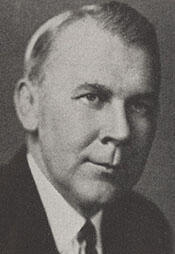
Here you will find contact information for Representative Graham Arthur Barden, including email address, phone number, and mailing address.
| Name | Graham Arthur Barden |
| Position | Representative |
| State | North Carolina |
| District | 3 |
| Party | Democratic |
| Status | Former Representative |
| Term Start | January 3, 1935 |
| Term End | January 3, 1961 |
| Terms Served | 13 |
| Born | September 25, 1896 |
| Gender | Male |
| Bioguide ID | B000139 |
About Representative Graham Arthur Barden
Graham Arthur Barden (September 25, 1896 – January 29, 1967) was a Democratic member of the United States House of Representatives from North Carolina who served thirteen consecutive terms in Congress from January 3, 1935, to January 3, 1961. Over the course of more than a quarter century in the House, he became a prominent figure in national education policy and a key Southern voice on labor and civil rights issues, representing his constituents during the New Deal, World War II, the early Cold War, and the beginnings of the modern civil rights era.
Barden was born in Sampson County, North Carolina, on September 25, 1896. When he was twelve years old, he moved with his family to Burgaw, North Carolina, where he attended the local public schools. His early years in rural and small-town eastern North Carolina shaped his familiarity with the concerns of agricultural and working-class communities that he would later represent in public office. After completing his schooling in Burgaw, he entered adulthood as the United States was approaching involvement in World War I.
During World War I, Barden served as a seaman in the United States Navy, entering military service during a period of rapid expansion of the American armed forces. His naval service, which lasted through the end of the war, provided him with firsthand experience of national service and the demands placed on young Americans in wartime. He left the Navy in 1919, returning to North Carolina to pursue higher education and a professional career.
After his discharge, Barden attended the University of North Carolina at Chapel Hill, where he studied law. He was admitted to the bar in 1920, the same year he completed his legal studies. That year he briefly practiced law and also taught high school, combining legal work with classroom teaching. Later in 1920 he was appointed a judge in the Craven County courts, a position he held until 1924. His judicial service in Craven County, which includes the city of New Bern, gave him early experience in public office and introduced him to the legal and civic affairs of the region he would later represent in Congress.
Barden’s formal political career began in state government. In 1932, amid the economic and political upheaval of the Great Depression, he was elected to the North Carolina House of Representatives as a Democrat. Two years later, in 1934, he successfully ran for the United States House of Representatives and won the first of thirteen consecutive terms in Congress, taking office on January 3, 1935. He served continuously until January 3, 1961, representing an eastern North Carolina district that included New Bern and surrounding communities. As a member of the House of Representatives, Barden participated actively in the legislative process and represented the interests of his constituents during a significant period in American history, including the implementation of New Deal programs, wartime mobilization during World War II, postwar economic expansion, and the early stages of federal involvement in civil rights and education.
Within the House, Barden became best known for his work on education and labor legislation. During the 78th and 79th Congresses (1943–1947), he served as chairman of the House Education Committee, playing a central role in shaping federal education policy during and immediately after World War II. When the Education Committee was later merged with the Labor Committee to form the House Committee on Education and Labor, Barden again rose to the chairmanship. He chaired the Education and Labor Committee in the 81st, 82nd, 84th, 85th, and 86th Congresses, spanning the years 1949–1953 and 1955–1961. In these roles he exercised considerable influence over legislation affecting public schools, higher education, and labor relations, often reflecting the priorities and perspectives of Southern Democrats of his era.
Barden’s long tenure also placed him at the center of the national debate over civil rights and school desegregation. In 1956 he was a signatory to the Southern Manifesto, a document signed by numerous Southern members of Congress that opposed the desegregation of public schools ordered by the Supreme Court in Brown v. Board of Education. By endorsing the manifesto, Barden aligned himself with those resisting federal enforcement of school desegregation, a stance that became a defining aspect of his record on civil rights and education in the 1950s.
After more than twenty-five years in the House, Barden chose not to stand for re-election in 1960 and left Congress at the conclusion of his thirteenth term in January 1961. He returned to New Bern, North Carolina, where he had long maintained his political and personal base. He died in New Bern on January 29, 1967. His life and career later became the subject of a full-length biography by Elmer L. Puryear, published by Campbell University Press in 1979. His legacy in eastern North Carolina is reflected in institutions bearing his name, including Graham A. Barden Elementary School in Havelock, North Carolina, which commemorates his lengthy service and influence in the region.