Representative Green Clay Smith
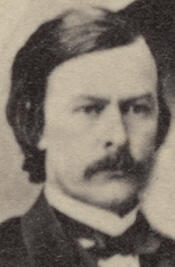
Here you will find contact information for Representative Green Clay Smith, including email address, phone number, and mailing address.
| Name | Green Clay Smith |
| Position | Representative |
| State | Kentucky |
| District | 6 |
| Party | Unconditional Unionist |
| Status | Former Representative |
| Term Start | December 7, 1863 |
| Term End | March 3, 1867 |
| Terms Served | 2 |
| Born | July 4, 1826 |
| Gender | Male |
| Bioguide ID | S000544 |
About Representative Green Clay Smith
Green Clay Smith (July 4, 1826 – June 29, 1895) was a United States soldier, politician, and clergyman who served as a Representative from Kentucky in the United States Congress from 1863 to 1867. A member of the Unconditional Unionist Party, he contributed to the legislative process during two terms in office and later served as Territorial Governor of Montana before entering the Baptist ministry and becoming active in the temperance movement.
Smith was born on July 4, 1826, in Richmond, Madison County, Kentucky, the third of seven children of John Speed Smith and Elizabeth Lewis (Clay) Smith (1798–1887). He was named for his maternal grandfather, Green Clay, a very wealthy Kentucky planter and slaveholder and a prominent state politician. His siblings included Sally Ann Lewis (1818–1875), Curran Cassius, Pauline Green, Junius Brutus, Mary Spencer, and John Speed Jr. His father served in the Kentucky legislature and in the U.S. House of Representatives, and his mother’s family was deeply involved in public life: her younger brothers, Brutus J. Clay and Cassius M. Clay, both became state politicians and were later elected as members of the Unconditional Union Party to the United States Congress from Kentucky during the American Civil War, with Cassius emerging as an outspoken abolitionist before the war.
As a young man, Smith pursued academic studies in Kentucky. When the Mexican–American War began, he enlisted in the Army and was commissioned a second lieutenant in the First Regiment of the Kentucky Volunteer Infantry on June 9, 1846. After his wartime service, he returned to Kentucky and continued his education, graduating from Transylvania University in 1849. He then studied law, was admitted to the bar in 1852, and began practicing in Covington, Kentucky. From 1853 to 1857 he served as a school commissioner, reflecting an early interest in public service and local administration.
Smith entered elective office as a member of the Kentucky House of Representatives, serving from 1861 to 1863, a period that coincided with the outbreak of the American Civil War. On April 4, 1862, he was commissioned colonel of the Fourth Regiment of the Kentucky Volunteer Cavalry in the Union Army. He was appointed brigadier general of volunteers on June 12, 1862, and later was promoted to major general of volunteers by brevet on March 13, 1865, in recognition of his service. Like his uncles Brutus J. Clay and Cassius M. Clay, Smith aligned himself with the Unconditional Union Party, which opposed secession and supported the preservation of the Union without compromise.
In 1862, Smith was elected as an Unconditional Unionist to the Thirty-eighth Congress from Kentucky, and he resigned his active military commission on December 1, 1863, to take his seat in the U.S. House of Representatives. He served in Congress from 1863 to 1867, representing Kentucky during the critical years of the Civil War and the beginning of Reconstruction. During his tenure, he served as chairman of the Committee on Militia from 1865 to 1866, participating in legislative deliberations on the organization and oversight of state and federal military forces. His service in Congress occurred during a significant period in American history, and he took part in the democratic process on behalf of his constituents as the nation grappled with the consequences of war and the restoration of the Union.
Smith resigned from Congress in July 1866 when President Andrew Johnson appointed him Territorial Governor of Montana. He served as governor from 1866 to 1869, overseeing the territory during a formative period of settlement and development. In this role, he worked to moderate hostilities between European American settlers and the Native American peoples who occupied the region, including tribes of the Blackfoot Confederacy, as federal authorities sought to extend U.S. governance and manage conflicts on the northwestern frontier.
After resigning as governor in 1869, Smith returned to Washington, D.C., where he turned increasingly to religious and social reform work. He was ordained to the Baptist ministry and became an active advocate in the temperance movement. He served as pastor to congregations in several Kentucky communities, including Richmond, Mount Sterling, Frankfort, and Louisville, combining pastoral duties with public advocacy for prohibition and moral reform. In 1876, the National Prohibition Party nominated him as its candidate for President of the United States, with Gideon T. Stewart as his running mate; the ticket received 9,737 popular votes in the general election, reflecting the still-limited but growing strength of the prohibition cause.
In 1890, Smith was called as pastor of the Metropolitan Baptist Church in Washington, D.C., now known as Capitol Hill Baptist Church. He served that congregation until his death on June 29, 1895, in Washington. Throughout his later years he continued his work in religion and temperance, maintaining a public presence as both clergyman and reformer. Smith was interred with military honors in Arlington National Cemetery in Arlington, Virginia, recognizing his dual legacy as a Union general and a national legislator.