Representative Greenbury Lafayette Fort
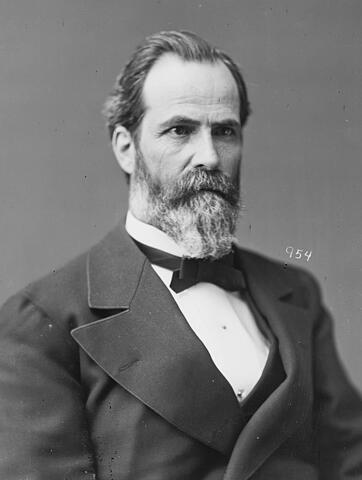
Here you will find contact information for Representative Greenbury Lafayette Fort, including email address, phone number, and mailing address.
| Name | Greenbury Lafayette Fort |
| Position | Representative |
| State | Illinois |
| District | 8 |
| Party | Republican |
| Status | Former Representative |
| Term Start | December 1, 1873 |
| Term End | March 3, 1881 |
| Terms Served | 4 |
| Born | October 17, 1825 |
| Gender | Male |
| Bioguide ID | F000288 |
About Representative Greenbury Lafayette Fort
Greenbury Lafayette Fort (October 17, 1825 – January 13, 1883) was a Republican U.S. Representative from Illinois who served four consecutive terms in the United States House of Representatives from 1873 to 1881. His congressional service took place during a significant period in American history, in the years following the Civil War and Reconstruction, when he participated in the legislative process and represented the interests of his Illinois constituents in the national government.
Fort was born in French Grant, Scioto County, Ohio, on October 17, 1825. In April 1834 he moved with his parents to Marshall County, Illinois, part of the expanding western frontier of the United States. He completed preparatory studies and attended Rock River Seminary in Mount Morris, Illinois, an institution associated with the Methodist Episcopal Church that provided advanced education in the region. His early life in a developing Midwestern community and his formal schooling helped prepare him for a career in law and public service.
After his studies, Fort read law and was admitted to the bar in 1847. He commenced the practice of law in Lacon, the county seat of Marshall County, Illinois. Alongside his legal practice, he quickly became involved in local public affairs. He was elected sheriff of Marshall County in 1850, a position that placed him at the center of law enforcement and county administration. In 1852 he served as clerk of Marshall County, and in 1857 he became a county judge, further solidifying his role as a leading legal and civic figure in the community.
With the outbreak of the Civil War, Fort entered military service in the Union Army. He was appointed a second lieutenant in the 11th Illinois Volunteer Infantry Regiment on April 30, 1861. Over the course of the war he was promoted through the ranks to lieutenant colonel and served as quartermaster, responsible for critical logistical and supply functions. In recognition of his service, he was brevetted major and lieutenant colonel of Volunteers on March 13, 1865. Following the war, he returned to Illinois and continued his public career, serving as a member of the Illinois State Senate in 1866, where he participated in state-level governance during the early Reconstruction era.
Fort’s experience in law, local office, and military service provided the foundation for his national political career. A member of the Republican Party, he was elected as a Republican to the Forty-third and to the three succeeding Congresses, serving in the U.S. House of Representatives from March 4, 1873, to March 3, 1881. During his four terms in office, he contributed to the legislative process in the postwar Congress, representing his Illinois district in debates over economic development, veterans’ issues, and the continuing adjustment of the nation after the Civil War. His tenure coincided with the presidencies of Ulysses S. Grant, Rutherford B. Hayes, and the beginning of James A. Garfield’s administration. He chose not to be a candidate for renomination in 1880 and concluded his congressional service at the end of the Forty-sixth Congress.
After leaving Congress, Fort retired from public life and returned to Lacon, Illinois. He remained a respected figure in his community, known for his long record of service at the county, state, and national levels. He had married Clara Boal, the daughter of prominent Illinois physician and politician Robert Boal, thereby linking two influential Illinois families. Their son, Robert Boal Fort, would later follow his father into public service as a member of the Illinois State Senate, continuing the family’s involvement in state politics.
Greenbury Lafayette Fort died in Lacon, Illinois, on January 13, 1883. He was interred in Lacon Cemetery. His life encompassed the transformation of Illinois from a frontier region to a key Midwestern state, and his career reflected the intertwined paths of law, military service, and Republican politics in the mid-19th century United States.