Representative Greg Ganske
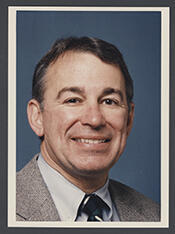
Here you will find contact information for Representative Greg Ganske, including email address, phone number, and mailing address.
| Name | Greg Ganske |
| Position | Representative |
| State | Iowa |
| District | 4 |
| Party | Republican |
| Status | Former Representative |
| Term Start | January 4, 1995 |
| Term End | January 3, 2003 |
| Terms Served | 4 |
| Born | March 31, 1949 |
| Gender | Male |
| Bioguide ID | G000041 |
About Representative Greg Ganske
John Greg Ganske (born March 31, 1949) is an American politician, plastic surgeon, and retired U.S. Army Reserve lieutenant colonel from Iowa who served as a Republican member of the United States House of Representatives from 1995 to 2003. He was the unsuccessful Republican nominee for United States Senator from Iowa in 2002 and later returned to medical practice and public commentary. Over four terms in Congress, he contributed to the legislative process as a Representative from Iowa, sponsoring 28 pieces of legislation and cosponsoring hundreds more.
Ganske was born in New Hampton, Iowa, to Victor and Mary Jo Ganske. Raised in northeastern Iowa, he distinguished himself early in athletics and international exchange. He earned honors in wrestling in high school and, in 1966, was an American Field Service exchange student to Costa Rica, an experience that broadened his exposure to international culture and politics. These formative years in Iowa and abroad helped shape his later interests in public service, health care, and foreign affairs.
Ganske pursued higher education at the University of Iowa, where he graduated in 1972 with a Bachelor of Arts degree with honors in political science and general science. He continued at the University of Iowa School of Medicine, receiving his M.D. in 1976. During medical school he met and married Corrine Mikkelson. After earning his medical degree, he completed a general surgery residency at the Oregon Health Sciences Center in 1982, followed by a plastic and reconstructive surgery residency at Harvard in 1984. At Harvard he trained under Nobel Laureate Dr. Joseph Murray, a pioneer in organ transplantation, gaining advanced expertise that would define his professional career. In addition to his civilian medical training, Ganske served in the U.S. Army Reserve, ultimately retiring with the rank of lieutenant colonel.
Following his surgical training, Ganske established himself as a plastic and reconstructive surgeon in Des Moines, Iowa. He practiced there throughout the 1980s and early 1990s, building a reputation in his field and becoming active in community and professional affairs. His medical background, particularly in reconstructive surgery, informed his later interest in health policy, patient protection, and medical ethics. While maintaining his practice, he became increasingly engaged in public issues, laying the groundwork for his eventual entry into electoral politics.
Ganske entered national politics in the 1994 election cycle, challenging veteran Democratic Congressman Neal Smith for Iowa’s 4th congressional district. Running as a Republican in what became one of the most notable upsets of that year, he campaigned in a cream-colored 1958 DeSoto—symbolically referencing the year Smith first won election to Congress—and often played music from that era at campaign events. He benefited from the 1990s round of redistricting, which had shifted the district from being largely coextensive with the Des Moines metropolitan area into southwestern Iowa, a region less familiar with Smith. Capitalizing on this new political geography, Ganske ran up large margins in southwestern Iowa and defeated Smith by six points in the 1994 general election.
Ganske took office in the U.S. House of Representatives on January 3, 1995, representing Iowa’s 4th district as a member of the Republican Party. His service in Congress occurred during a significant period in American history marked by the Republican “Contract with America,” debates over federal spending, health care, and welfare reform, and later the immediate post–September 11 era. He was considered a relatively moderate Republican, a stance that resonated in a district anchored in traditionally Democratic Des Moines. Ganske was nearly defeated for reelection in 1996 but secured another term, and he was reelected with comparatively little difficulty in 1998 and 2000. During his four terms, he participated actively in the legislative process, representing the interests of his constituents and engaging in national policy debates. According to Congress.gov, he sponsored 28 pieces of legislation and cosponsored hundreds more, reflecting a record of sustained legislative involvement.
After the 2000 round of redistricting, much of Iowa’s 4th district was shifted into a newly drawn 5th district that covered all of western Iowa, while Ganske’s home city of Des Moines was placed in the 3rd district, represented by Democrat Leonard Boswell. Rather than seek reelection to the House from a redrawn district, Ganske chose to run for the United States Senate in 2002. He easily secured the Republican nomination for the seat held by incumbent Democrat Tom Harkin. In the general election, however, Ganske lost to Harkin by approximately ten points in the November 2002 contest. His House service concluded on January 3, 2003, and following redistricting and his Senate bid, he was succeeded in representing much of his former constituency by Democrat Leonard Leroy Boswell.
Following his departure from Congress, Ganske resumed his medical practice as a plastic surgeon in Des Moines, returning to the profession in which he had trained and worked prior to his political career. He has remained engaged in public affairs through writing and commentary, contributing numerous opinion columns to regional and national outlets. His op-eds have addressed topics ranging from health care policy, COVID-19 response, and marijuana legalization to foreign policy, free speech, firearms regulation, and the role of faith and ethics in public life. Among his selected writings are pieces such as “Federal assault weapons ban should be renewed,” “Congress should cut spending more, taxes less,” “House Republicans Make a Commitment to America,” “I still think marijuana should be legal. Moderation in all things,” “Hold a morbidity and mortality conference on our COVID-19 response,” and “AI can make it hard to separate truth from fiction. Here’s how to tell the difference,” published in outlets including The Des Moines Register, The Wall Street Journal, Townhall, and JohnKassNews between 2022 and 2025. His continuing public engagement, along with appearances on C-SPAN and documentation in the Biographical Directory of the United States Congress, reflects an ongoing role in national discourse after a career that has combined medicine, military service, and elected office.