Representative Gulian Crommelin Verplanck
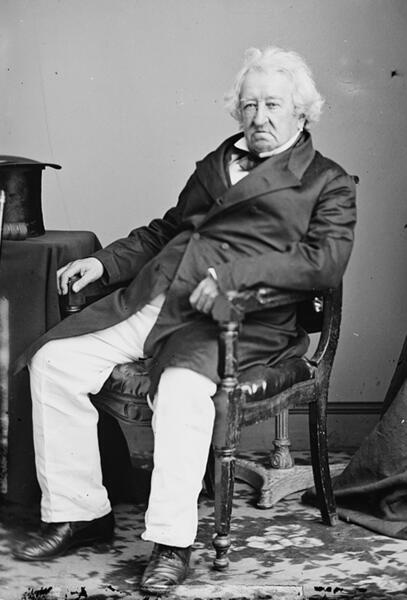
Here you will find contact information for Representative Gulian Crommelin Verplanck, including email address, phone number, and mailing address.
| Name | Gulian Crommelin Verplanck |
| Position | Representative |
| State | New York |
| District | 3 |
| Party | Jackson |
| Status | Former Representative |
| Term Start | December 5, 1825 |
| Term End | March 3, 1833 |
| Terms Served | 4 |
| Born | August 6, 1786 |
| Gender | Male |
| Bioguide ID | V000089 |
About Representative Gulian Crommelin Verplanck
Gulian Crommelin Verplanck served as a Representative from New York in the United States Congress from 1825 to 1833. A member of the Jackson Party, Gulian Crommelin Verplanck contributed to the legislative process during 4 terms in office.
Gulian Crommelin Verplanck’s service in Congress occurred during a significant period in American history. As a member of the House of Representatives, Gulian Crommelin Verplanck participated in the democratic process and represented the interests of constituents.
Gulian Crommelin Verplanck (August 6, 1786 – March 18, 1870) was an American attorney, politician, and writer. He was elected to the New York State Assembly and Senate, and later to the United States House of Representatives from New York, where he served as chairman of the influential House Ways and Means Committee. He served in a number of appointed positions of major institutions in New York: governor of New York Hospital; regent of the University of the State of New York, where in 1858, he became its Vice Chancellor, serving until his death more than a decade later; and President of the Board of Commissioners of Immigration for more than two decades. Verplanck published articles and poetry in the North American Review, and was counted among the “Knickerbocker group”. As a young man, he was among the organizers of the American Academy of the Fine Arts in New York City, which opened in 1802. It was intended to promote the study of classical art and help establish the city as a center of art. With tastes changing, it closed in 1840.