Representative Gus Yatron
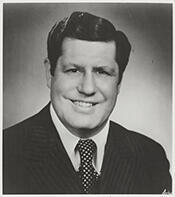
Here you will find contact information for Representative Gus Yatron, including email address, phone number, and mailing address.
| Name | Gus Yatron |
| Position | Representative |
| State | Pennsylvania |
| District | 6 |
| Party | Democratic |
| Status | Former Representative |
| Term Start | January 3, 1969 |
| Term End | January 3, 1993 |
| Terms Served | 12 |
| Born | October 16, 1927 |
| Gender | Male |
| Bioguide ID | Y000014 |
About Representative Gus Yatron
Constantine George “Gus” Yatron (October 16, 1927 – March 13, 2003) was an American businessman, professional boxer, and Democratic politician who served twelve consecutive terms as a member of the United States House of Representatives for Pennsylvania’s 6th congressional district from 1969 to 1993. Over the course of his 24 years in Congress, he represented his constituents during a significant period in American history, contributing to the legislative process and participating actively in the democratic governance of the nation.
Yatron was born in Reading, Berks County, Pennsylvania, to George H. and Theano Lazo Yatron, working-class Greek immigrants from the city of Mytilene on the island of Lesbos. His father worked as a carpenter and his mother as a maid, and their experience as immigrants shaped Yatron’s appreciation for hard work and opportunity. He attended the public schools of Reading and graduated from Reading High School, where he served as class president in his senior year, demonstrating early leadership and engagement in civic life.
Following his graduation from high school, Yatron enrolled at Kutztown State Teachers College (now Kutztown University of Pennsylvania), where he received his bachelor’s degree in 1950. While at Kutztown, he played college football for the Golden Bears and distinguished himself as an athlete, later earning induction into the Kutztown University Athletic Hall of Fame. During his college years he also took up boxing, entering the heavyweight division as a professional boxer in 1947. He compiled a professional record of 13 wins, 2 losses, and 1 draw, with nine victories by technical knockout, before turning his full attention to business and public service. At Kutztown he met his future wife, Mildred L. Yatron, with whom he would share his adult life.
After completing his education, Yatron returned to Reading and entered private business. Together with his father he founded “Yatron Ice Cream,” which he built into a successful local enterprise in his hometown. He later expanded his business interests by opening an additional hardware store, further establishing himself in the local commercial community. In 1968, as his political responsibilities grew and his interest in public service deepened, he sold Yatron Ice Cream to a local competitor in order to concentrate on his political career.
Yatron’s public service began at the local level. He served on the Reading School Board from 1955 to 1961, gaining experience in education policy and local governance. Concurrently, he was elected to the Pennsylvania House of Representatives, serving Berks County from 1956 until 1960. He then advanced to the Pennsylvania State Senate, representing the 11th district from 1961 to 1968. In these state legislative roles he developed a reputation as a diligent and pragmatic lawmaker, which laid the groundwork for his subsequent election to national office.
In 1968, campaigning as a moderate Democrat who supported fiscal responsibility and opposed further military escalation in the Vietnam War, Yatron was elected to the 91st United States Congress, representing Pennsylvania’s 6th congressional district. He took office on January 3, 1969, and would be reelected to eleven succeeding Congresses, serving continuously until January 3, 1993. As a member of the House of Representatives, Yatron quickly made a name for himself as a workhorse for his constituency, focusing on both national policy and the specific needs of his district. His first major legislative achievement came in 1971, when he sponsored legislation that expanded black lung benefits and extended eligibility requirements for afflicted coal miners, their widows, and their children, contributing to the broader framework that culminated in the Black Lung Benefits Act of 1972.
Throughout his congressional career, Yatron pursued initiatives aimed at improving government efficiency and protecting taxpayers. In 1975, he sponsored legislation, signed into law that year, establishing a commission to examine the volume of paper and administrative paperwork produced by the federal government and to recommend ways to reduce waste. The resulting “Paperwork Commission” issued recommendations that led to an estimated $3.5 billion in savings. As one of the few Greek Americans in Congress, Yatron took a particular interest in issues affecting Greece and the eastern Mediterranean. He was deeply affected by the 1974 Turkish invasion of Cyprus and played a leadership role in shaping U.S. assistance and diplomatic efforts that contributed to a cease-fire in the region. In 1973, he traveled to Europe and addressed the European Parliament in France, urging NATO allies to assume a greater share of the financial and strategic burden of defending Europe.
Yatron’s most sustained influence in Congress came through his work on foreign affairs and human rights. As a long-serving member of the House Foreign Affairs Committee, he became a strong advocate for making human rights a central element of U.S. foreign policy. In 1979 he assumed the chairmanship of the House Foreign Affairs Subcommittee on Inter-American Affairs, from which position he oversaw hearings and inquiries into U.S. policy in the Western Hemisphere and began investigations that touched on issues later associated with the Iran–Contra affair. In 1983 he became chairman of the House Foreign Affairs Subcommittee on International Organizations, Human Rights, and Oversight, further solidifying his role as a leading congressional voice on international human rights, multilateral institutions, and the accountability of U.S. foreign policy.
After serving 24 years in the U.S. House of Representatives, Yatron chose not to seek reelection in 1992 and retired from Congress at the conclusion of his twelfth term in January 1993. He subsequently lived in retirement, remaining connected to his home region of Pennsylvania and to the Greek American community whose interests he had long championed. Gus Yatron died on March 13, 2003, in Fairfax Station, Virginia. He was interred in Charles Evans Cemetery in Reading, Pennsylvania, returning in death to the city where he had been born, educated, and first entered public life.