Representative Guy Edgar Campbell
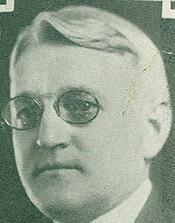
Here you will find contact information for Representative Guy Edgar Campbell, including email address, phone number, and mailing address.
| Name | Guy Edgar Campbell |
| Position | Representative |
| State | Pennsylvania |
| District | 36 |
| Party | Republican |
| Status | Former Representative |
| Term Start | April 2, 1917 |
| Term End | March 3, 1933 |
| Terms Served | 8 |
| Born | October 9, 1871 |
| Gender | Male |
| Bioguide ID | C000084 |
About Representative Guy Edgar Campbell
Guy Edgar Campbell (October 9, 1871 – February 17, 1940) was a Democratic and Republican member of the U.S. House of Representatives from Pennsylvania who served eight consecutive terms in Congress from 1917 to 1933. Over the course of his long tenure, he represented his constituents during a period of profound national transformation that encompassed the First World War, the postwar era, and the onset of the Great Depression. A member of the Republican Party for the bulk of his congressional career, Campbell was also at one time affiliated with the Democratic Party, reflecting the fluid partisan alignments of his era.
Born on October 9, 1871, Campbell came of age in the late nineteenth century, a time when Pennsylvania was emerging as a major industrial center. Details of his early life, including his family background and childhood, are not extensively documented in the surviving public record, but his later public service suggests an early familiarity with the economic and social concerns of his region. Growing up in Pennsylvania, he would have been exposed to the political and economic issues that shaped the state’s development, including industrial growth, labor relations, and infrastructure expansion.
Information about Campbell’s formal education is limited, but like many politicians of his generation, he likely combined schooling with practical experience in business or local affairs. His eventual rise to national office indicates that he acquired the skills and connections necessary to participate effectively in public life. Whatever his precise educational path, it prepared him to engage with the complex legislative questions that confronted Congress in the early twentieth century.
Before entering Congress, Campbell’s career developed within the political and civic life of Pennsylvania. His involvement in party politics and local public affairs laid the groundwork for his election to the U.S. House of Representatives. Through this experience, he became familiar with the needs and priorities of his constituents, particularly in a state whose economy was heavily influenced by manufacturing, mining, transportation, and commerce. This background helped position him as a credible advocate for his district when he sought national office.
Campbell was first elected to the U.S. House of Representatives as a Representative from Pennsylvania in 1916 and took his seat in the Sixty-fifth Congress on March 4, 1917. He served continuously through the Sixty-fifth to the Seventy-second Congresses, leaving office on March 3, 1933, after eight terms. During these sixteen years, he contributed to the legislative process as a member of the House of Representatives, participating in debates, committee work, and votes on measures that affected both his state and the nation. His service spanned World War I, the ratification of major constitutional amendments, the economic expansion of the 1920s, and the early years of the Great Depression, placing him at the center of many of the key policy discussions of his time.
As a member of the Republican Party during his congressional tenure, Campbell aligned himself with the dominant political currents in Pennsylvania, a state that was a stronghold of Republican influence in the early twentieth century. At some point in his political life he was also associated with the Democratic Party, an affiliation noted in contemporary records and later biographical references. This dual partisan identification underscores the complexity of party politics in his era and suggests that his political career may have involved shifts in allegiance or coalition-building across party lines, even as he remained committed to representing the interests of his constituents.
After leaving Congress in 1933, Campbell withdrew from national office as the New Deal era began to reshape American political and economic life. While specific details of his later professional activities are sparse, his long service in the House ensured that he remained a figure of note in Pennsylvania’s political history. Guy Edgar Campbell died on February 17, 1940. His sixteen years in the U.S. House of Representatives, spanning eight terms, left a record of sustained participation in the democratic process during one of the most consequential periods in modern American history.