Senator Guy Mark Gillette
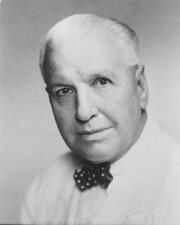
Here you will find contact information for Senator Guy Mark Gillette, including email address, phone number, and mailing address.
| Name | Guy Mark Gillette |
| Position | Senator |
| State | Iowa |
| Party | Democratic |
| Status | Former Representative |
| Term Start | March 9, 1933 |
| Term End | January 3, 1955 |
| Terms Served | 4 |
| Born | February 3, 1879 |
| Gender | Male |
| Bioguide ID | G000205 |
About Senator Guy Mark Gillette
Guy Mark Gillette (February 3, 1879 – March 3, 1973) was an American politician and lawyer who served Iowa as both a Democratic U.S. Representative (1933–1936) and U.S. Senator (1936–1945; 1949–1955). Over the course of four Senate terms, he was elected, re-elected, defeated, elected again, and defeated again, participating in the legislative process during a significant period in American history and representing the interests of his largely agricultural constituency in northwest Iowa.
Gillette was born in Cherokee, Cherokee County, Iowa, on February 3, 1879. He attended the public schools of Cherokee and, intending to pursue a career in law, enrolled at Drake University Law School in Des Moines. He graduated from Drake in 1900, was admitted to the bar that same year, and immediately commenced the practice of law in Cherokee. During the Spanish–American War, he served as a sergeant in the Fifty-second Iowa Regiment of the United States Army, although his unit did not see combat. In the aftermath of that conflict, he volunteered to fight alongside the Boers in the Second Boer War but was turned down. Returning to Iowa, he combined his legal practice with agricultural pursuits, reflecting the dual lawyer–farmer identity that would shape his political outlook.
Gillette’s early public career developed at the local and state levels. He served as city attorney of Cherokee from 1906 to 1907 and as prosecuting attorney of Cherokee County from 1907 to 1909. His growing prominence in state affairs led to his election as a member of the Iowa State Senate, in which he served from 1912 to 1916. During the First World War, he again entered military service, this time as a captain in the United States Army. After the war, he sought statewide office, running unsuccessfully for Iowa State Auditor in 1918, and then returned to Cherokee to resume farming and the practice of law. These experiences reinforced his identification with rural interests and the concerns of Iowa’s farmers.
Gillette entered national politics in the context of the Democratic landslide that accompanied Franklin D. Roosevelt’s election in 1932. That year he was elected as a Democrat to represent Iowa’s 9th congressional district, a heavily Republican area in northwest Iowa. He was easily re-elected in 1934 and served nearly all of his second House term. On November 3, 1936, he resigned from the House after winning a special election to the United States Senate to fill the vacancy caused by the death of Senator Richard Louis Murphy in an automobile accident. Nearly two years remained in Murphy’s term, which was to end on January 3, 1939. As a member of the Senate, Gillette generally supported the New Deal but broke with the Roosevelt administration on several key domestic measures, including a new wage and hours bill, a new farm bill, and aspects of the Social Security system.
Gillette’s independence from the Roosevelt administration became more pronounced in the late 1930s. He opposed Roosevelt’s plan to expand the Supreme Court, and in 1938 the administration actively sought to replace him, backing Congressman Otha D. Wearin for the Democratic nomination. Gillette defeated Wearin in the primary and went on to win his first full Senate term by 2,805 votes in the general election. During this term, his disagreements with Roosevelt widened to include the terms of the Neutrality Act, Roosevelt’s pursuit of third and fourth presidential terms, and certain federal judicial appointments. After the Japanese attack on Pearl Harbor—where his brother, Captain Claude Gillette, managed the Navy yard—Gillette adopted a more internationalist stance. As chair of a Senate subcommittee, he aggressively challenged the administration’s failure to prepare for a potential Japanese seizure of the nation’s natural rubber sources by developing synthetic, farm-based alternatives, particularly from corn. Contemporary observers, including British scholar Isaiah Berlin in a confidential 1943 analysis for the British Foreign Office, described Gillette as a simple, honest Midwestern Presbyterian, strongly devoted to corn interests and often isolationist in sentiment, though not anti-British and not a rigid opponent of Roosevelt’s foreign policy. Like several senators who had opposed Roosevelt’s pre–Pearl Harbor efforts to aid the United Kingdom and then faced wartime elections, Gillette was defeated in 1944, losing his Senate seat to Republican Governor Bourke Hickenlooper by 29,734 votes.
Within days of his first Senate defeat, President Roosevelt nominated Gillette to serve as chairman of the three-member Surplus Property Board, created to manage the disposition of surplus war property. The appointment prompted commentary in the press, including quips in The Washington Post and Life magazine that the president was confusing the problem of surplus property with that of surplus politicians. Gillette quickly grew dissatisfied with the position, complaining that he was frequently outvoted by the other two members of the board. He resigned in May 1945. Subsequently, he became president of the American League for a Free Palestine, an organization that advocated for the establishment of a Jewish state in Palestine; he served in that role until the committee’s work effectively ended with the creation of the State of Israel in 1948.
In 1948 Gillette sought a political comeback by running for Iowa’s other U.S. Senate seat, then held by former Republican Governor George Wilson. Campaigning in a period of concern over falling farm prices, he appealed directly to farmers and rural voters. At a campaign event in Iowa, President Harry S. Truman, himself seeking re-election, told voters that “if they failed to return Guy Gillette to the U.S. Senate there was something wrong with them.” Gillette defeated Wilson by 162,448 votes in the general election. In the concurrent presidential race, Truman carried Iowa en route to his national victory. Gillette’s win was one of nine Republican-held Senate seats that flipped to the Democrats in 1948. He was sworn back into the Senate on January 3, 1949, beginning his second period of Senate service, which extended until January 3, 1955.
During his final Senate tenure, Gillette remained active on issues of elections, foreign affairs, and postwar international organization. In 1951, as chair of the Subcommittee on Privileges and Elections, he conducted an investigation into the campaign practices of Wisconsin Senator Joseph McCarthy, an early congressional inquiry into McCarthy’s methods. He was among the first senators to call for the creation of a North Atlantic Assembly to provide a parliamentary dimension to the North Atlantic Treaty Organization. In 1952 he was selected by the District of Columbia Democratic Club to chair the Barkley for President effort, supporting Vice President Alben W. Barkley’s brief bid for the Democratic presidential nomination. In the 1954 election, Gillette sought re-election but was defeated by Republican U.S. Representative Thomas E. Martin by 39,697 votes. The loss was widely regarded as an upset, as it conflicted with pre-election polls, and it resulted in Iowa’s entire congressional delegation being composed of Republicans, a partisan alignment that would not recur until 2023.
After leaving the Senate for the second time, Gillette remained on Capitol Hill in a legal and advisory capacity. From 1955 to 1956 he served as counsel to the Senate Post Office and Civil Service Committee, and from 1956 to 1961 he was counsel to the Senate Judiciary Committee. He also appeared, along with former Senator Henry F. Ashurst, in a cameo role as a U.S. senator in the film “Advise & Consent,” reflecting his continued association with the institution he had served for so many years. In addition to his legislative and advisory work, Gillette wrote on public policy and international affairs, contributing articles such as “The Forgotten Consumer” (Challenge, November 1952), “The Senate in Foreign Relations” (Annals of the American Academy of Political and Social Science, September 1953), “Preparing for UN Charter Review” (World Affairs, Fall 1954), and “United Nations Charter Review” (Proceedings of the American Society of International Law, 1954). His life and career were later profiled in reference works and historical studies, including Current Biography and scholarly articles on Iowa political history.
In retirement, Gillette returned to Cherokee, Iowa, where he resided for the remainder of his life. The home he shared with his wife, known as the Guy M. and Rose (Freeman) Gillette House, became a noted local landmark. He lived quietly in Cherokee, maintaining his interest in public affairs into advanced age. Guy Mark Gillette died there on March 3, 1973, at the age of 94, closing a long career that had spanned local, state, and national service during some of the most consequential decades of the twentieth century.