Representative Guy Louis Moser
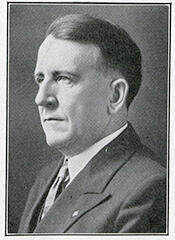
Here you will find contact information for Representative Guy Louis Moser, including email address, phone number, and mailing address.
| Name | Guy Louis Moser |
| Position | Representative |
| State | Pennsylvania |
| District | 14 |
| Party | Democratic |
| Status | Former Representative |
| Term Start | January 5, 1937 |
| Term End | January 3, 1943 |
| Terms Served | 3 |
| Born | January 23, 1886 |
| Gender | Male |
| Bioguide ID | M001026 |
About Representative Guy Louis Moser
Guy Louis Moser (January 23, 1886 – May 9, 1961) was a Democratic member of the U.S. House of Representatives from Pennsylvania who served three consecutive terms in Congress from 1937 to 1943. Over the course of his public career, he represented his Pennsylvania constituents during a pivotal era that encompassed the later years of the Great Depression and the early period of American involvement in World War II, contributing to the legislative process as a member of the House of Representatives and as chairman of a key standing committee.
Moser was born on a farm in Amity Township, Berks County, Pennsylvania, where he was raised in a rural setting that would later inform his interest in agricultural pursuits. He attended the Keystone State Normal School in Kutztown, Pennsylvania, an institution dedicated to training teachers, reflecting his early inclination toward education and public service. His formal schooling prepared him for a series of practical occupations that combined manual labor, teaching, and federal service, giving him broad experience with the working and middle-class communities he would later represent.
From 1898 to 1904, Moser was engaged in painting and paperhanging, work he undertook from a young age. In 1903 and 1904 he taught school in Amity Township, applying his normal school training in the local classrooms of his home county. Seeking more stable and long-term employment, he entered the federal postal service, beginning a career that would span more than two decades and provide him with extensive administrative and field experience.
Moser served as a railway postal clerk from 1904 to 1914, working aboard mail trains at a time when the Railway Mail Service was a critical component of the nation’s communications infrastructure. In 1914 he advanced to the position of post office inspector, a role he held until 1926. As an inspector, he was responsible for oversight, investigation, and enforcement within the postal system, gaining familiarity with federal operations and regulatory procedures. After leaving the postal service, he entered the private sector and was engaged in investment banking in Philadelphia, Pennsylvania, from 1926 to 1931, broadening his understanding of finance and business. Following his banking work, he turned to agricultural pursuits, returning to the land and farming interests that had marked his early life.
Moser’s transition into electoral politics began in the early 1930s. He sought the Democratic nomination for Congress in 1932 and again in 1934 but was unsuccessful in both attempts. These early campaigns, however, established his profile within the Democratic Party and among voters in his district. In 1936 he secured the Democratic nomination and was elected to the Seventy-fifth Congress, taking office on January 3, 1937. He was subsequently reelected to the Seventy-sixth and Seventy-seventh Congresses, serving continuously until January 3, 1943. During his tenure, he participated in the legislative deliberations of a Congress that dealt with New Deal policies, national defense measures, and the initial wartime mobilization.
While in the House of Representatives, Moser was a member of the Democratic Party caucus and represented Pennsylvania during a significant period in American history. He took part in the democratic process by advocating for the interests of his constituents and contributing to the formulation of national policy. In the Seventy-seventh Congress he served as chairman of the United States House Committee on the Census, a standing committee responsible for oversight of the decennial census and related statistical matters. In this capacity, he played a role in supervising the collection and use of population data that underpinned congressional apportionment, federal resource allocation, and a wide range of governmental planning activities.
Moser’s congressional career came to an end when he was an unsuccessful candidate for renomination in 1942. He continued to seek a return to the House, pursuing the Democratic nomination again in 1944, 1948, and 1950, but he did not regain his seat. After leaving Congress, he resumed agricultural pursuits, reflecting both his early background and his continuing interest in farming and rural affairs. In addition to his work in agriculture, he engaged in public speaking, drawing on his experience in federal service and elective office to address civic groups and political audiences.
Guy Louis Moser spent his later years in Pennsylvania, remaining connected to the communities he had long served. He died in Reading, Pennsylvania, on May 9, 1961. His career encompassed education, federal postal administration, finance, agriculture, and three terms in the U.S. House of Representatives, marking him as a figure whose public life intersected with major developments in early twentieth-century American political and economic history.