Representative Guy Loren Shaw
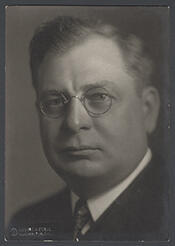
Here you will find contact information for Representative Guy Loren Shaw, including email address, phone number, and mailing address.
| Name | Guy Loren Shaw |
| Position | Representative |
| State | Illinois |
| District | 20 |
| Party | Republican |
| Status | Former Representative |
| Term Start | April 11, 1921 |
| Term End | March 3, 1923 |
| Terms Served | 1 |
| Born | May 16, 1881 |
| Gender | Male |
| Bioguide ID | S000306 |
About Representative Guy Loren Shaw
Guy Loren Shaw (May 16, 1881 – May 19, 1950) was an American farmer, real estate businessman, and Republican politician who served one term as a U.S. Representative from Illinois from 1921 to 1923. Over the course of his career, he combined practical experience in agriculture and land development with public service at both the state and national levels.
Shaw was born on a farm near Summer Hill, Pike County, Illinois, on May 16, 1881. Raised in a rural environment, he was educated in the local public schools, an experience that grounded him in the agricultural and small-town life of central Illinois at the turn of the twentieth century. His early years on the family farm helped shape his later professional focus on farming, land reclamation, and real estate, and provided him with firsthand familiarity with the concerns of agricultural communities he would later represent.
Pursuing formal training in his chosen field, Shaw attended the College of Agriculture of the University of Illinois. His studies there reflected the growing emphasis in the early 1900s on scientific farming and modern agricultural methods. After leaving the university, he returned to agricultural pursuits, applying both his academic training and practical experience. He became particularly involved in the development of overflow lands along the Illinois River, participating in efforts to reclaim and improve low-lying and periodically flooded tracts for productive use. This work placed him at the intersection of agriculture, land management, and local economic development.
Shaw’s involvement in public affairs began at the state level. In 1920 he served as a delegate to the Illinois state constitutional convention, a body convened to consider revisions to the state’s fundamental law. His selection as a delegate reflected his standing in his community and his growing reputation as a spokesman for agricultural and rural interests. Participation in the convention provided him with legislative and deliberative experience and helped launch his broader political career.
Building on this state-level service, Shaw was elected as a Republican to the Sixty-seventh Congress, representing Illinois in the U.S. House of Representatives from March 4, 1921, to March 3, 1923. His single term in Congress coincided with the early years of the Harding administration and a post–World War I period marked by economic adjustment, debates over agricultural policy, and shifting domestic priorities. As a member of the House of Representatives, Shaw contributed to the legislative process, participated in the democratic governance of the nation, and represented the interests of his Illinois constituents, particularly those from farming and small-town backgrounds. A member of the Republican Party, he aligned with the majority that controlled Congress during this period.
Shaw sought to continue his congressional career but was an unsuccessful candidate for reelection in 1922 to the Sixty-eighth Congress. After leaving Congress in March 1923, he returned to private life and resumed his business activities. Drawing on his background in land development, he engaged in the real estate business in Beardstown, Illinois, and later in Urbana, in Champaign County, Illinois. These ventures extended his longstanding interest in land use and property management beyond purely agricultural pursuits.
In his later years, Shaw moved to Normal, in McLean County, Illinois, where he continued to combine agricultural pursuits, farm management, and real estate work. He remained active in these fields until his final years, maintaining his connection to the agricultural communities that had shaped his life and career. Guy Loren Shaw died in Normal, Illinois, on May 19, 1950, three days after his sixty-ninth birthday. He was interred in Bloomington Cemetery in nearby Bloomington, Illinois, closing a life that linked farming, land development, and public service at both the state constitutional and federal legislative levels.