Representative H. Martin Lancaster
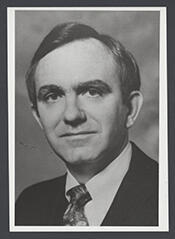
Here you will find contact information for Representative H. Martin Lancaster, including email address, phone number, and mailing address.
| Name | H. Martin Lancaster |
| Position | Representative |
| State | North Carolina |
| District | 3 |
| Party | Democratic |
| Status | Former Representative |
| Term Start | January 6, 1987 |
| Term End | January 3, 1995 |
| Terms Served | 4 |
| Born | March 24, 1943 |
| Gender | Male |
| Bioguide ID | L000045 |
About Representative H. Martin Lancaster
Harold Martin Lancaster, O.B.E. (born March 24, 1943) is an American politician and attorney who represented North Carolina in the United States House of Representatives from 1987 to 1995 and later served as President of the North Carolina Community College System and Chair of the National Council of State Directors of Community Colleges. A member of the Democratic Party, he served four terms in Congress during a significant period in American political history, contributing to the legislative process and representing the interests of his eastern North Carolina constituents.
Lancaster was raised on a tobacco farm in rural Wayne County, North Carolina, where he spent his childhood working in the fields. He attended a small local school and was active in church youth activities, experiences that grounded him in the culture and economy of rural eastern North Carolina. His early exposure to public service began in 1957, when he served as a Page in the North Carolina House of Representatives, and again in 1959, when he returned as Chief Page. These formative experiences in the state legislature helped spark his interest in law and politics.
In 1961, Lancaster enrolled at the University of North Carolina at Chapel Hill. Demonstrating strong academic promise, he entered the UNC School of Law after his junior year as a Law Alumni Scholar and completed his legal studies in 1967. Shortly after graduating from law school, he joined the United States Navy, serving on active duty as a judge advocate for three years. Eighteen months of that service were spent aboard the aircraft carrier USS Hancock (CV-19) off the coast of Vietnam during the Vietnam War. Lancaster continued his military involvement as a reservist in the Navy Judge Advocate General’s Corps until 1993, combining legal expertise with military service over more than two decades.
Following his active-duty service, Lancaster returned to North Carolina and entered private practice, establishing a law firm with a college classmate. His growing reputation in public affairs led Governor Jim Hunt in 1977 to appoint him Chairman of the North Carolina Arts Council, a position he held for four years. His work on the Arts Council helped raise the profile of cultural and artistic initiatives in the state and served as a springboard to elective office. Lancaster was subsequently elected to the North Carolina House of Representatives, where he served for eight years. In the state legislature, he built a record that positioned him for national office and deepened his engagement with issues affecting education, economic development, and rural communities.
Lancaster was elected to the U.S. House of Representatives in 1986 as a Democrat from North Carolina, taking office in January 1987. He was reelected three times and served until January 1995. During his four terms in Congress, he sat on the Armed Services, Small Business, Agriculture, and Merchant Marine and Fisheries Committees, with the House Armed Services Committee serving as his principal assignment. Lancaster also represented the House for six years in the negotiations on the Chemical Weapons Convention in Geneva, reflecting his involvement in national security and arms control policy. His congressional tenure coincided with the end of the Cold War and significant shifts in defense and agricultural policy, and he participated actively in the legislative deliberations of that era.
Although Lancaster had been reelected without serious difficulty in his earlier campaigns, the 1994 election proved challenging. That year he faced Republican Walter B. Jones, Jr., a former Democratic state representative who had recently switched parties. Redistricting in the early 1990s had added to Lancaster’s district a substantial portion of the territory once represented by Jones’s father, longtime Congressman Walter B. Jones, Sr. The race was initially close, but Jones gained momentum after circulating a photograph of Lancaster jogging with President Bill Clinton, whose socially liberal positions—particularly on allowing gays to serve openly in the military—were unpopular with many voters in Lancaster’s socially conservative eastern North Carolina district. In the national Republican landslide of 1994, Jones defeated Lancaster by nearly six percentage points, making Lancaster one of many moderate Southern Democrats unseated that year.
After leaving Congress in 1995, Lancaster briefly joined the administration of Governor Jim Hunt, handling federal issues for the state. President Bill Clinton then asked him to assist in securing Senate ratification of the Chemical Weapons Convention, drawing on Lancaster’s experience with the treaty negotiations while in Congress. In the fall of 1995, Clinton nominated Lancaster to serve as Assistant Secretary of the Army for Civil Works, the civilian official responsible for policy development and advocacy for the U.S. Army Corps of Engineers. The United States Senate confirmed his nomination in January 1996. In this role, Lancaster represented the Corps’ interests before the Office of Management and Budget, the White House, and Congress, overseeing civil works policy in areas such as navigation, flood control, and environmental restoration.
In 1997, Lancaster was selected as President of the North Carolina Community College System, a position in which he served for more than a decade. As system president, he sought to increase state and private funding for facilities, equipment, faculty salaries, and instruction, and he emphasized the central role of community colleges in workforce and economic development. He led the system’s participation in the successful 2000 Higher Education Bond referendum, which provided $600 million for community college construction, repair, and renovation. Lancaster focused particular attention on expanding the role of community colleges in preparing “homegrown teachers” for North Carolina’s public schools and in providing workforce training for biotechnology and other high-technology industries. In the summer of 2003, his leadership was recognized nationally when he was elected Chair of the National Council of State Directors of Community Colleges.
Lancaster announced in March 2007 that he would retire as president of the North Carolina Community College System in the spring of 2008. His tenure drew praise from educators and commentators; a column in the Raleigh News & Observer compared his impact on the community college system to that of William C. Friday on the University of North Carolina system, noting that Lancaster had effectively conveyed to legislators that community colleges were a key driver of the state’s economic growth and job recruitment. In April 2008, he was named President Emeritus of the community college system in recognition of his service. That same year, he announced that he would join the Raleigh law firm Smith Anderson Blount Dorsett Mitchell & Jernigan in an “of counsel” capacity beginning in September 2008, concentrating his practice on regulatory and administrative law.
In February 2009, Lancaster expanded his work in public policy by joining Dawson & Associates in Washington, D.C., as a senior advisor on federal transportation and environmental policy, again drawing on his experience with the Army Corps of Engineers and infrastructure issues. His contributions to international and regional affairs were recognized in 2011, when Queen Elizabeth II appointed him an Honorary Officer of the Most Excellent Order of the British Empire (O.B.E.) for his services to the people of Northern Ireland. Throughout his varied career in military service, state and federal government, higher education leadership, and legal practice, Lancaster has remained closely associated with efforts to link education, economic development, and public policy in North Carolina and beyond.