Representative Jim Saxton
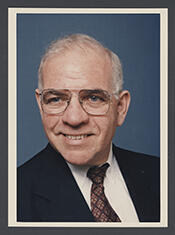
Here you will find contact information for Representative Jim Saxton, including email address, phone number, and mailing address.
| Name | Jim Saxton |
| Position | Representative |
| State | New Jersey |
| District | 3 |
| Party | Republican |
| Status | Former Representative |
| Term Start | January 3, 1985 |
| Term End | January 3, 2009 |
| Terms Served | 12 |
| Born | January 22, 1943 |
| Gender | Male |
| Bioguide ID | S000097 |
About Representative Jim Saxton
Hugh James Saxton (born January 22, 1943) is an American politician from New Jersey who served as a Republican member of the United States House of Representatives from 1984 to 2009. Over the course of 13 consecutive terms in Congress, he represented districts encompassing parts of Burlington, Ocean, and Camden counties, and became known as a centrist Republican with particular influence on defense, economic policy, and environmental issues. His congressional service unfolded during a significant period in late 20th- and early 21st-century American history, during which he participated actively in the legislative process and represented the interests of his South Jersey constituents.
Saxton was born in Nicholson, Wyoming County, Pennsylvania, on January 22, 1943. He attended public schools and went on to study at East Stroudsburg State College (now East Stroudsburg University of Pennsylvania) and Temple University. After completing his studies, he pursued a career as an elementary public school teacher, an experience that later informed his positions on education policy, including his opposition to school voucher programs. In addition to teaching, he worked as a small business owner, gaining familiarity with local economic concerns and the challenges facing entrepreneurs.
By the mid-1970s, Saxton had settled in New Jersey, where he became active in local and state politics. He served in the New Jersey General Assembly, the lower house of the state legislature, from 1976 to 1981. In 1982 he moved to the New Jersey Senate, where he served until 1984. During these years he built a reputation as a pragmatic Republican legislator and established a political base in South Jersey. Saxton resided for a time in the Vincentown section of Southampton Township, New Jersey, and later became a resident of Mount Holly, New Jersey, maintaining close ties to the communities he would go on to represent in Congress.
Saxton entered the U.S. House of Representatives in 1984 under unusual circumstances. That year, Representative Edwin B. Forsythe, the Republican incumbent in New Jersey’s 13th Congressional District, died with nine months remaining in his seventh full term. Saxton ran in and won both the special election to complete Forsythe’s term and the regular election for the full two-year term held the same day. This dual victory gave him greater seniority than other freshmen members elected in 1984. Following the 1990 census, when New Jersey lost a congressional seat, his district was renumbered as the 3rd District, but he continued to represent much of the same South Jersey territory. Saxton was reelected 11 times without serious difficulty, always winning at least 58 percent of the vote, though he faced spirited challenges in 2000 from Cherry Hill Mayor Susan Bass Levin and in 2006 from Democrat Rich Sexton, a lawyer and U.S. Navy veteran from Mount Laurel; he prevailed in the latter race by a 58–41 percent margin.
During his 13 terms in Congress, Saxton rose to become a high-ranking member of the House Armed Services Committee and the House Resources Committee (later the Natural Resources Committee). On Armed Services, he served as Ranking Member of the Air and Land Forces Subcommittee and sat on the Terrorism and Conventional Threats and Capabilities Subcommittee, playing a role in oversight of military readiness, weapons systems, and emerging security threats. On the Natural Resources Committee, he served on the Subcommittee on Fisheries, Wildlife and Oceans, reflecting his long-standing interest in conservation and coastal issues. He also held leadership positions on the Joint Economic Committee, a bicameral panel composed of members of both the House and Senate, serving at different times as its Ranking Republican Member and as Chairman, where he worked on macroeconomic policy, taxation, and long-term fiscal issues.
Saxton became particularly prominent in defense and base realignment matters affecting South Jersey. He was widely praised across the region for his efforts to remove Fort Dix from the Pentagon’s Base Realignment and Closure (BRAC) lists in 1989 and 1991, McGuire Air Force Base from the list in 1993, and Lakehurst Naval Air Station from the list in 1995. From 1993 to 2005 he worked to foster joint operations among the three installations, and his efforts were ultimately rewarded when Congress passed, and President George W. Bush signed, the Base Realignment and Closure Act of 2005. The legislation merged Fort Dix, McGuire Air Force Base, and Lakehurst Naval Air Station into a single “megabase,” the first of its kind in the United States, preserving approximately 17,000 jobs and directing an additional 1,500 jobs and new aircraft to the joint facility. He also played a key role in preserving the New Jersey Air National Guard’s 108th Air Refueling Wing by helping secure a squadron of newer aircraft, thereby ensuring the unit’s continued viability.
In domestic policy, Saxton’s record reflected a blend of conservative and moderate positions. He was generally classified as a moderate Republican, with the American Conservative Union rating his lifetime record as comparable to that of conservative Democrat Gene Taylor of Mississippi, and the nonpartisan National Journal in 2006 listing him among the centrists in Congress. He supported taking action to ensure the long-term solvency of Social Security and, as Chairman of the Joint Economic Committee, argued against the federal estate tax in a 1998 committee study. That analysis concluded that the estate tax imposed costs on taxpayers, the economy, and the environment that exceeded any potential benefits. He was strongly conservative on abortion, earning a 100 percent rating from the Christian Coalition from 2003 to 2005 and voting against measures that would authorize partial-birth abortion, taxpayer-funded human embryo experimentation, and human cloning. At the same time, he supported gun control measures such as the Brady Handgun Violence Prevention Act and a ban on certain semi-automatic firearms, and he opposed school vouchers, consistent with his background as a public school teacher.
Saxton was also notable for his environmental and conservation advocacy, which made him one of the relatively few Republicans regularly endorsed by major environmental organizations. He supported environmentalism and coastal protection, co-founding the bipartisan Congressional Wildlife Refuge Caucus and earning endorsements from the Sierra Club in 2000, 2002, 2004, and 2006. He received generally favorable ratings from environmental groups and was endorsed by the League of Conservation Voters, Ocean Champions, and the New Jersey Environmental Federation in his 2006 reelection campaign. The Audubon Society, the National Wildlife Federation, and The Nature Conservancy regularly gave him high marks and various awards for his work on conservation issues. Among his tangible accomplishments was a major beach erosion repair project on Long Beach Island, a popular New Jersey tourist destination, which reached the groundbreaking stage in 2006. He also helped secure a hospital Medicare funding initiative that brought approximately $80 million to New Jersey hospitals in 2005 and 2006.
On broader legislative matters, Saxton frequently aligned with bipartisan reform efforts. He supported federal campaign finance reform, backing both the Shays-Meehan bill in the House and the McCain-Feingold legislation in the Senate. In trade policy, he voted against the North American Free Trade Agreement (NAFTA) but supported the Central America Free Trade Agreement (CAFTA), which he viewed as a means to help alleviate poverty and hunger and reduce political instability in Latin America. He was supportive of some gay rights measures, including the Employment Non-Discrimination Act and hate crimes legislation. Saxton was a member of the Republican Main Street Partnership and Republicans for Environmental Protection, reflecting his centrist and environmentally oriented Republican profile. In the 2008 Republican presidential primaries, he endorsed his close friend Representative Duncan Hunter of California.
Saxton’s long tenure also included moments of public attention unrelated to legislation. On May 26, 2006, while in the Rayburn House Office Building, he reported hearing a loud noise resembling gunfire, prompting a security lockdown of the building for several hours. It was later determined that the sound had been caused by a construction worker discharging a pneumatic hammer in an elevator shaft near the garage; when Capitol Police asked the workers to recreate the noise, officers agreed it sounded like gunfire. On November 9, 2007, Saxton announced that he would not seek reelection in 2008, citing a diagnosis of prostate cancer. He left Congress at the conclusion of his term on January 3, 2009, and was succeeded by Democratic state senator John Adler, who had previously been his Democratic opponent in the 1990 congressional race.
Following his retirement from Congress, Saxton remained active in civic and business affairs. He became director emeritus on the board of Holtec International, a New Jersey–based energy equipment and systems company, reflecting his continued engagement with issues at the intersection of technology, energy, and public policy. Now residing in Mount Holly, New Jersey, H. James Saxton’s career is marked by his 13-term congressional service, his work on defense installations and economic policy, and his distinctive blend of conservative social views with moderate, pro-environmental, and bipartisan legislative initiatives.