Representative Halbert Eleazer Paine
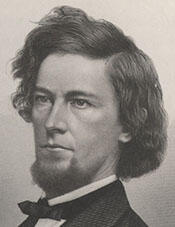
Here you will find contact information for Representative Halbert Eleazer Paine, including email address, phone number, and mailing address.
| Name | Halbert Eleazer Paine |
| Position | Representative |
| State | Wisconsin |
| District | 1 |
| Party | Republican |
| Status | Former Representative |
| Term Start | December 4, 1865 |
| Term End | March 3, 1871 |
| Terms Served | 3 |
| Born | February 4, 1826 |
| Gender | Male |
| Bioguide ID | P000028 |
About Representative Halbert Eleazer Paine
Halbert Eleazer Paine (February 4, 1826 – April 14, 1905) was an American lawyer, Union Army general, and Republican politician who represented Wisconsin’s 1st congressional district in the United States House of Representatives from 1865 to 1871. His three consecutive terms in Congress, as a member of the Republican Party, coincided with the critical years of the Civil War’s aftermath and Reconstruction, during which he contributed actively to the legislative process and represented the interests of his Wisconsin constituents.
Paine was born in Chardon, Geauga County, Ohio, on February 4, 1826. Through his father’s family he was a first cousin of Eleazar A. Paine, who would also become a Union general during the Civil War. He attended the common schools of Ohio and then enrolled at Western Reserve College, from which he graduated in 1845. Shortly after graduation he moved to Mississippi, where he spent about a year teaching school. He then returned to Cleveland, Ohio, to read law, and in 1848 he was admitted to the bar and established a legal practice. During this period he married and began raising a family, building the foundations of a professional and domestic life that would later be transplanted to the Midwest.
In 1857 Paine moved with his family to Milwaukee, Wisconsin, where he continued his legal career and quickly became part of the city’s professional and political circles. Beginning in 1859 his law partner was Carl Schurz, the German American reformer who would later serve as a Union general, U.S. senator, and cabinet member. Paine encouraged Schurz to devote more attention to politics and public speaking than to the routine practice of law, reflecting Paine’s own interest in public affairs and reform. By the eve of the Civil War, Paine was a well-established attorney in Wisconsin with growing connections to the emerging Republican leadership in the state.
With the outbreak of the American Civil War, Paine entered the Union Army and was commissioned colonel of the 4th Wisconsin Infantry Regiment. He led his regiment and later larger commands in extensive operations in the Lower Mississippi Valley, particularly in Louisiana and Mississippi. His service included participation in the capture of New Orleans, the Battle of Baton Rouge, the Bayou Teche offensive, and operations associated with the broader Vicksburg campaign. In late September 1862 he assumed command of Camp Parapet, a major fortification about ten miles north of New Orleans, under the overall command of Brigadier General Thomas W. Sherman, who directed the defenses of New Orleans. On March 12, 1863, President Abraham Lincoln nominated Paine to be brigadier general of volunteers, to rank from March 13, 1863; the U.S. Senate confirmed the appointment on March 13, 1863, and the commission was formally dated April 9, 1863. As a brigadier general, Paine commanded the Third Division of the Army of the Gulf and took part in the siege and Battle of Port Hudson in Louisiana. During an assault on Priest Gap in that campaign he was severely wounded, an injury that required the amputation of his leg. After his recovery he was assigned to command troops in the defenses of Washington, D.C., and played a role in repelling Confederate General Jubal A. Early’s raid on the capital in 1864. Paine resigned from the army on May 15, 1865, and returned to Wisconsin. On December 11, 1866, President Andrew Johnson nominated him for appointment to the brevet grade of major general of volunteers, to rank from March 13, 1865; the Senate confirmed this brevet promotion on February 6, 1867.
Even before his formal resignation from the military, Paine had entered national politics. A Republican, he was elected to the Thirty-ninth, Fortieth, and Forty-first Congresses from Wisconsin’s 1st congressional district, serving from March 4, 1865, to March 3, 1871. His six years in the House of Representatives spanned the decisive early Reconstruction period, and he participated fully in the democratic and legislative processes of that era. In 1866 he served as a delegate to the National Union Convention in Philadelphia, a gathering that sought to rally support for President Andrew Johnson’s Reconstruction policies prior to the midterm elections; some participants hoped to launch a new political party, though this effort did not come to fruition. In Congress, Paine served as chairman of the Committee on Militia during the Fortieth Congress and as chairman of the Committee on Elections during the Forty-first Congress, positions that placed him at the center of debates over the organization of state forces and the legitimacy of contested seats in the House. In 1869 he championed the passage of a bill providing for the systematic taking of meteorological observations in the interior of the continent, an initiative that contributed to the early development of federal weather services. After the expiration of his third term in 1871, Paine chose not to seek renomination and retired from elective politics.
Following his congressional service, Paine established permanent residence in Washington, D.C., where he resumed the practice of law and became a prominent member of the capital’s legal community. In 1879 President Rutherford B. Hayes appointed him United States Commissioner of Patents, a position he held for two years. As Commissioner of Patents, Paine advocated the adoption of practical technological innovations within federal agencies, including the introduction and wider use of typewriters in government offices, reflecting his interest in administrative efficiency and modernization. After leaving the Patent Office, he continued to practice law in Washington, often appearing in complex cases and contested election matters that drew upon his legislative experience.
In his later years Paine also devoted considerable attention to writing and legal scholarship. He published detailed accounts of two contested election cases in which he had served as counsel: Contested Election, Territory of Utah: George R. Maxwell v. George Q. Cannon (1888), and Contested Election, United States Senate: William H. Clagett v. Frederick T. Dubois: Before the Committee on Privileges and Elections: Argument of Halbert E. Paine, Counsel for Contestee (1891). These works documented the legal and constitutional issues surrounding representation from the territories and the Senate, and they reflected his expertise in election law developed during and after his service as chairman of the House Committee on Elections. Paine also wrote a memoir of his Civil War service, later published posthumously under the title A Wisconsin Yankee in Confederate Bayou Country: The Civil War Reminiscences of a Union General. Edited by historian Samuel C. Hyde, Jr. and issued in an annotated edition by Louisiana State University Press in 2009, the memoir has been noted for its reflective and analytical tone, emphasizing the motives and contradictions of his actions rather than a simple celebration of the Union cause.
Halbert Eleazer Paine died in Washington, D.C., on April 14, 1905. In recognition of his military service and national contributions, he was buried in Arlington National Cemetery. His career as a lawyer, Union general, and three-term Republican Representative from Wisconsin placed him among the notable figures of the Civil War and Reconstruction era, and his writings and public service continued to influence legal and historical understanding long after his death.