Representative Hamilton Dudley Coleman
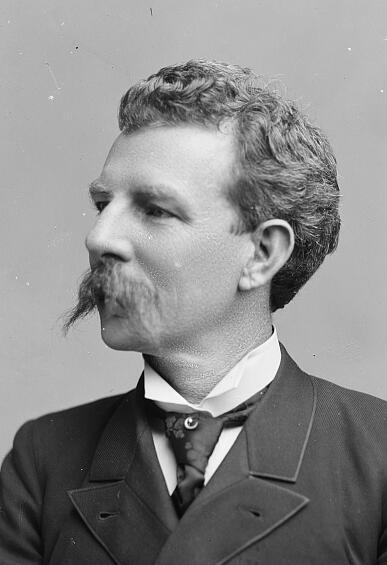
Here you will find contact information for Representative Hamilton Dudley Coleman, including email address, phone number, and mailing address.
| Name | Hamilton Dudley Coleman |
| Position | Representative |
| State | Louisiana |
| District | 2 |
| Party | Republican |
| Status | Former Representative |
| Term Start | December 2, 1889 |
| Term End | March 3, 1891 |
| Terms Served | 1 |
| Born | May 12, 1845 |
| Gender | Male |
| Bioguide ID | C000619 |
About Representative Hamilton Dudley Coleman
Hamilton Dudley Coleman (May 12, 1845 – March 16, 1926) was an American businessman and Republican politician who represented Louisiana’s 2nd congressional district, based in New Orleans, in the United States House of Representatives from 1889 to 1891. His career spanned military service in the Confederate Army, entrepreneurial activity in postwar New Orleans, and a series of state and federal political roles that made him a notable, if often unsuccessful, Republican figure in a predominantly Democratic era in Louisiana politics.
Coleman was born on May 12, 1845. As a young man, he came of age during the sectional crisis that culminated in the American Civil War. During the conflict he served in the Washington Artillery, a distinguished New Orleans-based unit that formed part of the Army of Northern Virginia. In this capacity he fought for the Confederacy and was among the Confederate forces present at the surrender of General Robert E. Lee’s army at Appomattox, Virginia, in April 1865, marking the effective end of major military operations in the Eastern Theater.
Following the war, Coleman returned to New Orleans and entered business at a time when the city and region were attempting to rebuild their shattered economy. He became a manufacturer and dealer of farm equipment, participating in the modernization of agricultural practices in Louisiana and the surrounding states. Demonstrating an interest in emerging technologies and urban infrastructure, he was also an organizer of New Orleans’s first electric lighting company, helping to introduce and expand electric illumination in the city during the late nineteenth century, when such systems were transforming American urban life.
Coleman’s prominence in business and his alignment with the Republican Party, which in Louisiana was a minority party following Reconstruction, led him into electoral politics. In the 1888 elections he was elected as a Republican to the Fifty-first Congress, representing Louisiana’s 2nd congressional district, which included much of New Orleans. He served a single term from March 4, 1889, to March 3, 1891. His election was notable in the context of the Democratic dominance of Louisiana politics in the post-Reconstruction era, and his tenure in Congress placed him among the very few Republicans to hold federal office from the state during that period.
In the 1890 election, Coleman sought reelection to the House but was defeated by Democrat Matthew D. Lagan, who had previously held the seat and reclaimed it from Coleman. Despite this setback, Coleman remained active in Republican politics in Louisiana. He ran unsuccessfully for governor and for lieutenant governor, illustrating both his continued prominence within the state Republican organization and the difficulty Republicans faced in winning statewide office in Louisiana during the late nineteenth and early twentieth centuries. His single congressional term nonetheless acquired long-term historical significance: he was the last Republican to represent Louisiana in Congress until David C. Treen was elected in 1973, and he was the last Republican to represent New Orleans in the House until Anh “Joseph” Cao won election in 2008.
In addition to his political activities, Coleman held a federal administrative post at the New Orleans Mint. From 1899 to 1905 he served as the melter and refiner, an official responsible for overseeing the processing and refining of precious metals used in coinage. This position placed him within the federal financial and monetary apparatus at a time when the United States was expanding its coinage and grappling with questions of currency, metal standards, and economic policy at the turn of the century.
Hamilton Dudley Coleman spent his later years divided between the Gulf Coast and New Orleans. He died in Biloxi, Mississippi, on March 16, 1926. His remains were returned to Louisiana for burial, and he is interred at Metairie Cemetery in New Orleans, a resting place for many of the city’s political, military, and business leaders. His life reflected the trajectory of a former Confederate soldier who became a Reconstruction- and post-Reconstruction-era Republican businessman and officeholder, occupying a distinctive place in the political history of Louisiana and New Orleans.