Representative Hamilton Chamberlain Jones
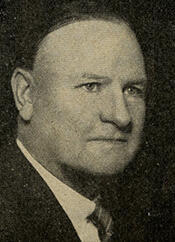
Here you will find contact information for Representative Hamilton Chamberlain Jones, including email address, phone number, and mailing address.
| Name | Hamilton Chamberlain Jones |
| Position | Representative |
| State | North Carolina |
| District | 10 |
| Party | Democratic |
| Status | Former Representative |
| Term Start | January 3, 1947 |
| Term End | January 3, 1953 |
| Terms Served | 3 |
| Born | September 26, 1884 |
| Gender | Male |
| Bioguide ID | J000224 |
About Representative Hamilton Chamberlain Jones
Hamilton Chamberlain Jones (September 26, 1884 – August 10, 1957) was a United States Representative from North Carolina and a longtime Democratic public official and attorney. Born in Charlotte, Mecklenburg County, North Carolina, he spent his early years there before pursuing secondary education beyond his home state. He attended the public schools of Charlotte, then Central High School in Washington, D.C., and later Horner Military School in Oxford, North Carolina, reflecting a formative education that combined local schooling, exposure to the nation’s capital, and military discipline.
Jones continued his studies at the University of North Carolina at Chapel Hill, from which he graduated in 1906. While at UNC he studied law and was a member of the Sigma Alpha Epsilon fraternity, participating in the social and professional networks that would later support his legal and political career. He pursued further legal education at Columbia Law School in New York City, completing his studies there in 1907. Having read law at both institutions, he was admitted to the bar in 1906, marking the formal beginning of his professional life in the legal field.
After his admission to the bar, Jones commenced the practice of law in Charlotte in 1910. In addition to his legal work, he engaged in various agricultural pursuits, a common combination in the early twentieth-century South that tied professional men to the region’s agrarian economy. His early legal practice and agricultural interests helped establish him as a figure rooted in both the professional and rural life of North Carolina, and they provided a base from which he entered public service.
Jones’s public career began at the local level. He served as Judge of the City Recorder’s Court and Juvenile Court of Charlotte from 1913 to 1919, positions that placed him at the center of municipal justice and juvenile matters during a period of urban growth and social change. Following this judicial service, he was appointed assistant United States district attorney for the Western District of North Carolina, serving from 1919 to 1921. In that federal prosecutorial role, he participated in the enforcement of national laws in the post–World War I era. He subsequently entered state-level politics, serving in the North Carolina State Senate from 1925 to 1927, where he contributed to legislative deliberations in Raleigh. In addition to his elective and appointive offices, he was a trustee of the University of North Carolina, maintaining a formal connection to his alma mater and participating in the governance of the state’s flagship university.
Building on decades of legal and public service, Jones was elected as a Democrat to the United States House of Representatives. He won election to the Eightieth, Eighty-first, and Eighty-second Congresses and served from January 3, 1947, to January 3, 1953, representing North Carolina during a significant period in American history that encompassed the early Cold War, the beginning of the postwar economic expansion, and the initial stages of the civil rights era. As a member of the House of Representatives, Hamilton Chamberlain Jones participated in the democratic process, contributed to the legislative work of Congress, and represented the interests of his North Carolina constituents. A member of the Democratic Party, he served three consecutive terms before standing for reelection in 1952. That year he was an unsuccessful candidate for election to the Eighty-third Congress, bringing his congressional service to a close at the start of 1953.
After leaving Congress, Jones resumed the practice of law in Charlotte, returning to the profession that had anchored his public life. He continued to be identified with the legal and civic affairs of his native city until his death. Hamilton Chamberlain Jones died in Charlotte, North Carolina, on August 10, 1957. He was interred in Evergreen Cemetery in Charlotte. His longtime residence in the city, known as the Hamilton C. Jones III House, was later recognized for its historical and architectural significance and was listed on the National Register of Historic Places in 2002, underscoring the enduring association of his name with the civic and historical landscape of Charlotte.