Senator Hamilton Fish Kean
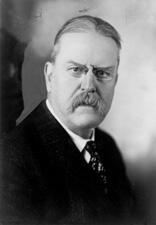
Here you will find contact information for Senator Hamilton Fish Kean, including email address, phone number, and mailing address.
| Name | Hamilton Fish Kean |
| Position | Senator |
| State | New Jersey |
| Party | Republican |
| Status | Former Representative |
| Term Start | April 15, 1929 |
| Term End | January 3, 1935 |
| Terms Served | 1 |
| Born | February 27, 1862 |
| Gender | Male |
| Bioguide ID | K000026 |
About Senator Hamilton Fish Kean
Hamilton Fish Kean (February 27, 1862 – December 27, 1941) was a Republican politician, banker, and agriculturalist who represented New Jersey in the United States Senate from 1929 to 1935. His single six-year term in the Senate coincided with a significant period in American history, spanning the onset of the Great Depression, during which he participated in the legislative process and represented the interests of his New Jersey constituents.
Kean was born on February 27, 1862, at “Ursino,” his ancestral estate near Elizabeth, New Jersey. He was the son of Col. John Kean and Lucy (née Halsted) Kean. Through both parents he was connected to prominent American political and financial families. His great-grandfather John Kean (1756–1795) had been a notable early American statesman, and his brother John Kean (1852–1914) also achieved distinction in public life. On his mother’s side, his maternal grandfather, Caleb O. Halsted, served as president of the Bank of the Manhattan Company, underscoring the family’s longstanding ties to finance. He was named after his great-uncle Hamilton Fish, a leading 19th-century statesman who served as Governor of New York, U.S. Senator, and U.S. Secretary of State.
Kean received his early education in the public schools of Elizabeth, New Jersey. He later attended St. Paul’s School in Concord, New Hampshire, one of the nation’s prominent preparatory schools, where he completed his formal schooling. This combination of local public education and elite preparatory training reflected both his family’s deep roots in New Jersey and its established position in national political and financial circles.
After completing his education, Kean engaged in banking and agricultural pursuits, dividing his interests between finance and the management of landed property. In 1893, he entered the investment business more formally when, along with Robert V. Van Cortlandt, he formed the investment firm of Kean & Van Cortlandt. This enterprise later evolved into Kean, Taylor & Co., further cementing his role in the financial sector. Over the years he became associated with a number of corporate boards, reflecting his growing influence in business and finance.
On January 12, 1888, Kean married Katharine Taylor Winthrop (1866–1943). She was the daughter of banker Robert Winthrop and Katherine (née Taylor) Winthrop and the sister of Beekman Winthrop, who served as Assistant Secretary of the Navy and Assistant Secretary of the Treasury. Through the Winthrop line, she was descended from John Winthrop, the Puritan lawyer and one of the leading figures in the founding of the Massachusetts Bay Colony. Hamilton and Katharine Kean were the parents of two sons: John Kean (1888–1949) and Robert Winthrop Kean (1893–1980), the latter of whom married Elizabeth Stuyvesant Howard (1898–1988) and later pursued a political career of his own, continuing the family’s public-service tradition.
Kean’s formal entry into national politics came in the early 20th century. From 1919 to 1928 he served as a member of the Republican National Committee, participating in party organization and strategy at the national level. In 1924 he was an unsuccessful candidate for the Republican nomination for United States Senator from New Jersey, an early indication of his ambition for elective office. Undeterred by this setback, he remained active in Republican politics and party leadership throughout the decade.
In 1928, Kean was elected as a Republican to the United States Senate from New Jersey. He took office in March 1929 and served one full term, from 1929 to 1935. His tenure in the Senate began just months before the stock market crash of October 1929 and extended through the early years of the Great Depression, a period of profound economic and social upheaval in the United States. As a member of the Senate, Hamilton Fish Kean contributed to the legislative process during this critical era, participating in debates and votes on measures addressing economic recovery, financial regulation, and relief efforts, and he represented the interests of his New Jersey constituents in the federal legislature. In 1934 he sought reelection but was defeated by former Governor A. Harry Moore, ending his congressional service after a single six-year term.
Following his departure from the Senate in 1935, Kean returned to his longstanding work in banking and corporate affairs. He continued to be active in the financial world and held a number of directorships. He was elected to the Board of Directors of the National Commercial Title and Mortgage Guarantee Company, the Associated Company, the Lawyers Title Guarantee Company of New Jersey, and the Plainfield-Union Water Company, among other business interests. In these roles he remained a significant figure in regional finance and corporate governance well into his later years.
Hamilton Fish Kean died on December 27, 1941, at St. Luke’s Hospital in New York City. After funeral services at Grace Church in New York, he was interred in Green-Wood Cemetery in Brooklyn. His life and career reflected the intersection of longstanding family prominence, financial enterprise, and public service, and his single term in the United States Senate placed him at the center of national decision-making during one of the most consequential periods in American history.