Representative Hampton Pitts Fulmer
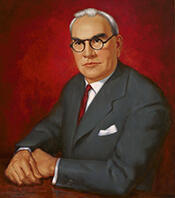
Here you will find contact information for Representative Hampton Pitts Fulmer, including email address, phone number, and mailing address.
| Name | Hampton Pitts Fulmer |
| Position | Representative |
| State | South Carolina |
| District | 2 |
| Party | Democratic |
| Status | Former Representative |
| Term Start | April 11, 1921 |
| Term End | January 3, 1945 |
| Terms Served | 12 |
| Born | June 23, 1875 |
| Gender | Male |
| Bioguide ID | F000417 |
About Representative Hampton Pitts Fulmer
Hampton Pitts Fulmer (June 23, 1875 – October 19, 1944) was an American politician of the Democratic Party who represented South Carolina in the United States House of Representatives from March 4, 1921, until his death on October 19, 1944. Over the course of 12 consecutive terms in Congress, he contributed to the legislative process during a significant period in American history, including the Great Depression and World War II, and became a prominent figure in agricultural policy and wartime legislation. After his death, his wife, Willa E. Lybrand Fulmer, succeeded him in his congressional seat.
Fulmer was born near Springfield, Orangeburg County, South Carolina, on June 23, 1875. He attended the local public schools before pursuing further education out of state. In 1897 he graduated from Massey Business College in Columbus, Georgia, where he received training that prepared him for a career in business and finance. His early life in rural South Carolina and his business education helped shape his later focus on agricultural and economic issues in public office.
Following his graduation, Fulmer returned to South Carolina and established himself in Norway, a small community in Orangeburg County. There he engaged in agricultural and mercantile pursuits, reflecting the agrarian character of the region, and he also became involved in banking. This combination of farming, commerce, and financial activity gave him a practical understanding of the economic challenges facing his constituents, particularly farmers and small business owners, and laid the groundwork for his later legislative interests.
In his personal life, Fulmer married Willa E. Lybrand in 1901. The couple had three children. Willa Fulmer would later become notable in her own right when she was elected to fill her husband’s seat in Congress after his death, continuing the family’s involvement in public service and maintaining representation for their district during a time of war.
Fulmer’s formal political career began at the state level. He served as a member of the South Carolina House of Representatives from 1917 to 1920. In this role he gained legislative experience and developed a political base in Orangeburg County and the surrounding area. His service in the state legislature coincided with World War I and the immediate postwar period, when issues of agricultural prices, rural credit, and economic adjustment were of particular concern in South Carolina.
In 1921 Fulmer moved to the national stage. A member of the Democratic Party, he was elected to the Sixty-seventh Congress and to the eleven succeeding Congresses, representing South Carolina in the United States House of Representatives from March 4, 1921, to October 19, 1944. Over these 12 terms in office, he participated actively in the democratic process and represented the interests of his constituents during an era that encompassed the Roaring Twenties, the New Deal, and World War II. His long tenure reflected sustained electoral support and positioned him as an influential Southern Democrat in the House.
During his congressional service, Fulmer became particularly prominent in agricultural policy. He served as chairman of the House Committee on Agriculture during the Seventy-sixth, Seventy-seventh, and Seventy-eighth Congresses, a period roughly spanning 1939 to 1945. In this capacity he played a key role in shaping federal agricultural legislation at a time when farm programs, price supports, and rural development were central components of national policy. His background in farming, commerce, and banking in rural South Carolina informed his approach to these issues and helped align national agricultural policy with the needs of his largely agrarian district.
Fulmer was also an important voice on foreign policy and national defense in the years leading up to and during World War II. During the period before the Japanese attack on Pearl Harbor, he was outspokenly pro-British and advocated providing military aid to the United Kingdom in its struggle against Nazi Germany. He supported American engagement in the conflict and, in 1941, voted in favor of the Lend-Lease Act, which authorized extensive material assistance to Allied nations. His stance placed him among those members of Congress who favored a more active American role in world affairs prior to the nation’s formal entry into the war.
Hampton Pitts Fulmer died in office in Washington, D.C., on October 19, 1944. At the time of his death he had already been nominated for re-election to the Seventy-ninth Congress, underscoring his continued political strength and the expectation that he would remain in office. Following his death, his wife, Willa L. (Willa E. Lybrand) Fulmer, was elected to succeed him, ensuring continuity of representation for their South Carolina district. He was buried in Memorial Park Cemetery in Orangeburg, South Carolina, close to the communities he had served throughout his life and career.