Representative Hannibal Lafayette Godwin
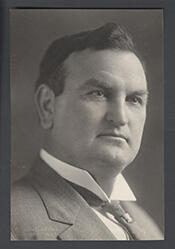
Here you will find contact information for Representative Hannibal Lafayette Godwin, including email address, phone number, and mailing address.
| Name | Hannibal Lafayette Godwin |
| Position | Representative |
| State | North Carolina |
| District | 6 |
| Party | Democratic |
| Status | Former Representative |
| Term Start | December 2, 1907 |
| Term End | March 3, 1921 |
| Terms Served | 7 |
| Born | November 3, 1873 |
| Gender | Male |
| Bioguide ID | G000250 |
About Representative Hannibal Lafayette Godwin
Hannibal Lafayette Godwin (November 3, 1873 – June 9, 1929) was a Democratic U.S. Congressman from North Carolina who served as a Representative in the United States Congress from 1907 to 1921. Over the course of seven consecutive terms in the House of Representatives, he contributed to the legislative process during a significant period in American history and represented the interests of his constituents as a member of the Democratic Party.
Born on November 3, 1873, Godwin came of age in the post-Reconstruction South, a time when North Carolina and the broader region were undergoing political, economic, and social realignments. His early life in North Carolina exposed him to the concerns of rural communities and the evolving political landscape of the late nineteenth century, experiences that would later inform his public service and legislative priorities.
Godwin pursued an education that prepared him for a professional and political career, studying in North Carolina at a time when formal training was increasingly important for those seeking public office. He entered the legal profession after his studies, a common path for many aspiring politicians of his era, and established himself in practice. His work as an attorney provided him with experience in statutory interpretation, advocacy, and the practical application of law, all of which proved valuable when he later assumed national legislative responsibilities.
Before his election to Congress, Godwin became active in local and state Democratic politics in North Carolina. As the Democratic Party consolidated its dominance in the state during the late nineteenth and early twentieth centuries, he aligned himself with its platform and leadership. Through his legal work and political involvement, he built a reputation that positioned him to seek higher office, reflecting both his personal ambition and the confidence of party leaders and voters in his abilities.
Godwin was elected as a Democrat to the United States House of Representatives and took his seat in Congress in 1907. He served continuously until 1921, completing seven terms in office. His congressional service spanned the administrations of Presidents Theodore Roosevelt, William Howard Taft, Woodrow Wilson, and the beginning of Warren G. Harding’s term, encompassing the Progressive Era and World War I. During these years, he participated in the democratic process at the national level, engaging in debates and votes on legislation affecting domestic reform, economic regulation, and the nation’s role in global affairs. As a Representative from North Carolina, he worked to represent the interests of his constituents, including agricultural communities and emerging industrial centers, within the broader framework of Democratic Party priorities.
Serving during a period marked by significant federal expansion and reform, Godwin was part of the congressional deliberations that addressed issues such as transportation, banking and finance, labor conditions, and wartime measures. His tenure coincided with major legislative initiatives associated with the Progressive Era and the United States’ mobilization for and participation in World War I. In this context, he contributed to the legislative process by casting votes, serving on committees as assigned, and advocating for policies that reflected both national concerns and the specific needs of North Carolina.
After leaving Congress in 1921, Godwin returned to private life and resumed his professional pursuits in North Carolina. Drawing on his years of legislative experience, he remained a figure of standing in his community and within state Democratic circles, even as he no longer held national office. His post-congressional years were spent in the legal and civic spheres, where his knowledge of federal law and policy continued to be of value.
Hannibal Lafayette Godwin died on June 9, 1929. His career in public service, particularly his fourteen years in the U.S. House of Representatives, placed him among the North Carolinians who helped shape federal policy during a transformative era in American history. Through his seven terms in Congress, he left a record of sustained participation in the legislative work of the nation and long-standing representation of his North Carolina constituents.