Senator Harley Martin Kilgore
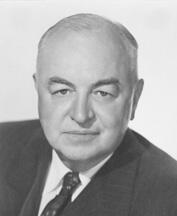
Here you will find contact information for Senator Harley Martin Kilgore, including email address, phone number, and mailing address.
| Name | Harley Martin Kilgore |
| Position | Senator |
| State | West Virginia |
| Party | Democratic |
| Status | Former Representative |
| Term Start | January 3, 1941 |
| Term End | January 3, 1957 |
| Terms Served | 3 |
| Born | January 11, 1893 |
| Gender | Male |
| Bioguide ID | K000176 |
About Senator Harley Martin Kilgore
Harley Martin Kilgore (January 11, 1893 – February 28, 1956) was a United States senator from West Virginia who served in the U.S. Senate from 1941 until his death in 1956. A member of the Democratic Party, he represented West Virginia during three terms in office, participating actively in the legislative process during a significant period in American history that encompassed World War II, the early Cold War, and major domestic policy debates.
Kilgore was born on January 11, 1893, in Brown, Harrison County, West Virginia, to Quimby Hugh Kilgore, an oil driller and contractor, and Laura Jo Kilgore. He was raised in rural West Virginia and attended the public schools of the state. His early life in an oil-field family in a developing region of Appalachia helped shape his later interest in economic development, industrial policy, and the welfare of working people in his home state.
After completing his primary and secondary schooling, Kilgore enrolled at West Virginia University in Morgantown, where he studied law. He graduated from the law department of West Virginia University in 1914 and was admitted to the bar that same year. Immediately after his admission, he began his professional life in education, teaching school in Hancock, West Virginia, in 1914 and 1915. In 1915 he organized the first high school in Raleigh County, West Virginia, and served as its first principal for a year. In 1916 he commenced the practice of law in Beckley, West Virginia, establishing himself as an attorney in a growing coal and industrial region.
With the entry of the United States into World War I, Kilgore entered military service. He served in the infantry beginning in 1917 and remained in uniform until 1920, when he was discharged with the rank of captain. In 1921 he organized the West Virginia National Guard, reflecting his continued commitment to military preparedness and public service, and he remained associated with the Guard until his retirement as a colonel in 1953. Also in 1921, he married Lois Elaine Lilly in Huntington, West Virginia. During the interwar years he continued his legal practice in Beckley and became increasingly active in public affairs and Democratic Party politics.
Kilgore’s judicial and political career advanced in the 1930s. He was appointed and then served as judge of the Raleigh County criminal court from 1933 to 1940, a period that coincided with the New Deal and significant legal and social changes in West Virginia. In 1940 he was elected as a Democrat to the United States Senate from West Virginia. He took his seat on January 3, 1941, and was subsequently reelected twice, serving continuously until his death in 1956. As a senator, he represented the interests of his constituents in a time of global conflict and domestic transformation, participating in the democratic process and shaping national policy across defense, science, civil liberties, and economic regulation.
During World War II, Kilgore became particularly prominent for his work on wartime mobilization and scientific policy. He was a member of the Senate Special Committee to Investigate the National Defense Program, commonly known as the Truman Committee, which scrutinized war contracts and defense production. Beginning in October 1942, he chaired the Subcommittee on War Mobilization of the Senate Committee on Military Affairs, widely known as the Kilgore Committee, which oversaw U.S. mobilization efforts for World War II. Acting on advice from manufacturing expert Herbert Schimmel in 1942, Kilgore used this platform to advocate for centralizing scientific research for the war effort. His committee drafted legislation for an Office of Technological Mobilization that would have had authority to fund research, share patents and trade secrets, and direct scientific facilities and personnel toward wartime needs. Although this specific proposal met resistance—particularly from leading scientists such as Vannevar Bush, who opposed extensive government administration of science and patent sharing—it marked Kilgore as an early and forceful proponent of a national science policy.
In the years immediately following the war, Kilgore played a central role in the long and complex legislative struggle that led to the creation of the National Science Foundation (NSF). As the war neared its end, he clashed with Bush and others over the structure and control of a peacetime science agency, favoring a body more directly accountable to the government and wary of undue military influence. After Senator Warren Magnuson introduced a competing bill based on Bush’s report, “Science, the Endless Frontier,” Kilgore felt betrayed by Bush’s failure to disclose this alternative plan and remained on hostile terms with him. When a bill sponsored by Republican Senator Alexander Smith, more closely aligned with Bush’s vision, passed Congress, Kilgore successfully urged President Harry S. Truman to block it, warning that it would permit military dominance over scientific research. Truman allowed the Smith bill to die by pocket veto and, at Kilgore’s urging, established a Presidential Research Board under John Steelman in October 1946. Following extended negotiations among scientists, manufacturers, and policymakers, Kilgore and Smith eventually reached a compromise on the structure of a science-funding agency that would focus on basic research. They cosponsored a new bill, and on May 10, 1950, President Truman signed the legislation establishing the National Science Foundation, an outcome in which Kilgore played a decisive role.
Kilgore was also active in national politics beyond his legislative work. In 1948 he served as West Virginia’s favorite-son candidate in the Democratic presidential primaries and won his home state unopposed, demonstrating his strong political standing within West Virginia and his alignment with the national Democratic Party. In the early Cold War climate, he took part in major debates over internal security and civil liberties. In 1950 he joined a small group of liberal senators, including Paul Douglas and Hubert Humphrey, in an effort to block the McCarran Internal Security Act, which was designed to suppress the American Communist Party and impose stringent registration and detention provisions. As a tactical move to split the bill’s supporters, Kilgore proposed a substitute measure that would have allowed the president to detain suspected subversives without trial in a national emergency, modeled on the World War II internment of Japanese Americans. Instead of undermining the bill, his substitute was incorporated into it, and critics later charged that liberals had endorsed “concentration camps.” Despite this outcome, Kilgore ultimately voted against the McCarran Act and supported President Truman’s veto; the Senate overrode the veto by a vote of 57 to 10. Later, in 1956, he did not sign the Southern Manifesto, even though school segregation had been legally required in West Virginia prior to the Supreme Court’s 1954 decision in Brown v. Board of Education, placing him among those Southern and border-state Democrats who declined to formally oppose desegregation.
In his later Senate years, Kilgore focused increasingly on economic concentration and corporate power. As chairman of the Senate Committee on the Judiciary, he spearheaded investigations into antitrust issues and monopolies. The Kilgore Subcommittee’s work grew out of a 1954 recommendation for a full investigation of monopolies and concentrations of economic power. In its 1954 report, the Subcommittee warned that the United States was in the “third great merger movement” in its history and noted that previous merger waves had been followed by “devastating business collapse.” Acting on these concerns, the Antitrust and Monopoly Subcommittee of the Senate Judiciary Committee, headed by Kilgore, launched a full-scale inquiry into antitrust policies and monopolies in 1955. On March 18 of that year, the Senate voted $200,000 to fund the investigations. These inquiries reflected Kilgore’s long-standing interest in protecting competition and guarding against excessive corporate concentration. After his death, the investigations were temporarily put on hold until Senator Estes Kefauver assumed the chairmanship of the subcommittee in 1957; the work continued under Kefauver until his death in 1963.
Harley Martin Kilgore’s Senate service ended with his death in office. He died on February 28, 1956, at Bethesda Naval Hospital in Bethesda, Maryland, at the age of 63, while still serving as a United States senator from West Virginia. He was interred in Arlington National Cemetery, reflecting national recognition of his military service and long tenure in public office. His papers are preserved at the West Virginia & Regional History Center at West Virginia University, documenting a career that spanned local judicial service, military leadership, and a prominent role in shaping mid-twentieth-century American science policy, wartime mobilization, civil liberties debates, and antitrust enforcement.