Representative Harley O. Staggers
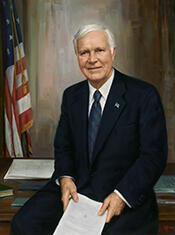
Here you will find contact information for Representative Harley O. Staggers, including email address, phone number, and mailing address.
| Name | Harley O. Staggers |
| Position | Representative |
| State | West Virginia |
| District | 2 |
| Party | Democratic |
| Status | Former Representative |
| Term Start | January 3, 1949 |
| Term End | January 3, 1981 |
| Terms Served | 16 |
| Born | August 3, 1907 |
| Gender | Male |
| Bioguide ID | S000778 |
About Representative Harley O. Staggers
Harley Orrin Staggers Sr. (August 3, 1907 – August 20, 1991) was an American politician who served 16 terms in the United States House of Representatives from 1949 to 1981, representing West Virginia’s 2nd Congressional District as a Democrat. Over more than three decades in Congress, he participated actively in the legislative process during a significant period in American history and was a prominent advocate for the nation’s transportation systems, particularly the railroad industry. From 1966 until his retirement in 1981, he chaired the powerful House Committee on Interstate and Foreign Commerce (today the Committee on Energy and Commerce), holding the longest uninterrupted tenure of any chairman of that committee in its more than 200-year history.
Staggers was born on August 3, 1907, in Keyser, Mineral County, West Virginia. He was educated in the public schools of Mineral County and went on to attend Emory and Henry College in Emory, Virginia, from which he graduated in 1931. Following his undergraduate studies, he pursued graduate work at Duke University in Durham, North Carolina. His early professional life in West Virginia, combined with his academic training, helped shape the practical and legislative interests that would later define his congressional career.
Before entering national politics, Staggers held local office and served in the military. He was elected sheriff of Mineral County, West Virginia, serving from 1937 to 1941. During World War II he served as a navigator in the U.S. Naval Air Corps, contributing to the war effort in uniform. These experiences in local law enforcement and military service provided him with a foundation in public service and administration that he carried into his subsequent political career.
In 1948, Staggers was elected to the U.S. House of Representatives from West Virginia’s 2nd Congressional District and took his seat in January 1949. He was reelected to another 15 consecutive terms, serving until his retirement in 1981. A member of the Democratic Party, he represented the interests of his constituents through periods of postwar expansion, the civil rights era, the Vietnam War, and the economic and regulatory debates of the 1970s. He was a delegate to the Democratic National Convention from West Virginia in 1960. Notably, he did not sign the 1956 Southern Manifesto and voted in favor of the Civil Rights Acts of 1957, 1960, 1964, and 1968, as well as the 24th Amendment to the U.S. Constitution and the Voting Rights Act of 1965, aligning himself with key federal civil rights and voting rights protections.
Staggers’s most influential work in Congress came through his leadership of the House Committee on Interstate and Foreign Commerce, which he chaired from 1966 until his retirement in 1981. In that role, he oversaw legislation affecting transportation, communications, public health, and consumer protection. A longtime supporter of the American railroad industry and its workers, he played a central role in shaping transportation policy. On May 11, 1973, under his chairmanship, the committee issued a press release summarizing the results of an investigation that determined illegal drug use existed at all levels of sports, including alarming use of steroids and amphetamines, highlighting his committee’s broad regulatory and oversight responsibilities.
Staggers was also involved in several high-profile controversies that reflected the tensions of the era over press freedom and broadcast standards. Following the U.S. Supreme Court’s June 10, 1971, decision that the Nixon Administration could not block The New York Times from publishing the Pentagon Papers, Staggers, on July 12, 1971, ordered CBS News to hand over unused film from its documentary “The Selling of the Pentagon” to determine whether the program had been accurately edited. Frank Stanton, president of CBS News, refused and stated he would go to jail rather than comply; the House ultimately supported Stanton, and Staggers abandoned his ultimatum. In 1973, after hearing John Lennon’s song “Working Class Hero” on Washington, D.C. station WGTB, he lodged a complaint with the Federal Communications Commission over the song’s explicit language. The station’s manager, Ken Sleeman, defended the broadcast on grounds of audience sophistication; although Sleeman initially faced potential criminal penalties and a fine, the charges were eventually dropped.
Staggers’s landmark legislative achievement was the Staggers Rail Act of 1980, crafted by him and other members of the Interstate and Foreign Commerce Committee to deregulate the American railroad industry. Signed into law by President Jimmy Carter on October 14, 1980, and named in his honor, the act eliminated many archaic regulations, allowing railroads to enter into contracts with shippers and set their own rates without prior approval from the Interstate Commerce Commission. The Staggers Rail Act is widely credited with strengthening the financial health and competitiveness of the U.S. railroad industry and improving safety, and it stands as a central part of his legislative legacy.
After his retirement from Congress in 1981, Staggers remained a respected figure in West Virginia and in national transportation policy circles. His contributions were commemorated in part through the naming of a federal court and post office building in Morgantown, West Virginia, and a portion of Water Street in his hometown of Keyser in his honor. He died in Cumberland, Maryland, on August 20, 1991.
Staggers’s family continued his tradition of public and community service. His son Harley O. Staggers Jr. practiced law in Keyser and served in the United States House of Representatives, representing West Virginia’s 2nd Congressional District from 1983 to 1993. Another son, Daniel C. Staggers, also practiced law in Keyser. His daughter Mary Kaye Staggers became a professor at Potomac State College and a member of the West Virginia Democratic Executive Committee. His daughter Margaret Anne “Peggy” Staggers, a resident of Fayetteville, West Virginia, served twice in the West Virginia House of Delegates, from 2006 to 2014 and again from 2018 to 2020. His daughter Susan owned and managed two local businesses in Keyser until her and her husband’s retirement, and his daughter Ellen made her home in Morgantown, West Virginia, reflecting the family’s enduring ties to the state he represented in Congress.