Representative Harmanus Bleecker
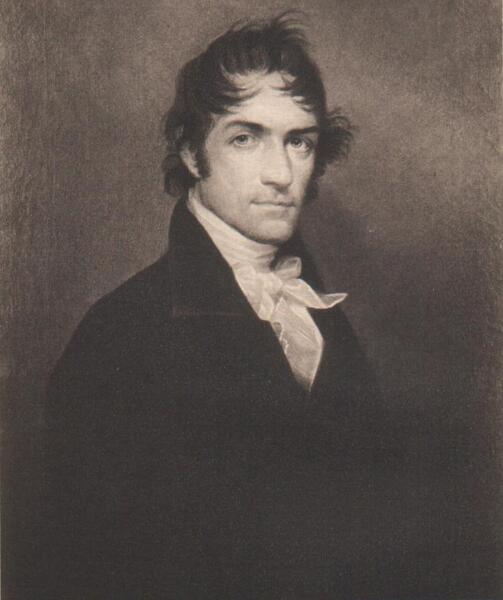
Here you will find contact information for Representative Harmanus Bleecker, including email address, phone number, and mailing address.
| Name | Harmanus Bleecker |
| Position | Representative |
| State | New York |
| District | 7 |
| Party | Federalist |
| Status | Former Representative |
| Term Start | November 4, 1811 |
| Term End | March 3, 1813 |
| Terms Served | 1 |
| Born | October 9, 1779 |
| Gender | Male |
| Bioguide ID | B000555 |
About Representative Harmanus Bleecker
Harmanus Bleecker (October 9, 1779 – July 19, 1849) was an American attorney, Federalist politician, and diplomat from Albany, New York, noted for his service in the New York State Assembly, the United States House of Representatives, and as Chargé d’Affaires to the Netherlands. A prominent figure in Albany’s legal, civic, and cultural life, he was also remembered for his philanthropy and his enduring ties to the city’s Dutch heritage.
Bleecker was born in Albany, New York, on October 9, 1779, into an old Dutch family that had resided in Albany since the seventeenth century. His father, Jacob Bleecker, was a prominent merchant, and his mother, Elizabeth Wendell, was the daughter of Hermanus Wendell, an Albany furrier. Through this lineage he was the great-great-grandson of Jan Jansen Bleecker, the first member of the Bleecker family to settle in North America. Raised in a community where Dutch traditions remained strong, he was educated in Albany and learned to speak Dutch fluently, preserving the older form of the language that had been passed down in the region.
After completing his early education, Bleecker pursued the study of law in Albany. He read law in the private offices of two established attorneys, John Vernon Henry and James Emott, and was admitted to the bar in 1801. He then commenced practice in Albany, where he quickly gained a reputation as a highly regarded lawyer. For a large portion of his career he practiced in partnership with Theodore Sedgwick (1780–1839) in the firm of Bleecker & Sedgwick. Bleecker was also a noted legal teacher; many men who went on to prominent legal, political, and business careers studied in his office, including David Dudley Field (1805–1894), Stephen Johnson Field, Charlemagne Tower, Bradford R. Wood, Peter Gansevoort, Solomon Southwick, Timothy Childs, and Charles Fenno Hoffman. In addition to his legal work, he engaged in numerous business ventures, serving on the board of directors of Albany’s Mechanics and Farmers Bank and acting as a trustee of the Erie and Champlain Canals, reflecting his interest in banking and canal construction and operation.
Bleecker entered national politics as a member of the Federalist Party. In 1810 he was elected to the United States House of Representatives and served in the Twelfth Congress from March 4, 1811, to March 3, 1813. Although an opponent of the War of 1812 while in Congress, he did not seek renomination in 1812 and returned to his law practice in Albany. He soon reentered public life at the state level, serving in the New York State Assembly in 1814 and 1815. During this period he worked closely with Governor Daniel D. Tompkins to secure funding for New York troops participating in the War of 1812, helping to finance the equipping, supplying, and pay of the state militia after it was federalized. In the late 1820s he was appointed one of New York’s commissioners to work with commissioners from New Jersey in determining the boundary between the two states, further demonstrating his role in important state matters.
Beyond elective office, Bleecker was active in educational and civic affairs. From 1822 to 1834 he served as a member of the Board of Regents of the University of the State of New York, overseeing the state’s system of higher education. In recognition of his contributions, Union College awarded him an honorary LL.D. degree in 1843, and he was made an honorary member of the Phi Beta Kappa Society. He was also involved in early efforts to improve health care in Albany; in 1839 he served on the original Board of Governors that founded Albany City Hospital, later known as Albany Medical Center. A committed opponent of slavery, he belonged to the American Colonization Society and the New-York Colonization Society, organizations that advocated the gradual emancipation of enslaved people and the relocation of free African Americans to colonies in Africa, including Liberia, which members believed would offer greater freedom and opportunity.
In 1837 Bleecker entered diplomatic service when he was appointed Chargé d’Affaires to the Netherlands by President Martin Van Buren, a longtime friend who shared his interest in Dutch language and culture. He formally held the post from May 12, 1837, to June 28, 1842. Bleecker was chosen for the position in preference to John Lloyd Stephens, another aspirant to the post. As a practitioner of traditional Dutch culture as it had survived in Albany and a speaker of the old-style Dutch language, he was warmly received by the Dutch government and people. According to a frequently repeated account, when Bleecker presented his credentials, King William remarked, “You speak better Dutch than we do in Holland!” His tenure in The Hague strengthened cultural and diplomatic ties between the United States and the Netherlands and further enhanced his standing at home.
After returning to Albany in 1842, Bleecker largely retired from active business and public life, though he continued to serve in important civic roles. From 1846 until his death he was a member of the executive committee that organized and oversaw the State Normal College in Albany, an institution created for the training of teachers and later known as the State University of New York at Albany. He also continued to participate in philanthropic endeavors, including support for hospitals and educational institutions in the Albany area. By 1848 his opposition to slavery and his personal affinity for Martin Van Buren led to his identification with the Free Soil Party, and he was a candidate for presidential elector on Van Buren’s Free Soil ticket.
Bleecker’s personal life reflected both his Dutch heritage and his wide circle of political and social connections. While still a Federalist, he formed a close friendship with Democratic Congressman and Senator John Randolph of Roanoke; the two men exchanged portraits as tokens of mutual esteem and displayed each other’s likenesses in their homes. For many years he practiced law with Theodore Sedgwick, son of Federalist legislator and judge Theodore Sedgwick, and he was at one time engaged to Judge Sedgwick’s daughter, the writer Catharine Sedgwick. He also maintained a close friendship with Federalist Congressman and Boston mayor Josiah Quincy (1772–1864). In addition, he enjoyed a long-standing friendship with Martin Van Buren, a Democrat, illustrating his ability to cultivate relationships across party lines.
Bleecker married late in life. While serving as a diplomat in the Netherlands, he met Sebastiana Cornelia Mentz of Arnhem, a woman many years his junior, whom he later married. She joined him in Albany and inherited his estate upon his death. The couple had no children. Harmanus Bleecker died in Albany on July 19, 1849, and was buried in Albany Rural Cemetery, Section 3, Lot 61. After his death, Sebastiana Cornelia Bleecker married Hendrick Coster and returned to the Netherlands, where she died in 1885. Honoring her first husband’s wishes, she left his fortune—amounting to about $130,000 (approximately $4.4 million in 2023 dollars)—for the benefit of the citizens of Albany. The executors of the estate used the funds to construct and maintain Harmanus Bleecker Hall, a combined library and theater built in 1889 near the corner of Washington Avenue and Lark Street. In 1919 the Young Men’s Association, which managed the institution, sold Bleecker Hall and used the proceeds to build the Harmanus Bleecker Library near the intersection of Washington Avenue and Dove Street, which opened in 1924 as a dedicated library. Bleecker Hall burned in a fire in 1940 and was later demolished, but the Bleecker Library building survived. In 1977 the Albany Public Library’s Washington Avenue Branch moved from the Bleecker Library into a new building on the former Bleecker Hall site. The old Bleecker Library building remained vacant for several years before being renovated as private office space; it is now listed on the National Register of Historic Places.
Bleecker’s life and legacy later became the subject of historical study. In 1924 Harriet Langdon Pruyn Rice, the daughter of John V. L. Pruyn and granddaughter of Amasa J. Parker—both of whom had been involved in the disposition of Bleecker’s estate—published a biography titled Harmanus Bleecker: An Albany Dutchman, 1779–1849. Her access to Bleecker’s papers and to family and legal records allowed for a detailed account of his career as a lawyer, legislator, diplomat, and benefactor of Albany.